

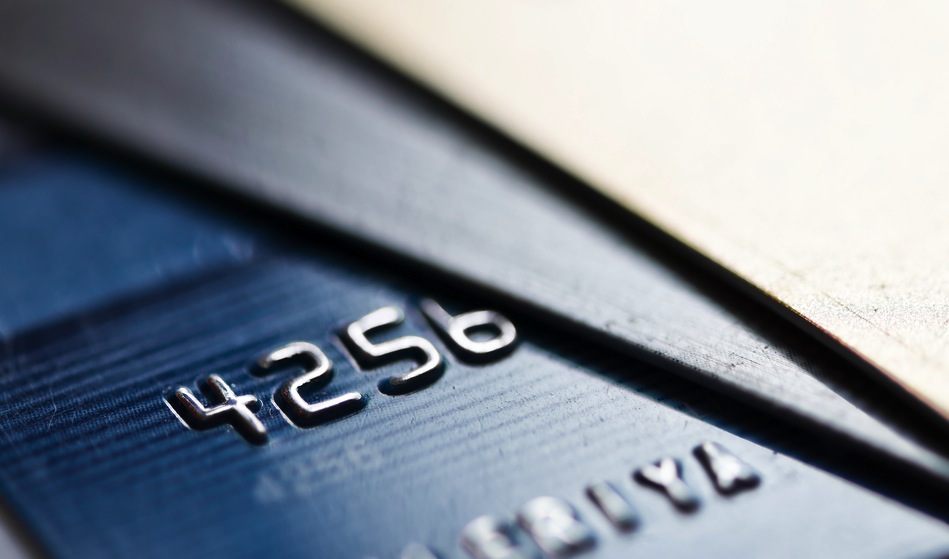

Unlocking the Secrets Behind Bank Card Numbers
Explore the fascinating world of bank card numbers, their structure, and the algorithms that keep your transactions secure. Learn how these numbers are verified and why they matter.
In today's world, it's nearly impossible to find someone without a bank card. We receive salaries on these cards, use them for shopping both in stores and online, and even take out loans using credit cards.
Every bank card comes with a unique 16-digit identifier. Given the vast number of cards issued globally, one might think it’s easy to trick systems by entering random number combinations during registrations or other processes without immediate payment. However, this approach fails because bank card numbers follow strict rules that allow verification of their authenticity even without direct bank confirmation.
For example, Visa cards always start with the digit '4'. Entering any other first digit for a Visa card will instantly invalidate the number. Most cards worldwide, including those issued in many countries, belong to payment systems like Visa and MasterCard. Their number prefixes typically are:
- Visa: 4-
- MasterCard: 51-55
You can find comprehensive lists of card number prefixes based on payment networks through official financial resources.
Understanding the Checksum
Despite the convenience of applications that store card data, many users prefer not to save their card information digitally, leading to manual input and potential human errors.
To quickly detect such errors, verification algorithms were developed. The last digit of any bank card number is a checksum derived from the preceding 15 digits using the Luhn algorithm.
Developed in 1954 by Hans Peter Luhn, this algorithm became part of the international ISO/IEC 7812-1 standard, which governs card numbering.
The algorithm’s popularity stems from its simplicity and effectiveness. After a few trials, anyone can mentally calculate the checksum. It reliably detects single-digit errors and most adjacent digit swaps — common mistakes during manual entry. However, since the checksum is only one digit, there’s about a 10% chance a random number might pass the check.
The Luhn algorithm works by numbering the digits from left to right, doubling every first and alternate digit, subtracting 9 from any result over 9, then summing all the digits. If the total is divisible by 10, the card number is valid.
More complex verification methods exist but are harder to perform mentally.
Other Applications of Checksums
Checksums are widely used beyond bank cards to instantly detect errors in important numeric sequences. Barcodes, identification numbers in various countries, and many electronic data integrity systems rely on checksums to ensure accuracy.
Parity Checks and Data Integrity
In early computing, memory was less reliable and prone to data corruption. Engineers introduced parity bits to detect errors by ensuring the total number of set bits was even or odd. Although simple, parity checks cannot pinpoint which bit is incorrect and may miss multiple errors.
Modern systems have more reliable memory, but critical sectors like banking and energy still use advanced error-correcting memory (ECC) that can detect and fix bit errors with high precision.
Data Protection with RAID
Despite the rise of solid-state drives (SSD), traditional hard disk drives (HDD) remain popular due to their lower cost per gigabyte. However, HDDs have moving parts and are prone to failure.
To protect important data from disk failures, systems often use RAID (Redundant Array of Independent Disks), which stores data across multiple drives with parity information. This setup allows recovery if one disk fails by reconstructing lost data using the remaining disks.
Initially, RAID stood for 'Redundant Array of Inexpensive Disks,' emphasizing cost-effectiveness over individual disk reliability. Today, as disks have become more reliable, RAID focuses on independence and redundancy to ensure data safety.
These data protection strategies mirror everyday practices like checklists and reminders, which help prevent errors and maintain reliability in daily tasks.
Explore useful articles in Technologies as of 25-01-2014. The article titled " Unlocking the Secrets Behind Bank Card Numbers " offers in-depth analysis and practical advice in the Technologies field. Each article is carefully crafted by experts to provide maximum value to readers.
The " Unlocking the Secrets Behind Bank Card Numbers " article expands your knowledge in Technologies, keeps you informed about the latest developments, and helps you make well-informed decisions. Each article is based on unique content, ensuring originality and quality.