

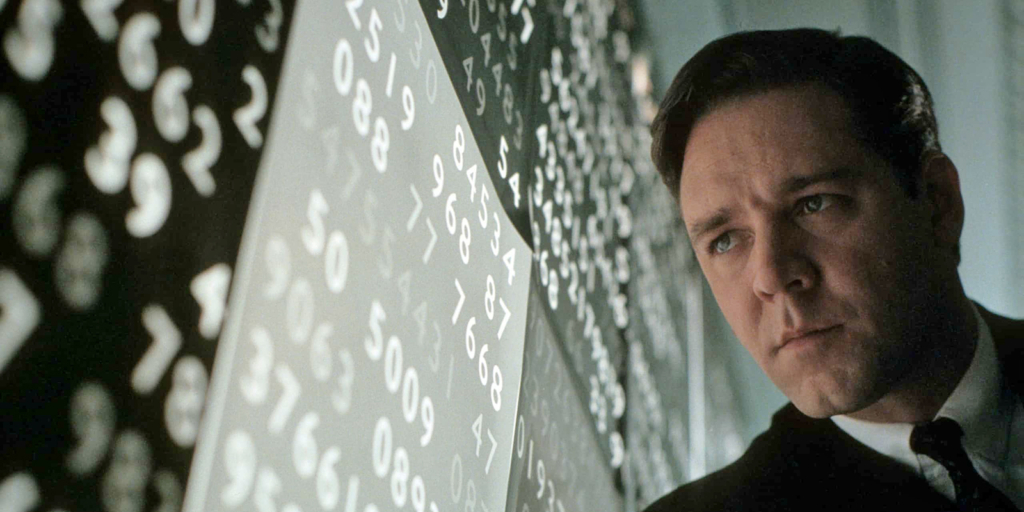

Unlocking the Mystery of Numerology: Science, Superstition, or Simply Numbers?
Explore the fascinating world of numerology, its historical roots, and why it remains a controversial topic. Learn how numbers have influenced cultures and beliefs, and why skepticism is essential.
It’s time to stop fearing so-called "unlucky" numbers or believing that your birth date rigidly defines your personality.
Many cultures consider the number 13 unlucky, while others see numbers like 3 and 7 as symbols of luck. Numbers surround us everywhere: from the three musketeers and three little pigs, to the four seasons and four cardinal directions, seven days in a week and seven deadly sins, ten commandments and ten fingers on our hands. But do numbers truly shape our lives? Numerologists say yes, but let's take a closer look.
What Is Numerology?
Numerology is a mystical belief system that suggests numbers govern our lives and the universe around us. Practitioners analyze numbers hidden in birth dates and names to reveal personality traits and predict future events. Often grouped with astrology, clairvoyance, and palmistry, numerology is considered a form of divination.
Supporters of numerology point to intriguing coincidences as evidence of a hidden connection between numbers and life. For example, mathematician Martin Gardner highlighted the striking parallels between the lives of American presidents Abraham Lincoln and John F. Kennedy:
- Lincoln was elected in 1860; Kennedy in 1960.
- Both were assassinated on a Friday; Lincoln at Ford’s Theatre, Kennedy in a Ford car.
- Both were succeeded by Democratic presidents named Johnson: Andrew Johnson born in 1808, Lyndon Johnson in 1908.
- Their secretaries were named John and Lincoln, respectively.
- Their assassins were born exactly 100 years apart: John Wilkes Booth in 1839 and Lee Harvey Oswald in 1939. Booth shot Lincoln in a theater and fled to a warehouse; Oswald shot Kennedy from a warehouse and hid in a theater (though some details are debated).
- Both assassins’ names have 15 letters in English.
Believers use various techniques to convert letters and words into numbers. For instance, numerologists interpret the English phrase "Old Testament" as 39 (3 and 9 combined) and "New Testament" as 27 (3 multiplied by 9), corresponding to the number of books in each part of the Bible.
The Origins of Numerology
Human fascination with numbers and their mystical qualities dates back thousands of years. Ancient bones with scratch marks, possibly representing lunar phases, suggest early lunar calendars from 30,000 years ago. Many ancient civilizations—Babylon, Egypt, China—assigned symbolic meanings to numbers.
Numerology holds particular significance in Jewish, Christian, and Islamic traditions. The Bible itself is full of symbolic numbers: seven days of creation matching seven days in a week, twelve apostles corresponding to twelve months, and more complex examples like Methuselah’s age of 969 years, which aligns with special mathematical sequences. These sacred texts inspired early Christian thinkers such as Irenaeus of Lyons, Ambrose of Milan, Augustine, and Bede the Venerable, who popularized numbers like 666 (the number of the beast) and 888 (symbolizing Christ).
Other famous numerical concepts include the golden ratio (approximately 1.618) and the Fibonacci sequence (1, 2, 3, 5, 8, 13, etc.), which appear frequently in nature—such as in the arrangement of sunflower seeds and daisy petals, forming elegant spirals.

The term "numerology" itself emerged relatively recently, entering English usage in the early 20th century according to the Oxford Dictionary.
Core Principles Behind Numerology
Modern numerologists analyze a person’s name and birth date by assigning numbers to letters to uncover hidden meanings. Several key methods underpin these interpretations.
Pythagorean Philosophy
Rooted largely in the teachings of the ancient Greek philosopher and mathematician Pythagoras, numerology incorporates mystical ideas about numbers representing the universe. Pythagoreans believed all things could be expressed numerically and that numbers explained natural phenomena.
For example, the number 1 symbolized unity and origin, as all numbers stem from it. Even numbers represented feminine qualities, odd numbers masculine. The number 5 (sum of 2 and 3) stood for marriage and life continuation; 4 symbolized justice; and 10 (sum of 1+2+3+4) represented perfection and unity.
Numbers also corresponded to spatial concepts: 1 as a point, 2 as a line, 3 as a triangle. The Pythagoreans recognized nine celestial bodies and revered the number 10 so much they speculated about a hidden "counter-Earth" always obscured by the Sun.
Isopsephy and Letter-to-Number Conversion
Isopsephy is an ancient method of converting letters to numbers, originally used in the Greek alphabet where letters doubled as numbers from 1 to 900. A similar approach was used in Church Slavonic script.

The Latin alphabet employs a comparable system devised by German alchemist Heinrich Cornelius Agrippa, which assigns numerical values to letters.

In 1612, the Protestant scholar Andreas Helwig used this technique to assign the number 666 to the Latin phrase "Vicarius Filii Dei" (Deputy of the Son of God), a title mistakenly attributed to the Pope, to argue that the Roman Catholic Church represented evil. The Pope’s official title, however, is "Vicarius Iesu Christi" (Deputy of Jesus Christ).
Names such as Ellen Gould White, co-founder of the Seventh-day Adventist Church, Adolf Hitler, Martin Luther, and even "Pope Leo X" have been linked to the number 666 through specific interpretations.
Among the most popular systems is the Pythagorean method, which assigns each letter a number from 1 to 9. This method is used to analyze personality traits by associating numbers with qualities—1 with leadership and egoism, 3 with creativity and idealism, for example.

Reducing Numbers
Numerologists often simplify multi-digit numbers into single digits by adding the digits together, a process called digit summing. For example:
April 12, 1961 = 1 + 2 + 0 + 4 + 1 + 9 + 6 + 1 = 24 → 2 + 4 = 6
This method can be applied to birth dates, addresses, phone numbers, and more. In some variations, master numbers like 11, 22, and 33 remain unreduced.
Arithmancy
Arithmancy, or divination through numbers, was practiced by ancient Greeks (Platonists and Pythagoreans), Chaldeans of Mesopotamia, and followers of Kabbalah (where it is called gematria). Mathematician Ian Stewart from Warwick University suggests modern numerology evolved from arithmancy.
Arithmancy and isopsephy are forms of onomancy—the medieval practice of divining through names. Fun fact: in the Harry Potter series, arithmancy is an elective subject at Hogwarts.
Why Numerology Lacks Scientific Support
Despite its rich history, numerology is entirely separate from rigorous mathematical fields like number theory.
There is a lack of credible scientific evidence supporting numerology’s claims. One notable study by Gilad Diamant, a physicist and programmer at Tel Aviv University, involved a professional numerologist and 200 volunteers. The experiment aimed to see if numbers could predict learning difficulties such as ADHD, dyslexia, dyscalculia, and autism. The results were statistically insignificant, suggesting no real connection between numerological formulas and reality.
Even without experiments, numerology’s validity as factual knowledge is questionable.
Ian Stewart illustrates this with his own name’s numerological value: 130. He notes that 130 years before his birth, the Battle of Waterloo occurred—could this imply a destined victory? Alternatively, 130 breaks down into 13 (an "unlucky" number) times 10 (perfection). Such interpretations are arbitrary and subjective.
While many numerical coincidences exist, they are often selectively highlighted to support mystical claims, ignoring contradictory evidence. For example, Lincoln was actually assassinated on April 14, 1865, and Kennedy on November 22, 1963. Booth was likely born in 1838 and hid in a barn, not a warehouse.
Numbers are human-made abstractions, not supernatural forces. Different cultures might have developed other counting systems, such as the base-20 system used by the Mayans.
Appeals to ancient wisdom in numerology fail under scrutiny. Early mathematicians practiced numerology when science and mythology were intertwined, but today, no one confuses alchemy with chemistry or astrology with astronomy. Unfortunately, numerology often blurs this line with mathematics.
In conclusion, numerology is a superstition and pseudoscience that misuses mathematics to create an illusion of legitimacy. It exemplifies how even precise sciences can be distorted. Stay informed and avoid falling for such deceptive practices.
Discover the latest news and current events in Life Transformation as of 05-02-2022. The article titled " Unlocking the Mystery of Numerology: Science, Superstition, or Simply Numbers? " provides you with the most relevant and reliable information in the Life Transformation field. Each news piece is thoroughly analyzed to deliver valuable insights to our readers.
The information in " Unlocking the Mystery of Numerology: Science, Superstition, or Simply Numbers? " helps you make better-informed decisions within the Life Transformation category. Our news articles are continuously updated and adhere to journalistic standards.