


How H5N1 Bird Flu Could Reach Humans: An Indian Modeling Study
A new Indian study uses computer simulations to map how H5N1 bird flu could pass from birds to humans and shows the critical moments when early actions can prevent a wider outbreak.
Bird flu, caused by the H5N1 virus, remains a persistent threat to public health worldwide. A team of Indian researchers built a computer model to forecast how a spillover from poultry could become a human outbreak and what steps can halt it early.
For years, experts have warned that bird flu could jump from birds to people, posing a global health risk. The study focuses on southern India's poultry belt and uses BharatSim, an open-source platform originally developed for Covid-19, to simulate potential outbreak scenarios.
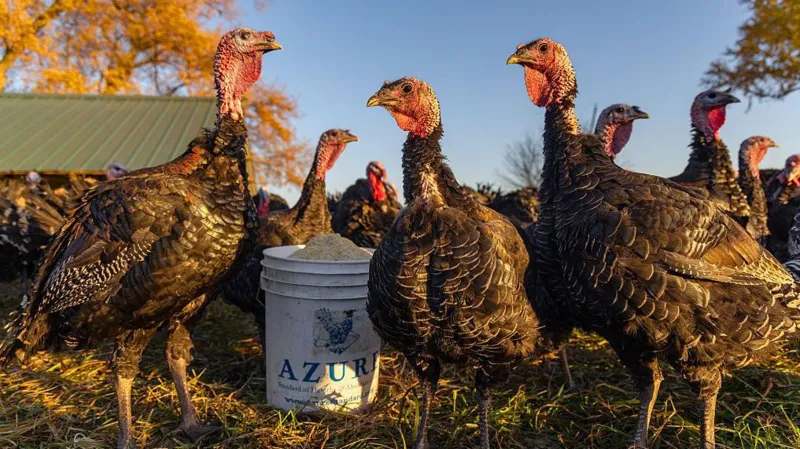
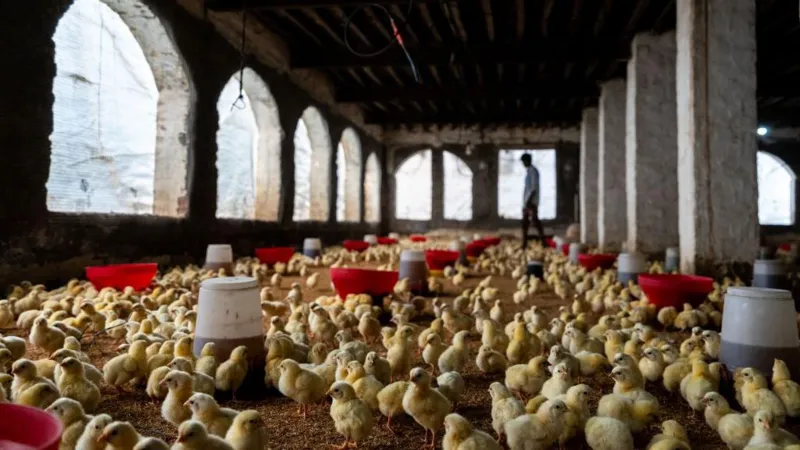
The research centers on Namakkal district in Tamil Nadu, a key poultry hub with roughly 1,600 farms and about 70 million chickens, producing tens of millions of eggs each day. The team created a synthetic village of 9,667 residents to mirror daily life, including homes, workplaces and markets, and seeded it with infected birds to reflect real exposure.
The outbreak starts at a single workplace — a farm or wet market — and spreads first to close contacts (primary) and then to people connected through families and daily activities (secondary). The simulation uses fixed networks for homes, schools and workplaces to track transmission paths.
Researchers measured transmission with the basic reproduction number, R0, which estimates how many people a single case could infect in a fully susceptible population. They ran multiple spread speeds to explore different realities in the absence of an actual pandemic.
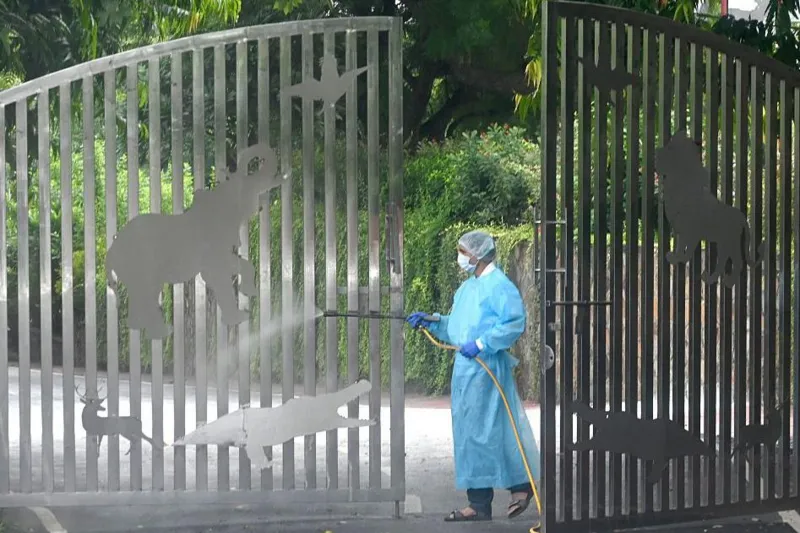
Interventions were then tested: culling birds, isolating close contacts, and targeted vaccination. The results show culling helps best when done before any human infections occur. Once spillover happens, timing becomes crucial: isolating patients and quarantining households can curb secondary spread, but once infections reach creeping into tertiary levels, much tougher actions — including lockdowns — may be needed. Vaccination raises the threshold for sustained transmission but has limited immediate effect on household risk.
The study also highlights a delicate trade-off: starting quarantine too early keeps families together longer and may raise household transmission, while starting too late reduces impact on the outbreak.
In short, the model has limits: it focuses on a single synthetic village and does not account for multiple outbreaks seeded by migratory birds or vast poultry networks, nor does it factor in behavior shifts like mask use when birds die. Virologist Seema Lakdawala of Emory University notes that influenza transmission varies by strain and that some infected people shed the virus less readily, complicating real-world spread.
In the authors' view, if H5N1 becomes established in humans, the disruption could resemble the 2009 swine flu pandemic rather than Covid-19, given existing vaccines and antivirals for influenza. Still, complacency would be dangerous, as the virus could recombine with other flu strains and trigger unpredictable seasonal waves.
The researchers emphasize the value of real-time modeling that can be updated with new data, helping health officials identify which actions matter most early in an outbreak.
Expert comment: Virologist Seema Lakdawala cautions that the model relies on assumptions about how efficiently flu viruses transmit, which can vary by strain. She adds that understanding that not all infected people drive spread equally is crucial for interpreting the results.
In summary, the study shows that early, targeted actions can prevent a small spillover from becoming a full outbreak, but models must be interpreted with care. Real-time data and diverse scenarios are essential for guiding policy in poultry-rich regions like Namakkal.
The key insight: act early with targeted measures to prevent an H5N1 outbreak from gaining momentum. Source: BBC News
Discover the latest news and current events in World News as of 19-12-2025. The article titled " How H5N1 Bird Flu Could Reach Humans: An Indian Modeling Study " provides you with the most relevant and reliable information in the World News field. Each news piece is thoroughly analyzed to deliver valuable insights to our readers.
The information in " How H5N1 Bird Flu Could Reach Humans: An Indian Modeling Study " helps you make better-informed decisions within the World News category. Our news articles are continuously updated and adhere to journalistic standards.