

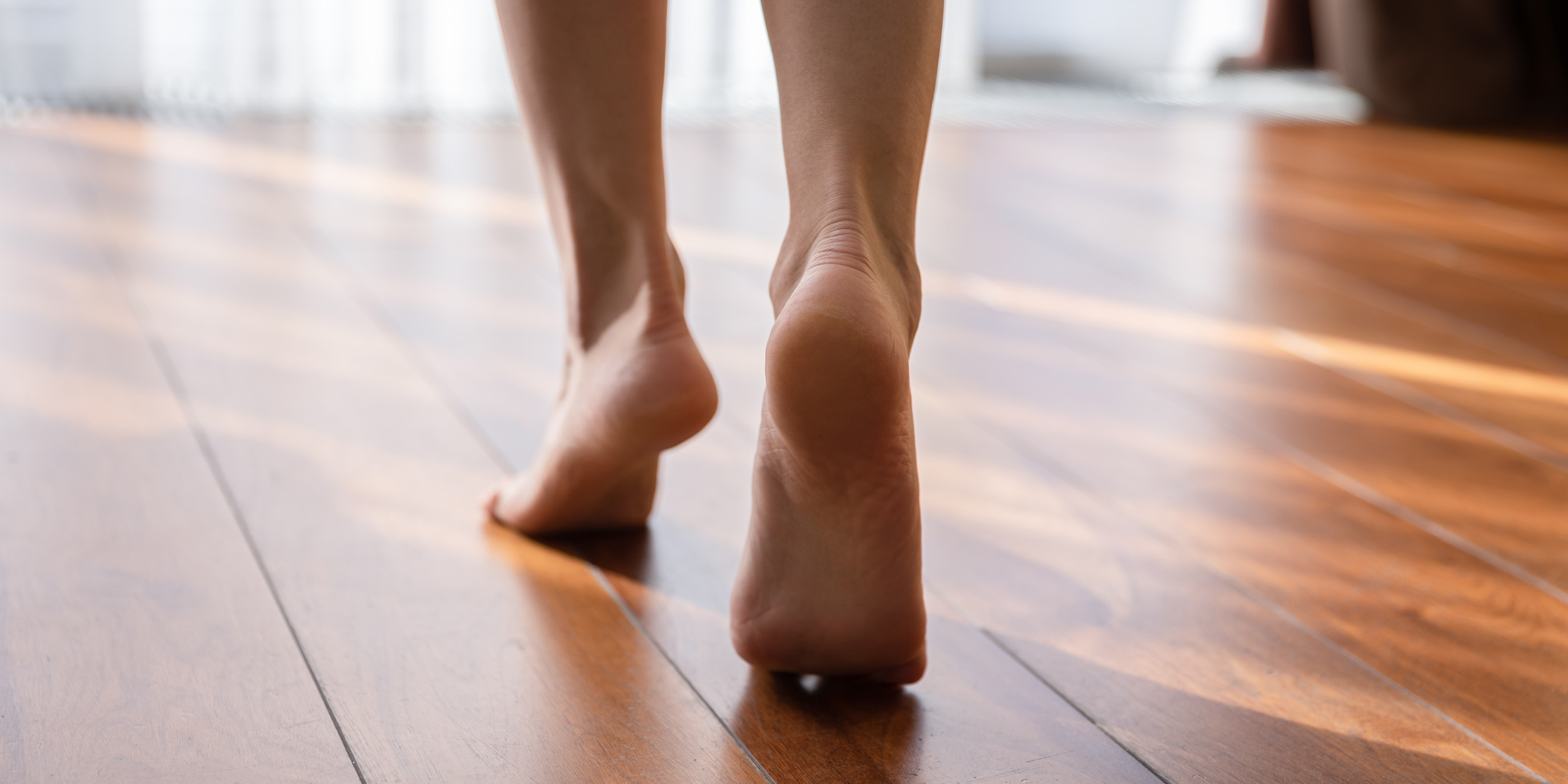

Is Barefoot Walking Good for Your Health? What Science Says
Discover how barefoot walking shifts load, affects balance, and what current research shows about going barefoot and minimalist footwear.
Barefoot walking often attracts people seeking comfort and a more natural foot movement. But does it really improve health or could it cause problems? Here’s a clear look at what current research says about going barefoot and using minimalist footwear.
How barefoot walking changes foot mechanics
Compared with wearing shoes, walking barefoot changes how weight is distributed, how the foot moves, and how steps are taken.
- Pressure shifts toward the forefoot and midfoot. In shoes, most load starts at the heel, but barefoot walking tends to distribute load more toward the front of the foot. This could reduce heel pain, though evidence is limited.
- Greater ankle and foot mobility. Barefoot movement allows more bending at the ankle and greater motion across the midfoot and toe joints.
- Shorter and more frequent steps. People tend to take quicker, shorter steps when barefoot, which may change knee and hip loading. Whether this helps or hurts is still debated.
What the research says about potential benefits
Flat feet and toe alignment
Some studies with children and teens found lower rates of flat feet and toe deformities among those who walked barefoot more often. However, this does not prove that avoiding shoes prevents flat feet, and real-world climate and culture make constant barefoot walking impractical.
For adults, evidence is limited. A couple of small reviews show mixed results: one study found flatter arches among habitual barefoot walkers, another found no difference in arch height.
For those who already have formed arches, avoiding shoes or switching to very minimalist footwear is unlikely to correct flat feet.
Pain relief in the feet
One small study looked at plantar fasciitis and found that barefoot walking twice a week for 30 minutes helped participants report less morning foot pain after a month. But this is preliminary, and plantar fasciitis is sensitive to footwear choices, so results may not apply to everyone.
Balance for older adults
Because feet contain many nerve endings, there is a theoretical case for barefoot walking improving balance. But robust evidence is sparse. In one small trial, older adults walked barefoot on a treadmill and showed more even toe-off timing, suggesting possible balance benefits. In another study, minimalist footwear offered strong stability even with eyes closed; however, the researchers were affiliated with a shoe company, which should be considered when interpreting results.
Overall, there is not solid evidence that barefoot walking or minimalist shoes reliably improve balance in older adults.
Risks and who should avoid barefoot walking
Barefoot walking can worsen symptoms for some conditions, such as plantar fasciitis, and it does not suit everyone. If you feel heel arch pain especially on first steps after rest or during running, don’t push barefoot walking. Seek medical advice before trying it further, and consider footwear with good cushioning and arch support as an alternative.
There are also injury risks. Walking or running without adequate protection can lead to cuts or bruises. If you choose minimalist footwear or go barefoot, pick safe locations and gradually increase exposure to allow adaptation. In one study, runners training in very thin soles showed bone marrow edema in one or more foot bones after ten weeks—that’s a reminder to progress gradually.
Bottom line: barefoot vs minimalist footwear
One major systematic review could not conclude that barefoot walking is clearly beneficial or harmful overall. Differences across populations and lifestyles make comparisons difficult, and more research is needed to draw firm conclusions. If you enjoy home barefoot walking or outdoor time without shoes, it’s harmless in itself, but don’t expect dramatic health improvements.
Expert opinion
Expert comment: A foot specialist notes that barefoot walking may suit individuals with healthy feet, but people with persistent foot pain should be cautious and consult a clinician before trying it. Footwear choices should fit personal needs rather than chasing a universal cure.
Short summary
Barefoot walking changes how the foot bears weight and moves, and some small studies hint at potential benefits for pain and balance, but evidence is inconclusive. For most adults, switching to barefoot or minimalist shoes is unlikely to cure issues like flat feet or chronic foot pain. If you are curious, try cautiously and seek medical advice if pain or swelling occurs.
Key takeaway: There is no strong scientific consensus that barefoot walking provides clear health benefits for everyone; footwear choices should prioritize comfort and safety and be tailored to individual needs.