

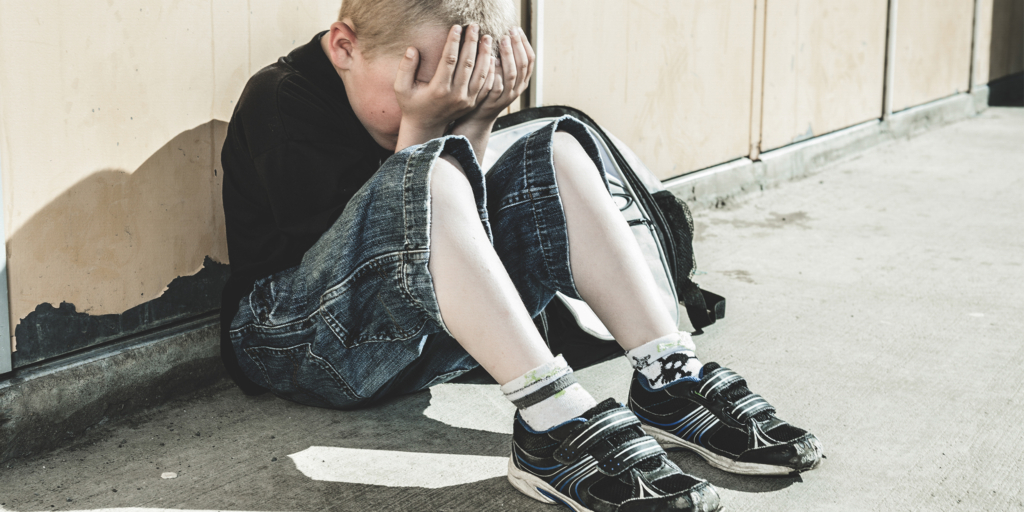

What to Do If Your Child Is Being Bullied at School
Bullying is a common issue many children face at school. Learn how to protect your child from bullying and foster a safe school environment in this comprehensive guide.
Children can sometimes be cruel, and even teachers may feel powerless against their behavior. School bullying, a relentless and senseless problem, has existed for decades and continues to affect many students. In this article, we explore the origins of bullying, identify who is most vulnerable, discuss effective interventions, and consider whether changing schools is the right solution if your child is targeted.
Some remember their school days fondly, while others recall them with dread—not because of poor conditions or boring lessons, but due to bullying.
Bullying is defined as aggressive behavior by one or more individuals towards another member of a group, especially among students, but it can also occur among colleagues. Unlike a conflict where parties have roughly equal power, bullying involves a victim who cannot adequately defend themselves against repeated attacks.
It's important to distinguish bullying from simply having few friends. A child might be introverted, reserved, or prefer solitude without being bullied. The key difference lies in persistent, intentional aggression directed at the child.
Recently, cyberbullying has emerged as a new form of emotional abuse conducted through the internet, particularly on social media platforms.
How Common Is Bullying?
Bullying is more prevalent than many realize. Approximately 30% of children aged 5 to 14 have experienced some form of violence, equating to around 6.5 million children globally (based on data from 2011). Of these cases, about 20% occur within the school environment, highlighting the magnitude of the issue.
Why Is School Bullying Dangerous?
Bullying can manifest as physical violence, resulting in injuries, or as psychological and emotional abuse, which is harder to detect but equally harmful.
It severely damages a child's self-esteem, leading to complex emotional issues and the belief that they deserve mistreatment.
Bullying disrupts learning because the child is focused on survival rather than studies. It can cause anxiety disorders, phobias, and depression.
Anyone who has experienced social rejection during school years often carries the scars into adulthood, potentially causing difficulties in communication and relationships later in life.
Who Is Most at Risk?
In reality, any child can become a target. Bullies look for any differences to exploit—whether physical disabilities, health issues, poor academic performance, wearing glasses, hair color, eye shape, lack of fashionable clothes or expensive gadgets, or coming from a single-parent family.
Introverted children with few friends, homebodies who struggle with social skills, and anyone whose behavior differs from that of the bullies are often targeted.
Trying to change these characteristics is usually ineffective, as bullies can find any excuse to harass.
Who Are the Bullies?
There are two main types of aggressors:
- Popular children—the 'kings and queens' of the school social scene who lead and control others.
- Socially marginalized students who attempt to assert dominance by forming their own groups.
Additionally, some bullying comes from adult school staff, typically teachers.
Why Do Bullies Bully?
Often, bullies act because they can. Many grown-up bullies admit they didn't realize their behavior was wrong or justify it by claiming their victims deserved it.
Experts suggest that bullying stems not from individual personalities but from how school classes are formed—grouping children solely by birth year creates unnatural social dynamics, forcing interactions without choice and leading to conflicts.
The school environment can resemble a prison, where people are confined together under strict supervision.
Bullying serves as a way to establish power within this forced community and unites aggressors into a cohesive group. Group dynamics dilute individual responsibility, giving children psychological permission to act aggressively.
One essential factor enabling bullying is the tolerance or silent approval of teachers and staff.
Are Teachers to Blame?
Not entirely. Teachers often do not see bullying because aggressors are skilled at hiding their actions and pretending to be well-behaved, while victims are less discreet and more likely to get caught when defending themselves.
As a result, teachers may notice rule-breaking without understanding the underlying cause.
Unfortunately, some adults believe children should resolve conflicts themselves or that victims are somehow responsible, and some educators lack the experience or willingness to intervene effectively.
How to Recognize If Your Child Is Being Bullied?
Children often remain silent about bullying, fearing adult intervention might worsen the situation or that they won't be understood. Watch for these signs:
- Unexplained bruises or scratches.
- Inconsistent or evasive explanations for injuries.
- Frequently lost or damaged belongings, such as electronics, jewelry, or clothing.
- Reluctance or refusal to attend school, feigning illness, or sudden headaches and stomachaches.
- Changes in eating habits, especially refusal to eat at school.
- Nightmares or insomnia.
- Declining academic performance and loss of interest in studies.
- Conflicts with friends, social isolation, low self-esteem, or persistent sadness.
- Running away from home, self-harm, or other destructive behaviors.
How Can Bullying Be Stopped?
There is no simple formula to end bullying. Addressing the problem solely between the victim and the bully is ineffective because bullying involves more participants.
The entire class and teachers are witnesses and participants in the unfolding situation, even if only as observers.
The most effective way to stop bullying is to foster a healthy, supportive school community.
Activities that promote teamwork, such as group projects and inclusive extracurricular programs, help build this environment.
It is crucial to openly identify bullying as violence and make it clear that aggressive behavior is noticed and must cease. This responsibility falls to the homeroom teacher, assistant principal, or school principal.
How Should Your Child Respond to Aggression?
Discuss all bullying incidents with your child to help them prepare appropriate responses. Bullying often follows predictable patterns, including name-calling, minor sabotage, threats, and physical violence.
Victims should respond in unexpected ways, such as calmly addressing insults without resorting to retaliation. For example, saying, "I am speaking politely to you," can defuse tension.
If belongings are damaged, your child should report it to a teacher loudly enough for bullies to hear: "Ms. Smith, there is gum stuck on my chair; someone damaged the school property." If physically attacked and unable to escape, shouting "Help! Fire!" can attract attention and deter aggressors.
Since bullying methods vary, responses should be personalized. If unsure, consult school psychologists for guidance.
What Can Be Done About the Bullies?
If physical violence occurs, seek medical attention, document injuries, report to the police, and pursue legal action for compensation. Parents and schools are responsible for addressing such offenses. Bullies typically face legal consequences after age 16 (or 14 for severe harm).
Emotional bullying is harder to prove and involve law enforcement. In such cases, immediately report the issue to the homeroom teacher, and if ignored, escalate to the assistant principal, principal, or local education authorities. The school must organize psychological interventions within affected classes to stop the abuse.
Will Intervening Make Things Worse?
No. Bullying is rarely an isolated incident; it often recurs. A child targeted by bullies cannot handle aggression alone.
The worst approach is assuming the child will manage the problem independently.
While some children cope, many suffer lasting damage, sometimes leading to tragic outcomes like suicide. Do you want to gamble with your child's well-being?
How to Support Your Child?
- If bullying is present, seek help from a psychologist, ideally involving the whole family. A child who feels like a victim at home is more vulnerable at school.
- Show unwavering support and commitment to helping your child overcome difficulties, no matter how challenging.
- Help eliminate fear by reassuring your child that their self-respect is more important than peers' or teachers' opinions.
- Encourage participation in hobbies, sports, or extracurricular activities to build confidence through achievements.
- Do everything possible to boost your child's self-esteem. Consult online resources, literature, and professionals to empower your child.
What Not to Say to a Bullied Child?
Parents sometimes unintentionally worsen the situation with harmful phrases:
"It's your fault," "You behave badly," "You provoke them," or "You deserve it." No child deserves bullying. Differences exist in everyone, but they do not justify abuse. Blaming the victim excuses bullies and aligns you against your child.
Some believe in a 'victim personality' that attracts bullying, but even if true, it is never acceptable to scapegoat a child.
"Ignore it." Bullying is a severe invasion of personal space and must not be ignored. Bullies might stop eventually, but not before damaging self-esteem and self-worth.
"Fight back." This advice risks your child's safety and can escalate conflicts. Ineffective resistance often intensifies bullying.
"What are you doing? He's suffering!" Trying to appeal to bullies' empathy usually backfires, reinforcing the victim's perceived weakness and the aggressors' dominance.
Should I Transfer My Child to Another School?
Many believe changing classes or schools is ineffective because bullying can recur. Instead, teaching your child new coping skills and resilience is recommended.
However, since bullying arises where children lack choice in their peer group, transferring to a different school—especially one offering specialized programs aligned with your child's interests—or a different teacher may improve the situation.
If the problem persists, and the school staff ignores bullying or your child fears attending school, changing schools is advisable.
Following the transfer, continue psychological support and help your child develop moral strength.
Is My Child Safe From Bullying?
Hopefully, your child will neither be a victim nor a bully. Nevertheless, keep in mind:
- Bullying is widespread and has always existed.
- It thrives in groups with diverse children lacking shared goals and interests. Anyone can become a victim because everyone differs in some way.
- Children often do not disclose bullying, making adult intervention essential. Address bullying at the class level with teachers and psychologists.
- The primary goal is to preserve your child's self-esteem to prevent severe psychological issues later.
- If school staff ignore bullying, consider finding a different school.
Share your experiences: How have you successfully stopped bullying in school? If you were once a bully, what motivated you?
Discover the latest news and current events in Inspiring Lifestyle as of 05-02-2022. The article titled " What to Do If Your Child Is Being Bullied at School " provides you with the most relevant and reliable information in the Inspiring Lifestyle field. Each news piece is thoroughly analyzed to deliver valuable insights to our readers.
The information in " What to Do If Your Child Is Being Bullied at School " helps you make better-informed decisions within the Inspiring Lifestyle category. Our news articles are continuously updated and adhere to journalistic standards.