

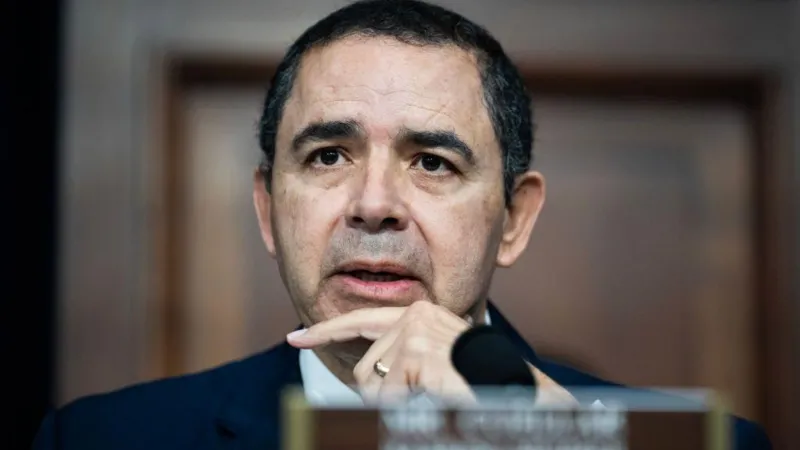

Trump slams Cuellar for not switching parties after pardon
Trump accuses Henry Cuellar of disloyalty after a presidential pardon, while Cuellar runs for re-election as a Democrat.
Former President Donald Trump has publicly criticised Texas Democrat Henry Cuellar for not switching parties after receiving a presidential pardon. He argues Cuellar showed disloyalty, while Cuellar presses on with a bid to re-enter Congress as a Democrat, defying GOP hopes. Trump also claimed the pardon was meant to shield Cuellar from political attacks linked to border policy.
What happened
Trump issued a pardon for Cuellar on Wednesday amid charges that the congressman and his wife accepted about £450,600 from Azerbaijan's state-owned oil company and a Mexican bank in exchange for advancing their interests in Congress. Cuellar and his wife maintain their innocence against 14 counts, including conspiracy, bribery, wire fraud and money laundering, filed in 2024 by the Justice Department under the Biden administration.
Political reaction
Cuellar then filed to run for re-election as a Democrat, dashing Republican hopes he might switch parties to bolster their narrow House majority.
In a social media post, Trump attacked Cuellar for loyalty, saying the congressman faced harsh treatment from what he described as radical left Democrats, who he claimed aimed to destroy him and his family because of his stance on border security.
Trump said he had never spoken with Cuellar or his family but felt compelled to stand up for them as they faced pressure. He added that Cuellar, despite the pardon, chose to stay in the Democratic party and work with groups he described as radical left.
Cuellar responded that he will remain a Democrat, stressing that his identity is American, Texan, and Democrat, in that order. He told Fox News that he is a conservative Democrat who will work with the president, and he said he prays for the president and the country.
Experts say this episode highlights how loyalty remains a central theme in American politics and party dynamics, especially when pardons intersect with policy disputes during an election cycle. Separately, federal unions have filed a lawsuit over a loyalty question in thousands of federal job applications, illustrating how allegiance rules can influence public service recruitment.
Trump has long argued that loyalty is his highest value, suggesting it should guide all political decisions, while opponents contend that loyalty can be used to pressure rivals.
Expert comment
Political analyst Jane Smith notes that pardons and party alignment debates show how loyalty shapes strategy in Congress and voter sentiment. She adds that moderate Democrats must balance loyalty with pragmatism in a volatile political climate.
Summary
The Cuellar pardon has become a focal point in debates over loyalty, party identity, and border policy. Cuellar remains a Democrat and plans to stand for re-election, while Trump casts the pardon as an act of political loyalty. The episode underscores how high-profile actions by a president can influence political fortunes and party planning.
Key insight: Loyalty remains a powerful driver in political life, shaping pardons, party choices, and public perception in major cases. BBC News