

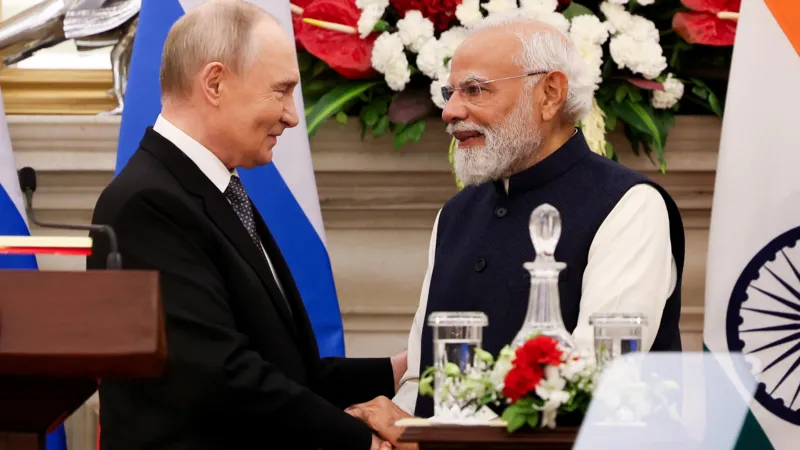

Putin in India: Moscow Pledges Uninterrupted Fuel Supplies
During Putin's India visit, Moscow pledges uninterrupted fuel shipments, expands visa schemes, and advances joint projects in civil nuclear energy, minerals, and broader trade.
Russian President Vladimir Putin arrived in India for talks with Prime Minister Narendra Modi, signaling a pragmatic approach to energy and commerce amid global pressure. He offered to keep India's energy supplies steady while pursuing a broader partnership in energy, minerals, and technology.
Energy, trade and diplomacy
During the talks, Moscow pledged to provide uninterrupted fuel shipments to India, framing the arrangement as a practical partnership rather than a political move. Modi emphasized India's commitment to peace in Ukraine and highlighted the importance of reliable energy and stronger regional connectivity.
India remains a major buyer of Russian crude since early 2022, while several Indian companies have started trimming volumes to align with Western sanctions.
Visas, consulates and economic cooperation
The leaders signed memorandums covering trade, agriculture, and joint ventures in shipbuilding, civil nuclear energy, and critical minerals. Modi announced two new 30-day visa schemes for Russian tourists and said two new Indian consulates opened in Russia. Russia Today, a Kremlin-backed channel, will be launched in India.
No large defense deals were announced, but the agreements pave the way for a long term economic program through 2030, including jobs, shipping, and the health sector.
Putin said he expects bilateral trade to rise from about USD 60 billion to as much as USD 100 billion in the coming years. Modi highlighted energy security as a central pillar of the partnership, while avoiding specific oil figures. India, the world’s third largest consumer of crude oil, has continued buying from Russia since the 2022 invasion, though some Indian firms have started cutting purchases to comply with sanctions.
Nuclear energy and BRICS cooperation
Putin referenced a flagship project to help build India's largest nuclear power plant, with Moscow providing support. In a joint statement, the leaders said they are reorienting the partnership toward joint research and development and the production of advanced defence platforms. They also noted cooperation through BRICS, a group of five major developing economies that promotes a multipolar world order.
Expert comment: Energy analysts say the pledge of steady fuel supplies underlines a practical, long term relationship, even as India weighs Western pressure. The outcome could shape energy and defense collaboration in the years ahead.
Short summary
The Delhi visit centered on energy security, trade expansion, and strategic infrastructure partnerships. Putin offered steady fuel supplies and signaled a broader economic agenda, including a goal to raise two-way trade toward USD 100 billion. Modi reiterated India's commitment to peace and highlighted energy connectivity as a cornerstone, with measures covering visas, consulates, and joint research through 2030. The talks also reinforced BRICS cooperation as a path to a multipolar global order.
Key insight: The India-Russia relationship is being recalibrated toward sustained energy security, joint R&D, and advanced defence collaboration, with a target to lift trade to about USD 100 billion. Source: BBC