


Drones Detect Deadly Whale Virus in Arctic Breath Study
Drones collect whale breath and skin samples to reveal cetacean morbillivirus in Arctic waters, illustrating a non-invasive approach to monitoring whale health.
New drone-based sampling is transforming how scientists monitor wild whale health in the Arctic. By collecting exhaled breath and skin samples, researchers can detect dangerous pathogens without disturbing the animals. This approach offers non-invasive, timely insights into how climate change is affecting marine life.
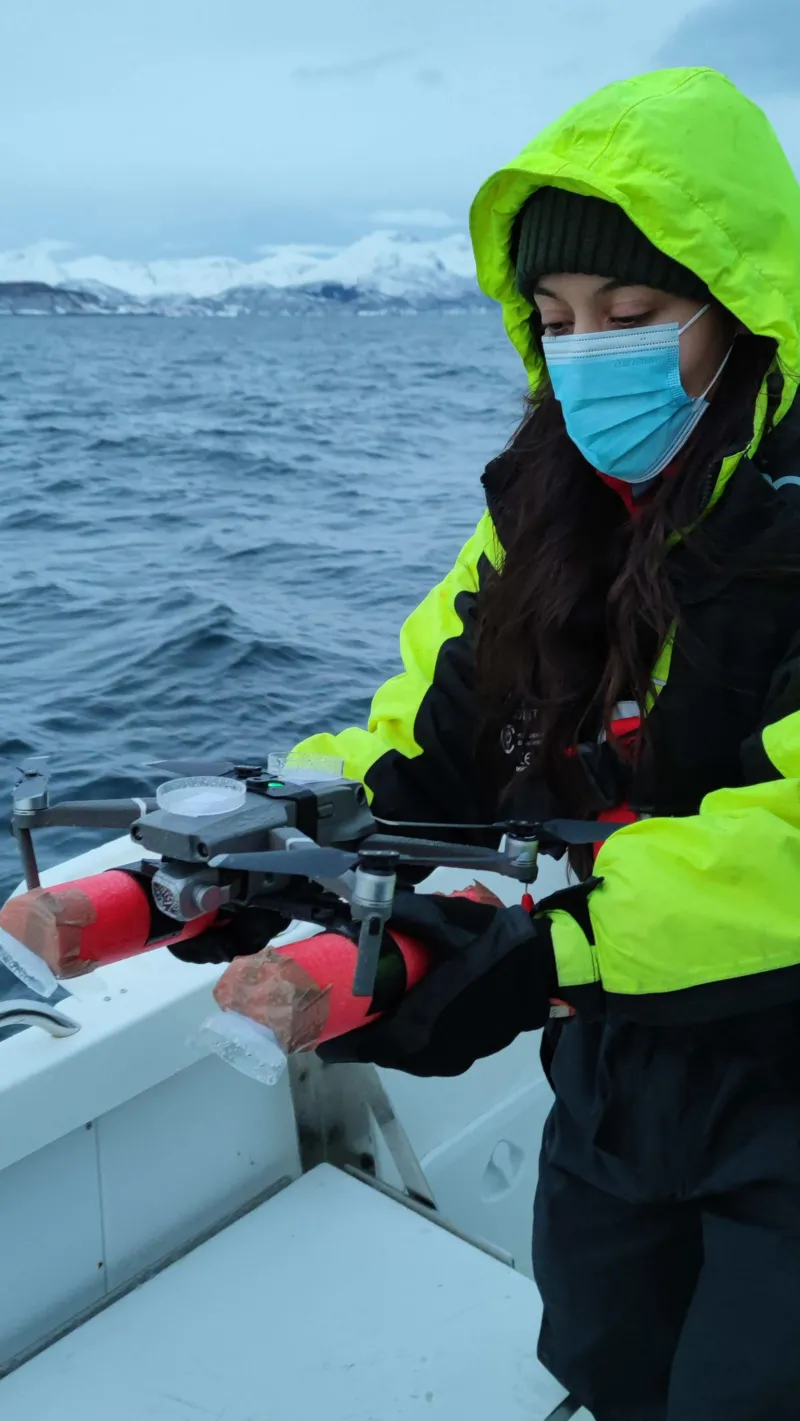
In the field, drones carried sterile petri dishes to capture droplets from the exhaled breath of humpback, fin, and sperm whales, alongside skin biopsies taken from boats. This combination boosts the chances of detecting infectious agents in remote waters.
The team confirmed that cetacean morbillivirus, a highly contagious virus linked to mass die-offs of dolphins and whales, is circulating above the Arctic Circle. The virus can jump between species and travel across oceans, posing a major threat to marine mammals.
Experts call the method a game-changer for whale health monitoring. Prof Terry Dawson of King’s College London noted that drone-based sampling lets researchers study pathogens in living whales without stress or harm, providing critical insights as Arctic ecosystems change rapidly.
Helena Costa of Nord University in Norway emphasized the importance of continuing long-term surveillance to understand how multiple emerging stressors will shape whale health in the years ahead.
The study is a collaboration among King’s College London, the Royal (Dick) School of Veterinary Studies in the United Kingdom, and Nord University in Norway, and is published in BMC Veterinary Research.
The drone-based sampling is a game-changer for non-invasive whale health monitoring. It allows researchers to study diseases in live animals without stressing them, a crucial advantage in the Arctic's fragile ecosystems.
In summary, drone-based sampling offers a non-invasive way to monitor whale health and detect dangerous viruses in Arctic waters. The method could transform long-term surveillance and help conservationists respond to emerging threats. Ongoing collaboration among leading universities aims to expand this approach to more species and regions.
Key takeaway: Drones enable non-invasive, early detection of deadly viruses in wild whales, helping scientists track Arctic health. Source: BBC News.
Discover the latest news and current events in World News as of 19-12-2025. The article titled " Drones Detect Deadly Whale Virus in Arctic Breath Study " provides you with the most relevant and reliable information in the World News field. Each news piece is thoroughly analyzed to deliver valuable insights to our readers.
The information in " Drones Detect Deadly Whale Virus in Arctic Breath Study " helps you make better-informed decisions within the World News category. Our news articles are continuously updated and adhere to journalistic standards.