


Discover the Future of Robotics, Drones, and Smart Vehicles at CES
Explore the groundbreaking innovations in robotics, artificial intelligence, autonomous drones, and next-gen vehicles unveiled at CES, shaping the future of technology and transportation.
Curious about what the future holds? Dive into an insightful overview of the most transformative technologies and breakthroughs showcased at the global tech event in Las Vegas — CES.
CES revealed that the most significant advancements in consumer electronics are happening in robotics, AI systems, and autonomous vehicle design. These sectors are set to drive the next wave of technological evolution.
Robots and Educational Innovations
The event highlighted a growing focus among major corporations on addressing workforce challenges. With technological progress slowing, accumulating deeper knowledge is essential, underscoring the need to nurture new generations of engineers. Consequently, a large portion of the exhibition was dedicated to educational initiatives centered on programming and robotics fundamentals.

LEGO stood out by introducing its WeDo 2.0 educational kit designed for elementary students. This set combines a microcontroller with 280 components from the beloved construction brand, aiding learners in mastering microcontroller programming, mechanics, and robotics principles. Accompanied by a mobile app, it offers an enriched learning experience unmatched by other educational kits.

Cerevo showcased Tipron, a robot integrated with speakers and a projector that streams video content anywhere in the home via a mobile app. Equipped with sensors and a camera, Tipron navigates obstacles to find the ideal projection spot, delivering an 80-inch image from three meters away. However, its battery supports only two hours of autonomous use.
Interestingly, the exhibition demonstrated that novelty robots—those that talk or sing—are no longer the main attraction. The focus has shifted toward robots delivering practical benefits, though such models remain scarce. Artificial intelligence has also become commonplace, appearing even in indie music videos and complex data processing.
Drones: From Entertainment to Personal Transport
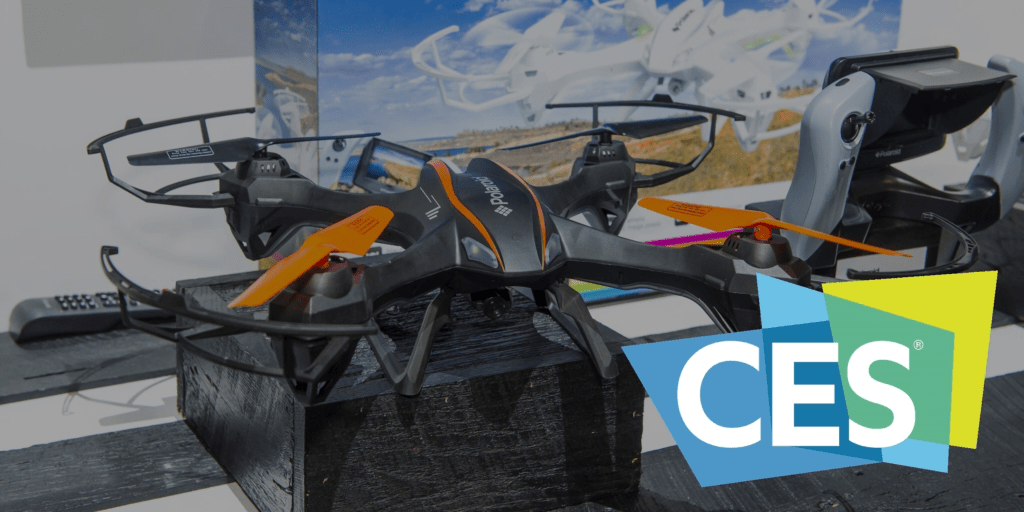
Drones stole the spotlight with a wide range of models—small and large, for fun and personal transportation.

The standout was the Ehang 184, an octocopter with eight rotors designed as a personal aerial vehicle. Featuring a full-size passenger cabin, it operates fully autonomously: passengers simply select their destination on a tablet and enjoy the ride. Its battery offers a 20-minute flight or up to 35 kilometers at altitudes reaching 3.5 kilometers.
UAV developers introduced Fleye, touted as the safest drone available. Its propellers are entirely enclosed within a plastic frame, enhancing safety but limiting flight performance to 10 minutes of video capture with an HD camera. The drone includes radar and sensors enabling fully automated flight, programmable via computer or smartphone.

French company Parrot unveiled Disco, a fixed-wing drone with remarkable endurance, capable of flying continuously for 30 minutes—a rare feat among commercial drones.
Lily drone offers hands-free filming with follow mode, water resistance, compact size, and speeds up to 40 km/h at altitudes of 15 meters for 20 minutes. Launching is as simple as tossing it into the air, making it an excellent alternative to traditional action cameras.
Similarly, the Hexo+ drone autonomously takes off, lands, and follows pre-set flight paths, allowing users to focus on controlling the onboard camera.
The highlight in consumer drones was Qualcomm, Tencent, and Zero Tech's collaborative creation—the YING drone powered by Qualcomm's Snapdragon Flight platform. While the drone itself records stabilized 1080p video, streams to popular platforms, and is smartphone-controlled, the real breakthrough lies in the Snapdragon Flight processor. Built on Snapdragon 801, this platform targets consumer drones and robotics, promising an influx of compatible devices from various manufacturers soon.
The Future of Automobiles
Models like Chevrolet Bolt, Faraday Future FFZERO1, BMW i Vision Future Interaction, and Volkswagen BUDD-e took center stage.
Despite dedicated auto shows, CES attracted numerous automakers showcasing truly unique innovations.

The most striking was Faraday Future's hypercar FFZERO1, boasting an electric motor with approximately 1,000 horsepower. Beyond its striking design, its scalable electric systems can be adapted across various projects. Notably, the company plans to offer these vehicles via subscription rather than traditional sales—a bold vision of future mobility.
General Motors introduced the Chevrolet Bolt EV crossover, capable of traveling 200 miles on a single charge. While this range is modest compared to some competitors, the Bolt is poised for imminent commercial release.

Electric vehicles represent the future, but CES also spotlighted autonomous cars of various designs. Rinspeed's Etos concept car overcomes current legal hurdles faced by self-driving cars by featuring a steering wheel. Its autopilot can retract the wheel to take full control, allowing seamless switching between manual and autonomous driving.
Major electronics manufacturers also made significant announcements. Qualcomm, after acquiring Cambridge Silicon Radio, expanded its portfolio in Bluetooth, Wi-Fi, GNSS, and audio systems, hinting at the imminent arrival of Chinese autonomous vehicles.

NVIDIA unveiled the Drive PX 2 onboard supercomputer designed for autonomous driving. Powered by dual Tegra processors and Pascal-based GPUs, it achieves 24 trillion deep learning operations per second—equivalent to 150 MacBook Pro laptops. Equipped with computer vision algorithms, it can detect road objects and learn driving patterns. Twelve surround-view cameras, lidar, radar, and ultrasonic sensors provide precise environmental awareness. Volvo has already announced plans to integrate Drive PX 2 into their vehicles.
Audio giant Harman introduced a cloud-based platform that integrates navigation with real-time traffic data. This customizable system analyzes inputs from GPS, gyroscopes, accelerometers, lidar, cameras, and more, sending data to cloud servers where deep learning algorithms assess and relay relevant information back to vehicles. This enables timely alerts about obstacles, accidents, speed limits, traffic signals, hazardous conditions, and erratic driver behavior, enhancing driver assistance systems (ADASIS).
Kia launched its Drive Wise sub-brand for vehicles equipped with autopilot features. While full self-driving cars are not expected until at least 2030, Kia plans to introduce automation technologies in four models starting summer, beginning with the Soul EV.
Against this backdrop, announcements about new fitness trackers, smartphones, and wireless technologies seemed less impactful. Yet, the true highlight of CES was the leap forward in robotics—far beyond gimmicks like self-lacing shoes, these innovations promise to redefine our interaction with technology.
Discover the latest news and current events in Technologies as of 30-05-2022. The article titled " Discover the Future of Robotics, Drones, and Smart Vehicles at CES " provides you with the most relevant and reliable information in the Technologies field. Each news piece is thoroughly analyzed to deliver valuable insights to our readers.
The information in " Discover the Future of Robotics, Drones, and Smart Vehicles at CES " helps you make better-informed decisions within the Technologies category. Our news articles are continuously updated and adhere to journalistic standards.