

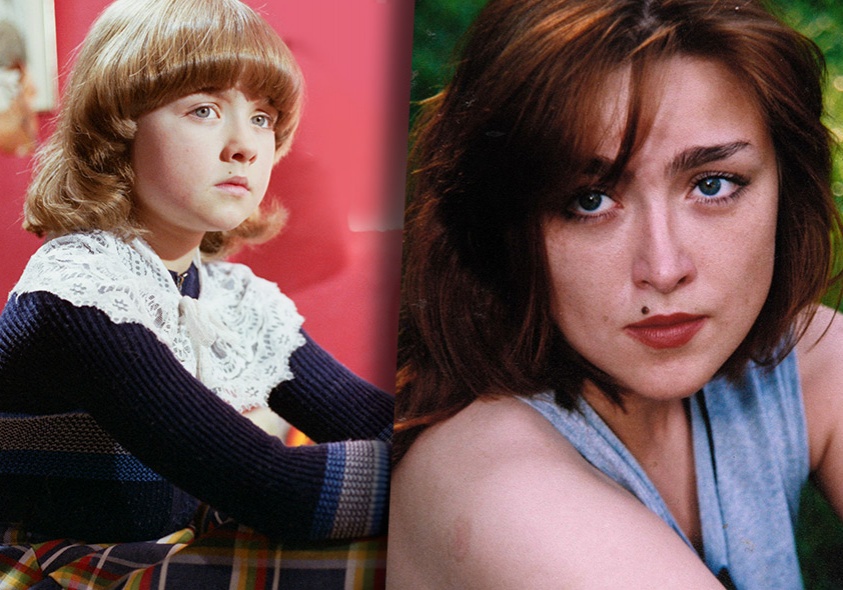

“All My Poems Will Turn to Misfortune”: The Tragic Story of Nika Turbina, the Child Prodigy Who Rose to Fame at 9 and Died at 27
Discover the heartbreaking journey of Nika Turbina, once hailed as the Soviet Union's most gifted child poet and dubbed the 'second Akhmatova,' whose meteoric rise to fame was tragically cut short.
Nika Turbina was celebrated as the most talented girl in the Soviet Union and was predicted to become the 'second Akhmatova.' However, her rapid ascent to stardom was matched by an equally swift downfall.
No matter how gifted a child is, they remain a child first—fragile, vulnerable, and in need of gentle care. This truth is often forgotten by the parents of prodigies. Such was the case with Nika Turbina, who captured the world’s attention at just 9 years old.
Pause for a moment, look—
We forgot to pick up from the ground
Dreams of scarlet sails,
Of fairy tales waiting in the dark…
I’ll run down the steps like days,
Back to the lost years,
I’ll cradle childhood in my arms,
And reclaim my life.
Many have studied the phenomenon of her poetic genius, yet no one could fully explain how such a young girl composed deeply mature poems. Rumors circulated that her mother and grandmother wrote the poems for her and even fabricated a legend that her father was Andrei Voznesensky, with whom her mother, Maya Turbina, had a brief romance. These remain mere speculations. The undeniable truth is that Nika’s life soared briefly before ending in tragedy.
The Child Prodigy
Nika Turbina was born on December 17, 1974, in Yalta. Her mother, Maya, was an artist; her grandmother, Lyudmila Vladimirovna, represented a fragment of the intelligentsia; and her grandfather, Anatoly Ignatievich, was a writer. From childhood, Nika suffered from asthma and had restless nights. During those hours, she would often stand by the window or talk to her reflection in the mirror. It was then that she first heard 'the Sound'—the voice she described as originating in her head, creating lines and rhymes. At four years old, unable to write herself, she would urgently wake her grandmother or grandfather to transcribe her dictated verses.
I listen to the rain
On my fingers.
Drops gather
In my palm
And, falling silent, become
A giant tear.
How painfully you weep, sky!
At Anatoly Ignatievich’s Crimean home, literary figures often gathered. One evening, they were presented with Nika’s poems, already filling three thick notebooks. The young poet’s talent was recognized early: by age 7, her poems were published in a newspaper, and at 9, her first collection, "Draft," was released.
My life is a draft.
All my successes and failures
Remain on it,
Like a torn
Scream shot by a gun.
“Uncle Zhenya”
Nika’s fame exploded before she turned 10—on March 6, 1983, she woke up famous. She was invited to Moscow, where she met the renowned poet Yevgeny Yevtushenko. Their fateful meeting took place at the House of Writers, where they performed together for the first time. This marked the beginning of the Yevtushenko-Turbina duo, frequently featured on Soviet television.
“A greatest miracle!” the celebrated poet introduced Nika from the stage, prompting thunderous applause.
The delicate teenager, sporting a hairstyle reminiscent of Mireille Mathieu, large eyes, and a charming beauty mark above her lip, gained recognition not only in her homeland but also internationally—receiving applause in Italy and the United States. With such a demanding schedule, her schooling was neglected, and the fifth grader permanently left her Yalta school, once attended by the poet Marina Tsvetaeva.
In 1986, during a visit to America, Nika and her grandmother were detained at the airport for two hours and offered to stay in the country. Had they accepted, her life might have taken a very different path. That same year, at 12, Nika received the prestigious Venice "Golden Lion" award, previously awarded only to one Soviet poet—Anna Akhmatova.

Shortly after this triumph, Yevtushenko suddenly stopped communicating with her. The reasons remain unknown, but according to the poet’s close friend Albert Burykin, it was because Nika had matured: “The change was terrible, and I understand it. It wasn’t just a protest from her side but a massive rebellion of a 13-year-old adolescent.”
The Trial of Loneliness
It is believed that Yevtushenko realized the grave mistake he made. Psychologists warned him that such rapid and loud success could ruin the life of not just a child but even an experienced adult, advising him to limit her public appearances and spare her from exhausting interviews. Yet, the poet shrugged off these warnings.
Nika’s family also showed little concern for her mental health, even as she increasingly needed their support. Her mentor and protector abandoned her, journalists lost interest (the child prodigy had grown and was no longer as fascinating), and the public’s attention shifted amid the country’s perestroika, focusing more on rising food prices than poetry.
Significant changes also occurred in the Turbina family. Maya Anatolyevna met a new man, remarried, and had a second daughter.
Just, listen,
Don’t leave me alone.
All my poems
Will turn to misfortune.
Nika’s pleas went unheard. Her mother and grandmother focused their attention on the younger Masha, prompting 13-year-old Nika to leave home. After her dazzling success, she found herself alone for the first time.
Marriage, Alcoholism, and Rehabilitation
What Nika did in the following years remains largely unknown, but in 1990 she resurfaced by getting married. Her husband was Giovanni Mastropaolo, a psychologist who owned a clinic in Switzerland. She was 16; he was 76. The marriage failed quickly, and after a year and a half, the divorced Turbina returned to Russia. She described the experience evasively as “beautiful and tragic, like a trampled rose.” In Lausanne, she began drinking, indulging as fiercely as she once wrote poetry.
Faces fade from memory,
Like last year’s leaves.
Autumn left only
The bitter taste of morning.
Faces disappear, but sometimes
A chill touches the heart.
Yellow leaves recalled.
It’s like meeting pain,
Like meeting the past,
With someone’s broken portrait.
Bitter from the present,
Terrified to live forgotten.
In 1994, Turbina was admitted without exams to the Moscow Institute of Culture because she barely knew how to write. She wrote in a peculiar shorthand, often skipping vowels, a method that once helped her capture her turbulent thoughts.

Her life spiraled downward. Why did her parents not help? Where were her friends? Did she even have any? Or was she surrounded only by drinking companions?
One must start living!
But why, then?
On the night of May 14–15, 1997, during a drunken argument, Nika rushed to an open window and fell from the fifth floor. She suffered a broken spine, both forearms, shattered pelvic bones, and numerous cuts that left permanent scars. Doctors performed 12 surgeries to save her. The funds for her treatment were raised by Alena Galich, a friend she made at the institute. Alena also arranged for Nika to be admitted to a specialized clinic near Moscow that treats artists for alcoholism. However, just as the paperwork was signed, Nika’s mother unexpectedly appeared and forcibly took her to a regular psychiatric hospital in Crimea. She emerged thin, exhausted, and with a completely extinguished gaze.
“Rain, Night, Broken Window”
After these events, Alexander Mironov entered Nika’s life—an actor from a Moscow theater and a heavy drinker. On May 11, 2002, they went to a friend’s place to spend the evening drinking. When the alcohol ran out, Alexander and his friend Inna went to the store, leaving Nika sitting on the windowsill.
It would be wrong to assume she intended to commit suicide then. Sitting on the window with her legs dangling was a childhood habit. But at 27, exhausted, mentally unstable, and uncoordinated, she lost her grip. She tried to hold onto the frame but couldn’t hang on and fell. The impact was so severe that, according to a neighbor, the jeans she wore split along the seams.
Rain. Night. Broken window.
And shards of glass frozen in the air,
Like leaves not caught by the wind.
Suddenly a sound.
Just like that
A human life breaks off.
These lines were written by Nika when she was just seven. It’s no wonder rumors circulated that she possessed a gift of foresight. Her grandmother confirmed this: “Nika sensed her death. Once she said, ‘Boo, I will die at 27. Though before that, I will die dozens of times.’”
How easy it is to lose what you have! Just a few years earlier, the entire country showered Nika Turbina with flowers and applause. On the day of her funeral, only Alena Galich came to say goodbye in complete silence.
Oh, how rarely
We say to each other
Reliable and necessary words!
That’s why it’s so hard
To find a friend,
That’s why alone…
I so want
To give flowers—
I consider it a little thing.
How I want
To burn bridges
And forget
What must be done.
Photo: Konstantin Dudchenko/TASS
Discover the latest news and current events in Real Life as of 19-07-2024. The article titled " “All My Poems Will Turn to Misfortune”: The Tragic Story of Nika Turbina, the Child Prodigy Who Rose to Fame at 9 and Died at 27 " provides you with the most relevant and reliable information in the Real Life field. Each news piece is thoroughly analyzed to deliver valuable insights to our readers.
The information in " “All My Poems Will Turn to Misfortune”: The Tragic Story of Nika Turbina, the Child Prodigy Who Rose to Fame at 9 and Died at 27 " helps you make better-informed decisions within the Real Life category. Our news articles are continuously updated and adhere to journalistic standards.