

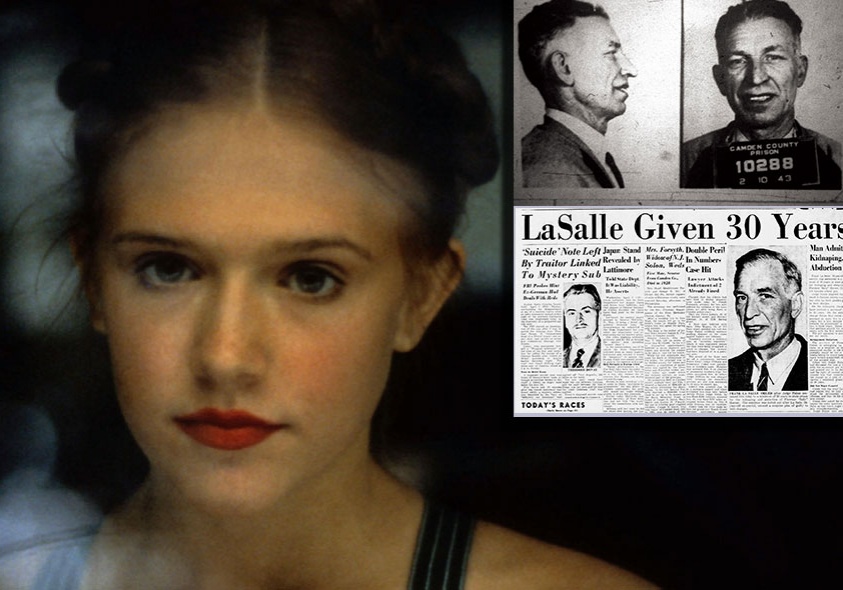

The True Story Behind Lolita: How a Real Crime Preceded the Controversial Novel
Discover the chilling true story of Sally Horner, whose harrowing experience inspired Vladimir Nabokov's infamous novel 'Lolita'. This article explores the real-life events that unfolded years before the book's publication, revealing the dark realities behind the literary masterpiece.
Vladimir Nabokov's novel 'Lolita' continues to shock readers with its provocative and seemingly unbelievable plot. Yet, even the boldest literary fiction often pales in comparison to the harsh truths of real life. This is exemplified by the story of Sally Horner, whose ordeal preceded Nabokov's novel and undoubtedly influenced it in many ways.
Even if you haven't read Nabokov's 'Lolita', you are likely familiar with its theme. Few works in world literature have dared to tackle the taboo subject of an adult man's attraction to a barely adolescent girl. Unsurprisingly, the novel caused a sensation and remained a topic of discussion for years. Its echoes persist today, with the term "nymphet" becoming part of modern vocabulary, and the name Lolita itself turning into a cultural symbol.
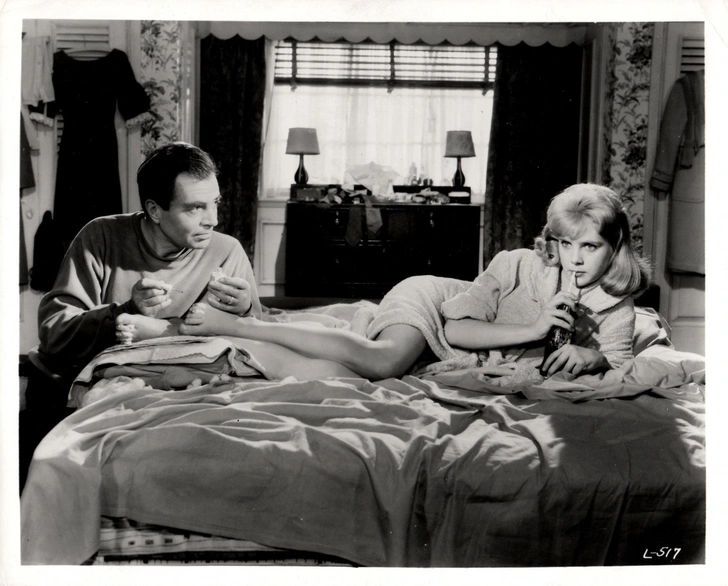
Nabokov was truly obsessed with this narrative. He explored it across several works before finally dedicating nearly two decades to crafting the novel. Throughout this time, he developed complex characters and plotlines, enduring frustration, disappointment, and even burning manuscripts before returning to the story of unhealthy passion.

Literary scholars continue to debate what exactly inspired Nabokov. Several theories and works are suggested as influences. However, Nabokov himself hints at the truth within the text of 'Lolita':
"Did I do to Dolly what Frank LaSalle, a 50-year-old mechanic, did to 11-year-old Sally Horner in 1948?"
Though written in America, 'Lolita' was first published in France in 1955 and only reached the United States in 1958, where it had already gained notoriety. Given Nabokov's decades-long engagement with the theme, he was fully aware of the crime that had shaken America and received widespread media coverage.
Sadly, rescue did not bring happiness to young Sally, whose brief life bore many parallels to that of Dolores Haze, Nabokov's fictional Lolita.
A Five-Cent Theft
The story begins in the spring of 1948 in the small town of Camden, New Jersey. Eleven-year-old Sally Horner, eager to impress a group of popular girls at school, agreed to play "Truth or Dare." When dared to steal something from a local store, she chose a notebook priced at just five cents.
What followed might never have happened if not for a pair of watchful eyes observing her every move in the store.
As Sally slipped the notebook into her backpack and ran outside, a heavy male hand landed on her shoulder.
"I'm an FBI agent. You're under arrest, young lady," began Sally's terrifying introduction to Frank LaSalle, the man with whom she would spend nearly two years. Tall and gaunt, he looked at her sternly, leaving no doubt that punishment awaited.
Born Florence but known as Sally since childhood, she lived in a struggling single-parent household. Her father had passed away, and her mother Ella, a seamstress, worked tirelessly to support her and her older sister Susan, who was expecting a child and preparing for marriage.
Sally dreaded juvenile detention, but the so-called agent intended to send her there. However, he offered a "deal" to soften her punishment—on the condition that she keep their arrangement secret and be ready to serve the government at any time.
Of course, LaSalle never mentioned that he was no FBI agent. At 52, the former mechanic had been free for only six months after serving time for sexual offenses against minors, involving five girls aged 12 to 14.
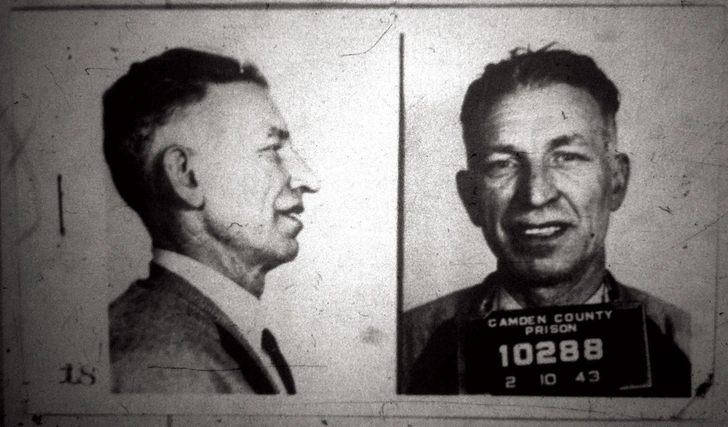
After escorting Sally home, LaSalle stalked her for weeks, gathering information. Within a month, he intercepted her on her way from school and insisted she accompany him to Atlantic City to resolve the theft case. He instructed her to tell her mother that a classmate had invited her to spend time at her family's oceanfront apartment. To reinforce this story, LaSalle called Ella Horner that evening.
The courteous gentleman repeatedly emphasized that his family's spacious accommodations would be delighted to host Sally.
Today, Ella's willingness to let her daughter go with strangers seems horrifying. She later admitted that her primary motivation was financial hardship and a desire to give Sally a treat.
No one accompanied Sally to the bus station; she insisted she could manage alone, and her mother urged her to write and call often.
They would not meet again for nearly two years.
Running From Reality
On June 14, 1948, LaSalle and Sally arrived at the coast and checked into a hotel near the beach, posing as father and daughter. Sally kept her promise, writing letters and making calls to her mother. Six weeks passed, and in her final letter, she said they were moving to Baltimore—a destination not previously mentioned. Ella grew suspicious, especially as the letter ominously ended with:
"I don't want to write anymore."
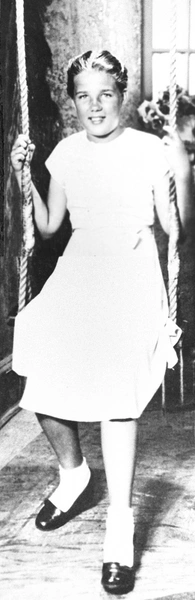
Alarmed, Ella contacted the police. Officers traced the return address on the envelope and found a room where a girl matching Sally's description had stayed. But she had already left with her "father." The room was hastily abandoned, with belongings scattered: two suitcases on the floor, a man's hat on the bed, and a vacation photo of Sally sitting on a swing, dressed in a pristine white dress and black patent leather shoes, her hair neatly pulled back, wearing a shy smile.
The police quickly identified the man accompanying Sally. Capturing him seemed straightforward.
The Elusive Fugitive
Sally's letter was truthful—they had indeed moved to Baltimore. Their stay at the Atlantic coast resort was a brief respite. LaSalle rented a room, found work, and enrolled Sally in a Catholic girls' school under the alias Madeleine Laplant.
By then, LaSalle was wanted by the authorities, and Sally's photo was circulated nationwide with pleas for anyone who recognized her to contact the police immediately.
In Baltimore, LaSalle began sexually abusing Sally. To neighbors, he portrayed himself as a widowed father rescuing his innocent daughter from a depraved mother—a cynical fabrication.
Meanwhile, in spring 1949, LaSalle was sentenced in absentia to 30 to 35 years for abducting a minor. Learning this from newspapers, he fled once more. Remarkably, Sally continued to believe he was an undercover agent and that their moves were part of his assignments.
Rising Tensions
From Baltimore, they traveled south and by late April 1949 settled in a trailer park in Dallas, Texas. Sally had turned 12. LaSalle enrolled her in another Catholic school under the name Florence Planett and presented himself as a widower. Neighbors pitied them, noting Sally's care for her "father," as she prepared meals and baked pies.
Their relationship charmed everyone—except one neighbor who would become pivotal.
Ruth Janich, a neighbor, sensed something was wrong. She was disturbed by LaSalle's obsessive surveillance of Sally, never leaving her unattended, swiftly removing her from conversations. Ruth once tried to speak with Sally, who, clearly frightened, denied everything.
Soon, the Janich family moved to California but maintained contact with LaSalle and "Florence Planett."
A Friend's Intervention
In early 1950, Ruth wrote to LaSalle about job opportunities in California. LaSalle was already planning another move to evade capture.
During this time, Sally confided in a Catholic school friend about her ordeal. Horrified, the friend urged her to seek help. For the first time in nearly two years, Sally defied LaSalle. He dismissed it, preoccupied with the impending move.
The endgame was near.
In late March 1950, nearly two years after her abduction, LaSalle and Sally reached a motel in San Jose, California, where the Janich family awaited them. Over 21 months, LaSalle had crossed the country multiple times, changing identities to avoid detection, determined to keep his captive.
Leaving Sally in Ruth's care, LaSalle went job hunting. Ruth pressed Sally to speak out, and Sally revealed only her kidnapping and longing for her mother, omitting the abuse.
The Final Chapter
Despite limited funds, Ruth arranged a long-distance call to help the 13-year-old. Time was critical; LaSalle could return anytime. Unable to reach her mother, Sally called her older sister, whose husband, El, answered.
When police arrived at the trailer park, Sally was tearful, fearing LaSalle's wrath for breaking their pact.
She found solace only under the protection of real FBI agent Mitchell Cohen, who led the investigation.
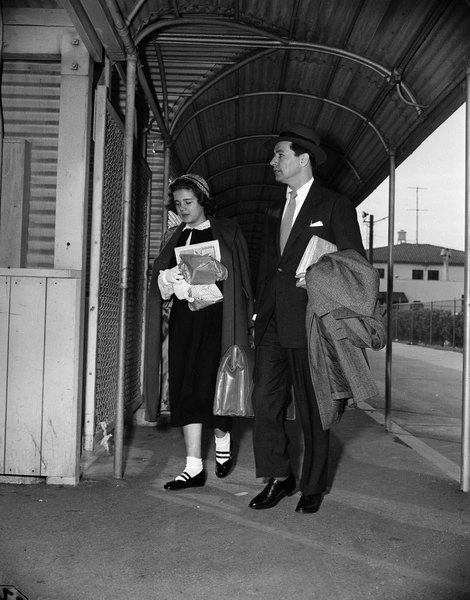
Escorted to a juvenile shelter, authorities awaited LaSalle's arrest. He surrendered without resistance, initially denying sexual charges but soon confessing. He was extradited to New Jersey for trial and sentenced to 35 years.
Returning Home
When Sally flew home from San Jose accompanied by Detective Cohen, reporters awaited her arrival. On the East Coast, journalists captured her reunion with her mother in New Jersey. The young girl appeared frightened and subdued.

Case files reveal Sally's fear of family judgment. She genuinely believed her relatives might reject her as "tainted."
"Whatever she did, I will forgive her," Ella Horner declared—a statement that quickly spread through the media.
Tragically, alongside sympathy, Sally faced significant stigma. At the time, many blamed victims of sexual assault, and the 13-year-old endured disapproving glances from classmates and neighbors, while relentless reporters offered no respite.
In Nabokov's novel, Dolores, the real Lolita, dies at 17 from complications of childbirth.
Sally Horner's life ended two years earlier, at age 15, in a car accident.
By then, she had abandoned concern for her reputation, spending time with boys rather than nonexistent friends. Using a forged ID claiming she was 17, she often traveled to nearby towns hoping to avoid recognition. On one such trip, she met 20-year-old Ed Baker. During a nighttime drive, their car crashed into a parked truck. Ed survived, but Sally died instantly from a traumatic brain injury.
"He broke my heart; you just broke my life," the grown-up Lolita tells Humbert in Nabokov's novel, contrasting him with the rival who stole her away.
Several biographies detail Sally Horner's shattered life, especially poignant today when abusers face justice and victims receive societal and psychological support. Sally endured post-traumatic stress alone, striving to escape her pain.
Photos: Getty Images, Legion-Media.ru, AP/EAST-NEWS
Discover engaging topics and analytical content in Real Life as of 01-04-2024. The article titled " The True Story Behind Lolita: How a Real Crime Preceded the Controversial Novel " provides new insights and practical guidance in the Real Life field. Each topic is meticulously analyzed to deliver actionable information to readers.
The topic " The True Story Behind Lolita: How a Real Crime Preceded the Controversial Novel " helps you make smarter decisions within the Real Life category. All topics on our website are unique and offer valuable content for our audience.