



How Ultrasound Facial Cleansing Works and Can You Do It at Home
Learn how ultrasound facial cleansing works, its benefits and risks, and what to consider before trying a home device or seeking professional treatment.
Ultrasound facial cleansing is a cosmetic treatment that uses gentle vibrations to refresh the skin, unclog pores, and improve overall tone. It offers a non-invasive alternative to manual squeezing and is commonly performed in clinics by licensed professionals. This guide explains how the procedure works, whether you can do it at home, and what to watch out for.
What is ultrasound facial cleansing and when it helps
Ultrasound facial cleansing is a mild method to refresh the skin, clear pores, and even out complexion without pain or irritation. Since it targets the surface rather than squeezing, the skin is less likely to be damaged during the procedure.
It is often recommended for oily or combination skin, enlarged pores, blackheads, a dull look, or light flaking. Some online guides claim it can also serve as preventive care in urban environments with dust and pollution, but real benefits come from a consistent skincare routine and proper use.
How the procedure works
During a session, a device with a metal spatula emits high-frequency ultrasound waves across the skin. These vibrations loosen dead skin cells, excess oil, and dirt, which are then removed with gentle contact rather than heavy pressure on the skin.
Unlike micro-focused ultrasound, which penetrates deeper for lifting (up to about 5 mm), standard ultrasound cleansing mainly affects the upper skin layers. Nevertheless, surface-level ultrasound can boost microcirculation, stimulate metabolism, and activate skin cells, helping the complexion look brighter.
Clinicians typically prepare the skin with cleansing gels or mild exfoliants and finish with serums that hydrate, soothe, or regulate oil. The ultrasound can help active ingredients penetrate more effectively.
Can you do this at home
Online marketplaces offer consumer devices and models that resemble professional units. Real professional equipment is usually not sold to individuals and is purchased by clinics directly from manufacturers or through authorized distributors.
Professional devices deliver higher power, built-in cooling, precise parameter control, and medical-grade certifications. Home devices tend to have lower power, run on batteries, lack cooling, and come with preset programs that cannot be adjusted as finely.
In a clinic, a cosmetologist or dermatologist tailors the intensity to your skin and may combine treatments with other products. Home devices cannot match this level of customization, so results are typically subtler. A professional assessment remains valuable for safety and optimal outcomes.
Overall, a home ultrasonic device is best used to maintain effects between professional sessions rather than replace them entirely.
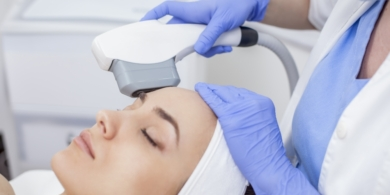
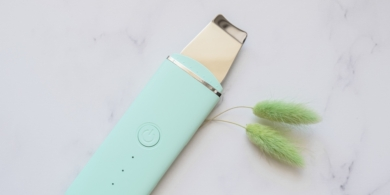
Domestic devices claim to offer deep cleansing and glow, but the key difference is in power and control. Clinics use devices with higher frequency and power, plus cooling systems and adjustable settings. Home devices, especially those powered by batteries, have lower power and fewer options for customization.
Can it cause harm?
Generally, ultrasound cleansing is considered safe. It does not damage the skin barrier and usually causes no pain or downtime.
Side effects can occur if the procedure is done incorrectly or too often, including redness, mild swelling, tingling, or small bruises that typically fade within a few hours. Problems arise when users ignore instructions or apply excessive pressure or repetitively treat the same area, which can cause micro-injuries and irritation—especially on sensitive or thin skin.
When to see a dermatologist
Some skin conditions require medical advice rather than a DIY session. If you have persistent breakouts despite routine care, unusual lesions, or changes in color or shape of a mole, see a dermatologist promptly. Chronic flaking, itching, or redness that does not respond to over-the-counter products may indicate eczema or psoriasis and should be evaluated by a professional. If your skin reacts unusually to standard skincare, consult a clinician to determine whether ultrasound cleansing is suitable for you.
A dermatologist can assess your skin and decide if ultrasound cleansing is appropriate or if alternative treatments are better suited to your needs.
Expert comment
Expert comment: A board-certified dermatologist notes that ultrasound cleansing is safe when performed by trained professionals, but consumer devices lack the power and precise control of clinic equipment. Start with a professional assessment to determine if it fits your skin type and goals.
Summary
Ultrasound facial cleansing uses gentle vibrations to remove surface debris and enhance product absorption. Clinics offer personalized intensity and product combinations, while home devices are mainly for maintenance and may not deliver salon-level results. Always follow instructions, and seek professional guidance if you have concerns or sensitive skin.
Key insight: Ultrasound cleansing provides a safe, surface-level refresh when guided by a professional; home devices require caution and cannot fully replace clinic sessions.