


Bangladesh Protests Erupt as Newspapers Targeted After Activist's Death
Protests in Dhaka escalate after the death of a rising youth activist who helped oust a former prime minister, with two major newspapers attacked and print disrupted.
Protests in Bangladesh intensified late Thursday after the death of a leading youth activist who helped mobilize opposition demonstrations. Thousands marched and, in several spots, protesters set fire to the offices of two major newspapers as concerns grew about press freedom amid a tense political climate ahead of elections.
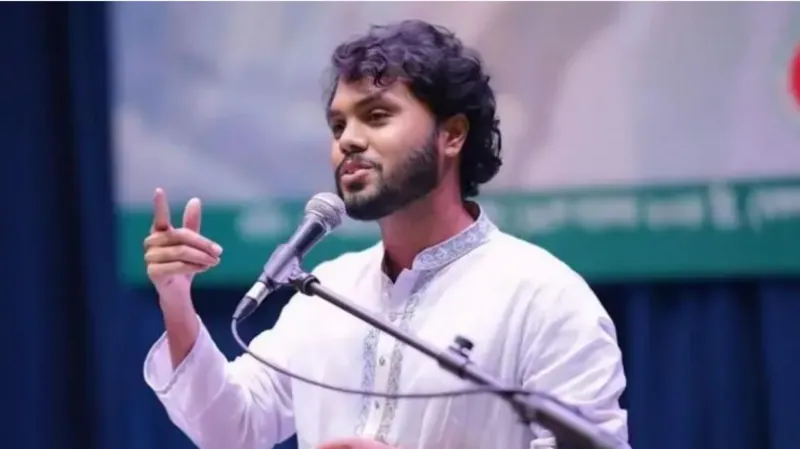
Sharif Osman Hadi, a senior member of the student group Inqilab Mancha, had emerged as a key figure following last year’s protests that challenged the government. He was shot in Dhaka last week and died from his wounds on Thursday, prompting an outpouring of anger among his supporters and critics alike.
Hundreds of demonstrators stormed the English-language Daily Star and the Bengali daily Prothom Alo on Thursday night, with protests continuing into the next day. The Daily Star issued a stark statement calling it one of the darkest days for independent journalism in the country.
For the first time in 35 years, the Daily Star could not publish its print edition on Friday and said it would be inoperable for a period. Kamal Ahmed, the consulting editor, told INLIBER that 28 staff members were trapped on the roof of the building for hours, gasping for fresh air until security forces arrived to rescue them.
While no people were seriously injured, large portions of both buildings were heavily damaged by fire, and smoke lingered at Prothom Alo’s site when reporters visited on Friday. Officials have not explained why the two outlets were targeted, though both have long been seen as secular and critical voices in the country’s media landscape, often drawing fire from supporters of the government.
The attacks come as the interim government, which took power after the July 2024 uprising, maintains a tight grip on politics. The two newspapers have continued to scrutinize government policies, drawing further ire from some of the regime’s backers.
In a statement, the interim government condemned the violence and pledged to ensure accountability, saying that attacks on journalists amount to attacks on truth itself. It noted that the country is in the midst of what it called an historic democratic transition and urged those who seek chaos to instead embrace peace.
Other prominent sites, including the home of Bangladesh’s founding president, Sheikh Mujibur Rahman, were vandalized in the same wave of vandalism on Thursday. The country is slated to hold elections next February, the first since the crisis began and a date that has intensified political tensions.
Sharif Osman Hadi, 32, was a senior member of Inqilab Mancha and an outspoken critic of regional rivalries, including India. He rose to prominence on national television and in social media during last year’s protests and planned to run as an independent candidate in the February elections. He was shot while leaving a mosque in Dhaka on 12 December and died after being treated in Singapore.
Muhammad Yunus, the Nobel laureate who leads the interim government, described Hadi’s death as an irreparable loss for the nation and warned that the attack appeared premeditated to derail the election process. He said democracy in the country cannot be halted by fear, violence, or bloodshed.
Security forces have detained several people as investigations continue, and the government has declared a day of national mourning for Saturday.
Hasina’s government went into exile in 2024 after weeks of street demonstrations, with later reports indicating a harsh crackdown on dissent. In November, Hasina was sentenced to death for crimes against humanity in a separate legal action, a conviction that the government called a landmark judgment for accountability.
Expert analysis
Expert comment: "When political crises intensify, newsroom safety becomes a litmus test for democracy. The assault on major publications signals a broader threat to accountability and civil society."
Expert comment: "Analysts warn that violence against the press can backfire, potentially fueling further protests and drawing international concern over rights and the electoral process."
Summary
Dhaka witnessed renewed protests after the death of a prominent youth leader connected to anti-government movements. Two major newspapers were attacked, disrupting print operations and raising concerns about media freedom. The government condemned the violence, promised investigations, and reaffirmed a commitment to a peaceful democratic transition ahead of next February’s elections. The incident underscores the volatile intersection of politics, media, and public protest in Bangladesh.
Key insight: Attacks on journalists threaten democracy and press freedom, especially during fragile political transitions. Source: BBC News
Discover the latest news and current events in World News as of 19-12-2025. The article titled " Bangladesh Protests Erupt as Newspapers Targeted After Activist's Death " provides you with the most relevant and reliable information in the World News field. Each news piece is thoroughly analyzed to deliver valuable insights to our readers.
The information in " Bangladesh Protests Erupt as Newspapers Targeted After Activist's Death " helps you make better-informed decisions within the World News category. Our news articles are continuously updated and adhere to journalistic standards.