



UK Inflation Drops to 3.2% in November as Prices Ease
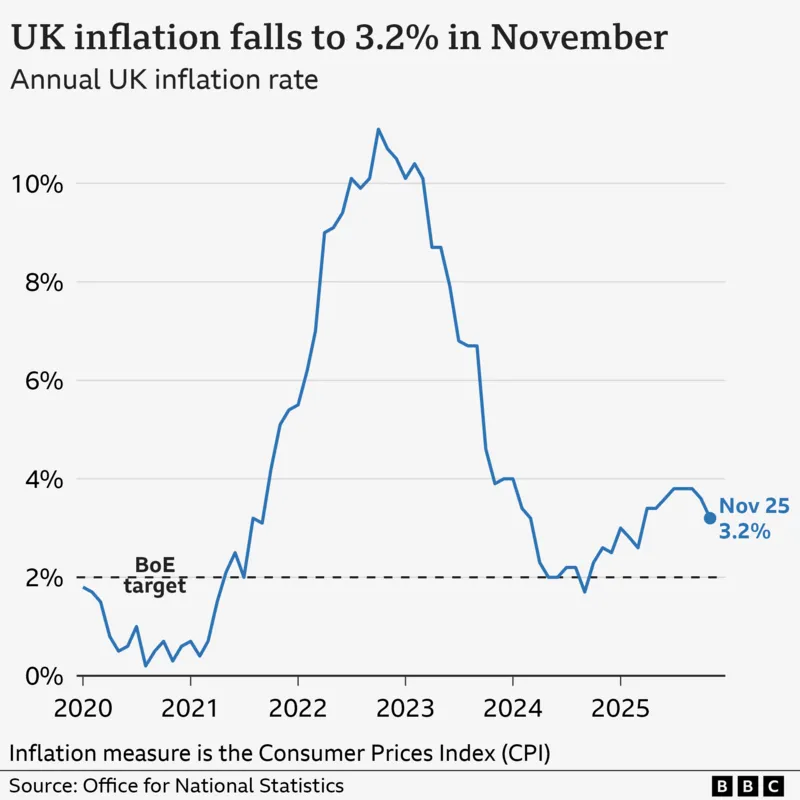
UK inflation slows to 3.2% in November, helped by lower food prices, cheaper clothing, and other everyday goods, boosting hopes for possible Bank of England rate cuts next year.
Britain’s inflation rate cooled to 3.2% in November, the lowest in eight months, as prices eased across several key categories. The drop has analysts hinting that inflation may have peaked, potentially paving the way for lower interest rates next year.
The softening pace was led by cheaper food, with the Office for National Statistics (ONS) pointing to declines in common items such as cakes, biscuits, and breakfast cereals. ONS Chief Economist Grant Fitzner described these movements as the main driver behind the fall.
This data arrives ahead of the Bank of England’s policy meeting, where a rate cut is broadly anticipated by markets and economists.
What pulled inflation lower in November
The year‑over‑year CPI rate dipped from 3.6% in October as costs fell in several sectors, notably food. The ONS highlighted declines in everyday items like baked goods, which helped pull the headline rate down.
These figures reinforce the sense that inflation may have peaked, though the path for future reductions will depend on price movements in the coming months.
Ahead of the Bank of England decision
With the November figures, investors expect the BoE to consider loosening policy soon, aligning with broad market expectations of a rate cut in the coming months.
Falling food price inflation
Food prices fell 0.2 percentage points from October to November, while the annual rise for food slowed to 4.2% from 4.9%. The drop in food inflation was the standout factor behind the overall easing in inflation.
Chancellor Rachel Reeves welcomed the relief, noting that reducing household bills remains a priority and referencing measures such as energy bill reductions and wage‑support strategies announced in the Budget this year.
Inflation is measured by the Consumer Prices Index (CPI), a basket of goods and services selected by the ONS that includes essentials like bread, fruit, and clothing. The currency market also reacted, with the pound sliding about 0.7% against the US dollar following the data release.
A baker from Camberwell, Alyssa Heath, noted how higher prices have influenced ingredient choices. The Band of Bakers group meets occasionally to share what they bake, and price pressure makes them prioritise staple items over more expensive ingredients.
"Your everyday staples like flour and sugar remain affordable, but premium ingredients such as nuts, dairy, or exotic items are pricier and used less often as a result," she said.

Impacts on food price inflation
While overall inflation cooled, the food market showed a mixed picture. Beef prices rose by 27.7% year over year, with sharp increases in chocolate (17.3%), milk (14.8%), and coffee (14.5%). In contrast, olive oil prices fell by 16.2%, flour dropped 6.1%, and pasta fell 4.2%.
Other festive staples such as cheese, potatoes, and poultry posted only small price changes.
Black Friday sales were stronger this year, helping to keep clothing and footwear prices relatively low in November as retailers competed for shoppers.
Analysts cautioned that inflation decline doesn’t mean the cost of living is suddenly cheaper. Many households are still feeling the impact of earlier price spikes, and wage growth and energy costs will influence how quickly prices continue to ease.
Expert comment: The inflation slowdown offers relief for households, but prices remain high in many categories. The pace of further declines will depend on energy bills, wages, and broader price pressures across the economy.
In summary, November’s 3.2% CPI reading reflects easing pressures in food, clothing, and several services. The data support expectations of a Bank of England rate cut next year, though living costs remain a challenge for many families. Market attention will now focus on how energy costs and wages evolve over the coming months.
Key insight: Inflation is easing, strengthening expectations for possible Bank of England rate cuts next year. BBC inflation article
Discover the latest news and current events in Economics as of 19-12-2025. The article titled " UK Inflation Drops to 3.2% in November as Prices Ease " provides you with the most relevant and reliable information in the Economics field. Each news piece is thoroughly analyzed to deliver valuable insights to our readers.
The information in " UK Inflation Drops to 3.2% in November as Prices Ease " helps you make better-informed decisions within the Economics category. Our news articles are continuously updated and adhere to journalistic standards.