


And Then Steve Said: 'Let There Be iPhone,' Part 1
The story behind the creation of the iPhone — a groundbreaking device that fundamentally transformed how people access and process information.
Apple enthusiasts had been urging Steve Jobs for years to integrate a phone into the iPod, freeing them from carrying two separate devices. Steve was finally ready to fulfill their wish.
- Part 1
- Part 2
- Part 3
- Part 4
The 55-mile journey from Campbell to San Francisco is considered one of the most scenic drives on Earth. The route primarily follows the Junipero Serra Freeway — a vast and surprisingly empty highway bordering the Santa Cruz Mountains. It's one of the best places to test the limits of your Ferrari and one of the worst for cellular signal reception. For Andy Grignon, this was the perfect spot to be alone with his thoughts on the early morning of January 8, 2007.
This route was unusual for Andy. As a senior engineer at Apple, he worked in Cupertino, west of Campbell. His typical commute was about 15 minutes, but not today. Andy was heading to meet Steve Jobs to make history together.

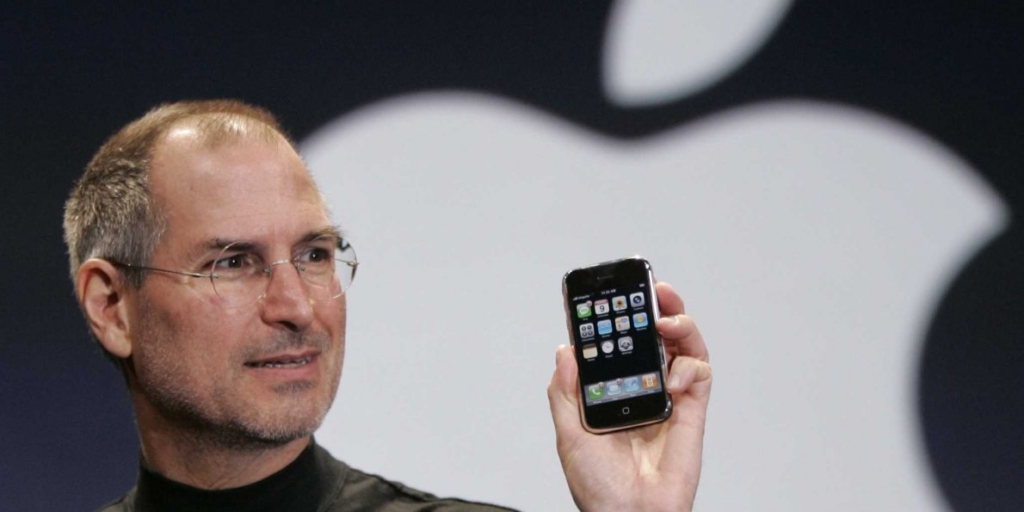
They were preparing for the Macworld Expo in San Francisco. Apple fans had long requested Jobs to combine a phone with the iPod, eliminating the need to carry two devices, and Steve was ready to grant their wish. Andy and his colleagues were set to spend the night at a nearby hotel, and the next day at 10 a.m., they would join the world in witnessing Steve Jobs unveil the first iPhone.
However, as Andy drove further north, he didn’t feel the excitement one might expect. Instead, he was terrified. Most Silicon Valley presentations were pre-recorded to avoid the risk of poor internet connections ruining the show. But Jobs insisted on live demos, making the event thrilling yet stressful. For Andy and the backstage team, presentations were always high-pressure moments.
As the senior engineer responsible for the iPhone’s communication features, Andy carried the weight of ensuring the device could make calls, connect via Bluetooth to headsets, and link to Wi-Fi networks. While phones today perform countless functions, their core purpose remains two-way radio communication. Andy was one of Apple’s earliest engineers and had devoted two and a half years to this project, working seven days a week.
He was also part of the iPhone rehearsal team and later participated in the live presentation at the Moscone Center. It was rare to see the 90-minute showcase run flawlessly. Jobs rehearsed for five days, yet even on the final day, the iPhone would unexpectedly drop calls, lose internet connectivity, freeze, or shut down.
"At first, being at rehearsals was really exciting. Only a select few were allowed in. But soon, the atmosphere became tense. I rarely saw Steve relaxed. Occasionally, yes, but mostly he would just stare at you and say in a loud, stern voice: ‘You’re screwing up my company’ or ‘If we fail, it’ll be your fault.’"
– Andy Grignon, Senior Apple Engineer
Andy and the team knew that if something went wrong during the presentation, Jobs wouldn’t blame himself. "It felt like we rehearsed the show a hundred times, but something always went wrong. It was a terrible feeling," Andy recalls.
The preparations were top secret. From Thursday through the following week, Apple took over the entire center. Backstage, a 2.5 by 2.5-meter lab was set up for storing and testing iPhones, adjacent to Steve Jobs’ lounge. A dozen security guards were stationed around the clock at entrances and throughout the building. Electronic access was granted only to those approved by Jobs himself. As mentioned, only the chosen few could enter the rehearsal room.

Jobs was so obsessed with preventing leaks that he wanted to keep all support staff inside the building overnight before the presentation day. His assistants persuaded him otherwise.
Andy understood that the iPhone launch was no ordinary product announcement, but no one could predict the device’s impact. Over the next seven years, the iPhone and iPad became some of the most significant innovations in Silicon Valley history. They revolutionized the mobile industry, created a new and highly profitable app economy generating over $10 billion in revenue, and shook the multi-billion-dollar personal computer empire.
If iPads are included in the personal computer category, Apple instantly becomes the world’s largest PC manufacturer.
In 2012 alone, about 200 million iPhones and iPads were sold—more than twice the number of cars sold worldwide during the same period.
The impact was not only economic but cultural. Apple’s innovations reshaped how people interact with technology. It wasn’t just about using fingers instead of a mouse. Smartphones became an extension of our minds, fundamentally changing how we acquire and process information.
Think about how revolutionary this was then. Books, newspapers, phones, radios, tape recorders, cameras, video cameras, compasses, TVs, VCRs, personal computers, gaming consoles, and iPods—all combined into one device that fits easily in your pocket. These technologies transformed how we learn, how doctors treat patients, and how we explore the world.
Yet today, Apple faces fierce competition. Since Google introduced Android—its weapon to dominate the mobile sector—it hasn’t just competed with the iPhone; it has succeeded. By 2010, Android powered 80% of all smartphones on the market. A similar trend occurred with tablets. In 2010, the iPad held about 90% of the market share, but by 2013, over 60% of tablets sold ran Android.
What concerns Apple fans most is the lack of clarity about the company’s direction. When Jobs passed away in 2011, the question wasn’t just whether Tim Cook could succeed him, but whether anyone could.
Under Jobs, Apple was an innovation powerhouse, releasing breakthrough products every 3–5 years.
Jobs told his biographer Walter Isaacson that another revolution was coming—a revolution in television. But under Cook’s leadership, that revolution never materialized, and investor skepticism grew. New product announcements once boosted Apple’s stock, but when Tim introduced the iPhone 5c and 5s, shares dropped 10%. In 2012, Apple’s stock price reached $702, making it the most valuable company in the world. A year later, it had fallen by more than 25%.
Comparing anyone to Jobs is unfair, and in his two years as CEO, Cook has worked hard to prove he leads Apple in his own way, without trying to replicate Steve.
It’s hard to imagine the excitement Steve felt when he decided to unveil the iPhone in 2007. It wasn’t just a new device type for Apple—it was a live presentation with a prototype that barely worked. Although the smartphone wouldn’t hit shelves for another six months, Steve wanted the world to desire it immediately.

In truth, the list of tasks remaining for the iPhone was enormous. The production line was not yet established. About a hundred smartphones existed, all of varying quality. Some had gaps between the screen and casing; others had scratches on the screen. The operating system was riddled with bugs.
The iPhone could play parts of videos or songs, but playing a full clip would crash the system. It worked well when sending emails then browsing the web, but reversing that order could cause freezes. Hours of trial and error allowed the Apple team to develop what engineers call the "golden path"—a specific sequence of tasks that made the phone appear fully functional.
Still, in the final moments before the demo, workarounds were necessary to keep the iPhone looking operational. On announcement day, Grignon’s software had bugs, as did the memory management software. No one knew if the fixes Steve demanded for the demo units would reduce issues.
- Part 1
- Part 2
- Part 3
- Part 4
Discover the latest news and current events in Technologies as of 29-05-2021. The article titled " And Then Steve Said: 'Let There Be iPhone,' Part 1 " provides you with the most relevant and reliable information in the Technologies field. Each news piece is thoroughly analyzed to deliver valuable insights to our readers.
The information in " And Then Steve Said: 'Let There Be iPhone,' Part 1 " helps you make better-informed decisions within the Technologies category. Our news articles are continuously updated and adhere to journalistic standards.