

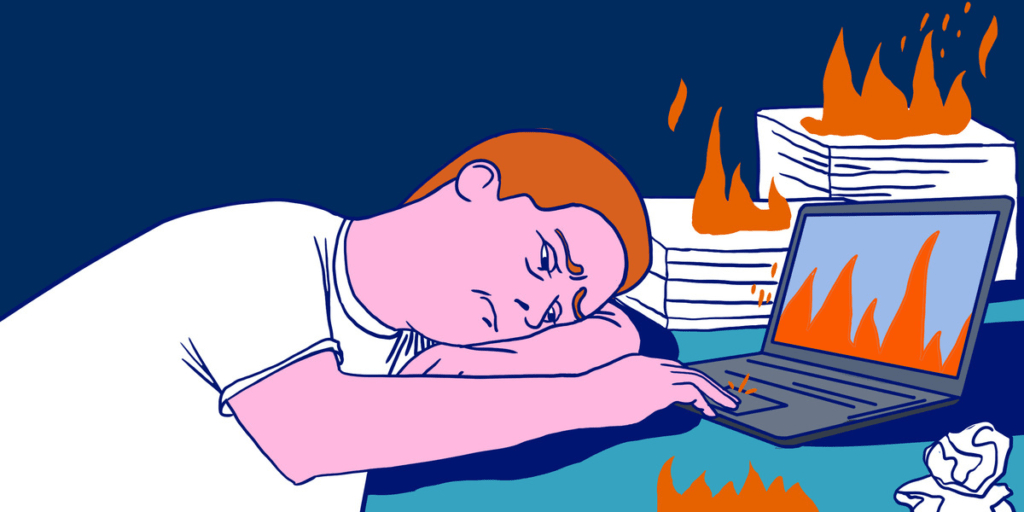

What to Do If You Suddenly Realize You Hate Your Job
This article provides insightful answers to common questions that will help you choose a new career path and finally find your dream job.
Here are 7 essential questions to guide you in deciding which direction to take when changing your professional life.
1. What Do I Find Uninteresting or Dislike Doing?
Identifying what drains your energy is just as important as knowing what you’re passionate about. Reflect on the aspects of your current job that irritate you the most—whether it's cold-calling strangers, preparing reports or spreadsheets, rigid schedules, meaningless office chatter, or wasting time when all tasks are done but you still have to stay at work. Make a list of these frustrations. This list will be invaluable when narrowing down potential new careers by eliminating unsuitable options. If nothing comes to mind, check out our list of reasons why changing jobs is urgent.
Also, separately list tasks you currently don’t perform but definitely want to avoid in your future career—whether it’s bookkeeping, nonstop client calls, creating presentations, or frequent business trips.
2. Is It Feasible to Learn a New Profession?
Absolutely. Sometimes, this requires enrolling in a university program and studying for several years—after all, you can’t become a surgeon without proper medical training and hands-on experience.
But here’s the good news: many modern careers can be mastered from home in less than a year through online courses accessible on your laptop. These roles are often computer-based, such as copywriting, software development, web design, or digital marketing. Online courses provide practical foundational knowledge that enables you to start working immediately, with theoretical concepts deepening as you gain experience.
While universities offer digital profession programs, they often take several years and include general education subjects that may not be directly relevant. Online learning is a more flexible and efficient alternative.
For example, Yandex.Practicum offers programs in digital fields like web development, testing engineering, data science, Python development, and data analytics.
You can explore a profession and see if it interests you by taking their free introductory course, which takes about 10 to 20 hours. This course provides a solid overview and even lets you complete a sample project.
3. When Can I Study If I’m Still Working?

Anytime you have free moments. Online courses usually allow students to complete assignments at their convenience, as long as deadlines are met.
Balancing work and study means less leisure time—fewer binge-watching sessions or social gatherings—but remember, this is temporary. Your efforts will lead to a new job with better pay and greater satisfaction.
In today’s fast-evolving world, professionals must commit to lifelong learning to stay relevant. Without continuous growth, skills become outdated, risking job loss. Flexibility and a willingness to improve are key to remaining in demand.
4. Do People Really Change Careers After 30?
Yes, and successfully so. For instance, PayPal co-founder Peter Thiel was a lawyer and stock trader until age 31. Jon Peretti, founder of The Huffington Post and inspiration behind BuzzFeed, was a teacher until 30. Designer Vera Wang worked as a Vogue editor until 40.
Even after 50, career changes are possible. Taikichiro Mori, founder of Mori Building Company, was a university professor until 55. British retiree Ruth Flowers learned DJing at 68 and performed at the Cannes Film Festival, famously known as DJ Ruth Flowers, Mamy Rock.
There are inspiring stories closer to home too. For example, Ivan Repalov, a former manager, transitioned to IT at 34, trained as a testing engineer, and now works at Yandex.
5. How Will This Affect My Family and Loved Ones?

Friends and family might discourage you, citing concerns about stability, finances, or time for training. It’s important to calmly discuss your motivations, whether it’s dissatisfaction with salary, working conditions, lack of career growth, or simply feeling unhappy.
Explain that learning new skills will require time, but you won’t quit your current job and lose income in the process.
Once you acquire your new profession, things will improve: you may work remotely or freelance, likely earn a higher salary, and most importantly, find fulfillment in your work. This will reduce stress and allow you to spend more quality time with family and friends instead of feeling drained at home.
6. Will I Be in Demand Today, Tomorrow, and Years From Now?
Research on future professions from universities and job platforms highlights industries expected to thrive in the coming decades, including both emerging and established roles.
It’s essential to assess the world and current circumstances. For example, the pandemic accelerated remote work adoption. Office employees adapted quickly, while some professions—like waitstaff, flight attendants, and sports coaches—faced unemployment or had to switch fields.
Meanwhile, digital specialists such as developers and analysts remained unaffected, working equally well from home or office. Their demand has only grown, as internet usage continues to rise.
7. How Quickly Can I Find a New Job?
To gauge demand in your city, region, or country, visit job search websites and compare the number of job openings to resumes submitted. If vacancies outnumber applicants, that’s excellent—you’ll likely find a job quickly. Equal numbers mean competition is moderate, and you’ll need to prove you’re the best candidate.
If resumes vastly outnumber vacancies, competition is fierce, extending your job search. However, this doesn’t mean you have no chance. You might start with lower-paid or even unpaid roles to build experience. For example, after completing a web development course, you could work as a junior specialist for 2-6 months to gain confidence before seeking promotions.
Job hunting isn’t limited to specialized sites. Use various channels:
- Networking: Ask friends, colleagues, or acquaintances if they know of openings.
- Social Media: Check company pages for job postings or share your resume for wider reach.
- Company Websites: Regularly monitor the 'Careers' sections for new opportunities.
- Professional Communities: Join forums or groups where relevant job offers and industry insights are shared.
The more channels you use, the faster you’ll find a job.
The professions taught at Yandex.Practicum are highly sought after. The platform analyzed over 400,000 IT vacancies in the past four years to identify the most valuable skills and technologies.
Throughout your course, mentors will support you and later assist with resume writing and interview preparation. Soon, Yandex.Practicum will launch seven more online courses, including 'Neural Network Specialist' and 'Interface Designer.'
Learn more about Yandex.Practicum.
Discover engaging topics and analytical content in Inspiring Lifestyle as of 16-08-2022. The article titled " What to Do If You Suddenly Realize You Hate Your Job " provides new insights and practical guidance in the Inspiring Lifestyle field. Each topic is meticulously analyzed to deliver actionable information to readers.
The topic " What to Do If You Suddenly Realize You Hate Your Job " helps you make smarter decisions within the Inspiring Lifestyle category. All topics on our website are unique and offer valuable content for our audience.