

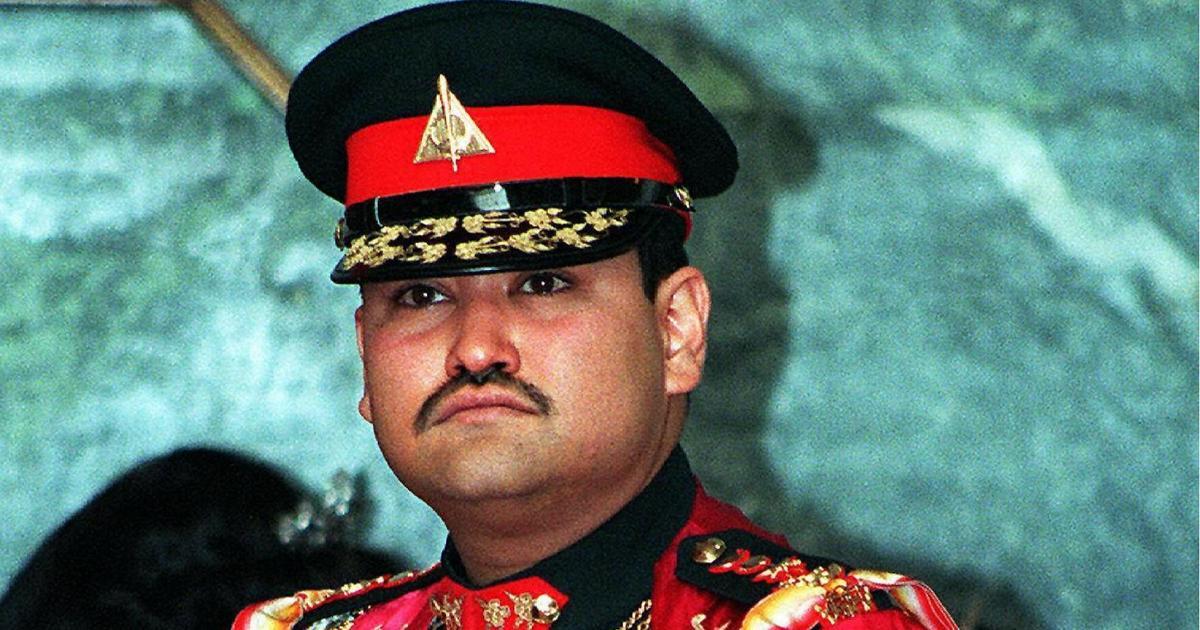

Love's Fatal Role: The Story of the Prince-Killer Who Ended Nepal's Monarchy
On June 1, 2001, a tragic event unfolded within Nepal's royal palace, forever marking history. The crown prince, unwilling to accept his family's rules, drenched Narayanhiti Palace in blood, leading to the collapse of the monarchy.
The events of June 1, 2001, at Nepal's royal palace have etched an unforgettable chapter in history. Narayanhiti Palace was stained with blood due to the actions of the crown prince, who refused to abide by his family's traditions.
Today, monarchies are rare worldwide. Most reigning royals serve as symbolic figures rather than actual rulers. However, history records numerous brutal struggles for the throne, exemplified by the tragic incident in Nepal's capital, Kathmandu, in 2001.
The Origins of Nepal's Monarchy and a Grim Prophecy
Nepal's monarchy dates back to 1768, when Prithvi Narayan Shah unified dozens of fragmented principalities into a single nation after prolonged fierce battles.
Legend tells that once, while strolling through a forest with his entourage, the king met a revered sage named Gorakhnath. In a gesture of respect, the king offered the sage a plate of fresh curd. The yogi tasted it but spat it back into the bowl, suggesting the king should consume it as a sign of respect.

Prithvi Narayan Shah refused without hesitation and threw the plate to the ground, soiling his feet. Angered by this disrespect, the sage cursed the monarch, declaring that his dynasty would last only as many generations as he had toes—ten in total. At the time, no one took the prophecy seriously. Passed down through generations, the legend came true in 2001 when the tenth king sat on Nepal's throne.
The Tenth King of Nepal
Birendra Shah ascended the throne in 1972 as the tenth ruler of the dynasty. He was respected and loved by both courtiers and common citizens, though some family members disapproved of his democratic reforms. In the early 1990s, King Birendra held a referendum that transitioned Nepal from an absolute monarchy to a constitutional monarchy. Political parties were officially allowed, and some joined the government formed by the king.


The new political course initially inspired the nation but soon became a source of tension. Maoist insurgents demanded the complete abolition of the monarchy and the establishment of communism. By 1996, they had formed a full-fledged guerrilla movement, igniting a civil war that lasted two decades.
At the time of his death, Birendra Shah was 55 years old, married to Queen Aishwarya. They had three children: Princes Dipendra and Nirajan, and Princess Shruti. No one could have foreseen that the king would be killed by his eldest son, who would go down in history as a killer prince.
The Deadly Dinner at Narayanhiti Palace
On a warm summer day, June 1, 2001, the royal family hosted a traditional reception. The monarchs were cordial, sipping aperitifs and engaging in polite conversation, while Prince Dipendra remained distant, dressed in his ceremonial uniform, playing billiards alone.
The previous night, Dipendra had discussed his desire to marry Devi Rajya Lakshmi Rana, a woman from the Rana family he met in London and had been with for over ten years. His parents, especially Queen Aishwarya, vehemently opposed the match, unwilling to accept Devi as the crown prince's bride due to political reasons and family traditions.


While such marriages were not unprecedented in the Shah family—one of King Birendra’s brothers had married a foreigner and lost his succession rights—the royal couple's refusal stemmed from political motives rather than personal ones.
That fateful day, Prince Dipendra defiantly announced his intention to marry Devi. His family accused him of disrespect and threatening their lives. Rumors circulated that the queen and king planned to name Nirajan, the younger son and the queen’s favorite, as the heir instead of Dipendra. Nirajan was 22, studying management, and had strained relations with his elder brother and the family.
Throughout June 1, Dipendra repeatedly drank whiskey. At one point, he summoned his adjutant and requested his "special cigarettes." After smoking two, he suddenly fell ill and collapsed. He was carried to his chambers, but what transpired behind closed doors remains unknown.

Reports suggest the prince expelled everyone from the room and called Devi, who was in India at the time. About half an hour later, Dipendra reentered the hall wearing his favorite camouflage uniform, armed with a small pistol and two additional weapons holstered on his person. A fourth rifle lay nearby, likely too heavy to carry.
He fired the first shot into the ceiling, then shot his father, the king. Subsequent shots were indiscriminately aimed at all present. He immediately killed his brother Nirajan and sister Shruti. Out of approximately thirty bullets fired, most found their targets. Besides the king, queen, and their children, victims included Prince Dhirendra, royal sisters Shanti and Sharada, Sharada’s husband Kumar, and King Birendra’s aunt Jayanti. Princess Komal, wife of Prince Gyanendra, survived with a grazing wound as she sat in a distant corner, but remains traumatized and unable to testify.

Out of 24 attendees at the royal dinner, 12 were killed by the prince. The lightly wounded cousin, Prince Paras, saved three family members by quickly shielding them with a sofa.
Upon hearing the shots, Queen Aishwarya rushed into the hall, only to be coldly shot by her son. The palace guards stood frozen, mouths agape, failing to intervene. Their inaction remains a mystery—perhaps they hesitated to interfere in what they perceived as a family dispute. The entire massacre lasted mere seconds. After the gunfire ceased, a faint groan was heard—the king was still alive. Dipendra finished him off and fled the palace.
Narayanhiti Palace was guarded by sixty bodyguards. They broke protocol upon hearing gunshots and entered the inner chambers but were too late to stop the carnage. They found bloodied bodies, shattered porcelain, and the faint moans of the sole surviving royal spouse of Prince Gyanendra.

Prince Dipendra then approached an elegant arched bridge amid the palace gardens and attempted suicide. However, on the way to the hospital, he fell into a coma. Despite the tragedy, he was proclaimed Nepal’s new monarch that day. Three days later, the 29-year-old prince died without regaining consciousness.
Investigation and Aftermath
Following the investigation, Prince Gyanendra, uncle of the prince-killer, ascended the throne. The nation was in shock. Crowds gathered spontaneously outside the palace, and unrest spread throughout the streets. To preserve the dynasty’s reputation, authorities initially claimed Dipendra’s weapon "malfunctioned." However, Nepal’s elite demanded a thorough inquiry, revealing harrowing details.
The police concluded their investigation within two weeks, determining the shooting was deliberate. Dipendra was identified as the perpetrator, motivated by the family’s rejection of his marriage.

In October of the same year, Gyanendra named his son Paras as the new crown prince, but the public opposed the decision. This opposition fueled the civil war, and in 2008, after 240 years, Nepal’s monarchy was officially abolished.
As for Devi Rajya Lakshmi Rana, the unintended catalyst of the tragedy, she vanished from public view. She fled the nightmare to her sister in Moscow, later relocating to Europe. In 2004, Devi earned a master's degree from the London School of Economics. In 2007, she married the son of an Indian film producer and grandson of an Indian minister. Three years later, the couple welcomed a child.

Photos: Getty Images, East News, Legion-Media.ru
Discover engaging topics and analytical content in Real Life as of 24-03-2024. The article titled " Love's Fatal Role: The Story of the Prince-Killer Who Ended Nepal's Monarchy " provides new insights and practical guidance in the Real Life field. Each topic is meticulously analyzed to deliver actionable information to readers.
The topic " Love's Fatal Role: The Story of the Prince-Killer Who Ended Nepal's Monarchy " helps you make smarter decisions within the Real Life category. All topics on our website are unique and offer valuable content for our audience.