


How to Build Leg Muscles at Home Without Weights
Discover effective ways to strengthen and sculpt your legs at home without any equipment. This guide features top exercises and proven techniques for toned calves and thighs.
Explore the best exercises and powerful methods to shape defined calves and thighs.
Is It Possible to Build Leg Muscles Without Weights?
While heavy weights are essential for rapidly increasing strength, muscle growth can be effectively achieved without them.
Scientific meta-analyses show that muscles grow similarly whether training with heavy weights and low reps or performing 12–40 reps using light resistance or just body weight.
The key is pushing your muscles to fatigue or near failure—meaning by the end of each set, you should only have enough energy for 1–2 more reps.
To sufficiently challenge your muscles, consider these approaches:
- Choose complex exercises, like single-leg squats or eliminating the relaxation phase.
- Add resistance using compact home workout tools such as resistance bands with varying tension or DIY weights.
- Incorporate plyometric moves like jumps, which fatigue muscles faster due to their explosive nature. Research confirms plyometrics are as effective for hypertrophy in beginners and enthusiasts as weighted training.
- Combine exercises into supersets targeting opposing muscle groups. For example, during a squat descent, the hamstrings engage, while the ascent activates the quadriceps. Performing two exercises back-to-back without rest maximizes muscle fatigue and accelerates growth.
Top Bodyweight Exercises to Strengthen Legs
Here are key movements that effectively load leg muscles without any equipment.
Bulgarian Split Squats

This exercise targets the front thigh muscles and provides excellent glute engagement. Stand with your back to a chair or low support and rest the toes of one foot on it. Place your hands on your hips or cross them in front of your chest for balance.
Lower yourself until the thigh of the supporting leg is parallel to the floor. If your heel lifts, step a bit farther from the support. Ensure your knee does not cave inward as you rise.
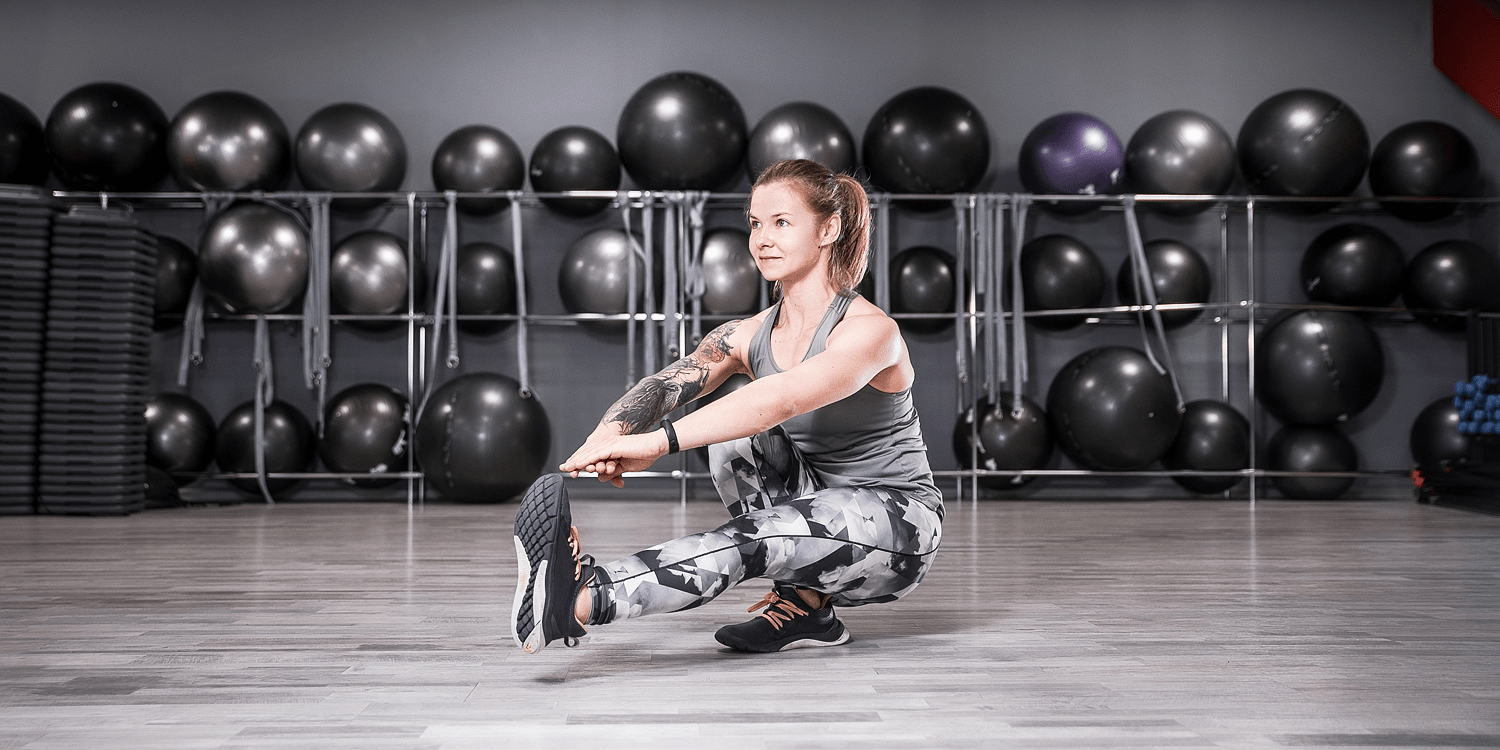
Pistol Squats
This challenging move works the hip flexors, quadriceps, adductors, and glute muscles while improving joint mobility and balance.
Lift one leg straight off the floor and squat down on the other until your knee is fully bent. Keep the lifted foot off the ground and the supporting foot flat. Rise while preventing your knee from turning inward. Extend your arms forward to help maintain balance.
Mastering pistol squats may take weeks, but many preparatory exercises can build strength and stability in your thighs and glutes. Choose a progression that fits your level.
Jump Squats
This explosive exercise is more demanding than regular air squats and can fatigue your quadriceps after just 20 reps; beginners might feel it after 10.
Stand with feet shoulder-width apart or slightly narrower, hands crossed over your chest or on your hips. Squat down as deeply as possible while keeping your back straight and heels on the floor.
Jump upward explosively and land softly back into a squat. Repeat continuously.
Jumping Lunges
Another plyometric move that ignites your thighs and sculpts your glutes within 10–20 reps.
Step forward into a lunge, then jump up, switching legs mid-air. Land in a lunge with the opposite leg forward. Avoid touching the back knee to the floor to prevent injury.
Single-Leg Glute Bridge

This is a top exercise for the hamstrings and glutes.
Lie on your back with knees bent and feet flat. Lift one leg straight and hold it off the ground. Squeeze your glutes and raise your hips as high as possible. Lower down and repeat.
To increase difficulty, place your supporting foot on a raised surface like a sofa edge or move it farther from your hips to intensify the load.

Step-Ups on Elevated Surface
This move effectively strengthens both thighs and glutes.
Stand beside a sturdy platform, step up with one foot, then step down and alternate legs. Keep your knee aligned and avoid it turning inward.
Box Jumps
A dynamic plyometric exercise that tones thighs and calves.
Choose a stable platform no higher than 20 inches (50 cm) if you’re new to exercise. Jump onto the box and step down carefully to protect your knees.
Calf Raises

This targets the calf muscles. Rise onto your toes and lower back down. Hold onto a support if needed for balance.
For added challenge, place the ball of your foot on a raised surface and lower your heel below floor level before lifting. This increases range of motion and calf activation.
You can also intensify these and other exercises using commercial or homemade compact training tools.
Recommended Equipment for Home Leg Workouts
Beginners can rely on bodyweight exercises, but as you progress, you’ll need to increase repetitions and sets to continue muscle growth.
Enhance your workouts with the following equipment:
Resistance Bands
Step on a resistance band and place the loop over your shoulders to add resistance to squats, lunges, and Bulgarian split squats.

Mini bands or doubling a band around your thighs above the knees increase difficulty for lateral steps and leg lifts. Anchoring a band to a stable object enables knee flexion and extension exercises.

Choose thicker bands for greater resistance to effectively train large leg muscles.
Ankle Weights
Sand-filled ankle weights strapped to your legs add resistance to plyometric and other leg exercises.
Water or Sand Bottles in a Backpack
Fill bottles with water or sand, place them in a backpack, and wear it on your back or chest to add weight during jumps, squats, and lunges. For glute bridges, place the load on your hips.
Sand Canister
A sturdy canister with a wide handle can be used for goblet squats, holding weight in front of your chest.
If the handle is strong, you can perform single-leg Romanian deadlifts and leg swings to target hamstrings and glutes.
Where to Find Ready-Made Workout Programs
If you prefer structured routines, try these popular training complexes from renowned coaches. Choose one or try all.
1. 20-Minute Circuit Interval Workout
Designed by bodybuilder, coach, and physical therapist Jeff Cavalier, this workout requires no equipment but can be intensified with weights.
The workout features four 5-minute rounds. Each round includes three exercises performed back-to-back for timed intervals:
- Beginners: 15 seconds work, 15 seconds rest.
- Intermediate: 20 seconds work, 10 seconds rest.
- Advanced: 25 seconds work, 5 seconds rest.
This cycle takes 90 seconds, followed by 60 seconds rest and mobility exercises targeting hip flexibility, performed for 30 seconds per leg. The mobility segment lasts 2 minutes, making each round 4.5 minutes. Rest 30 seconds before the next round.
Round 1
- Air squats or weighted goblet squats.
- Glute bridge with stepping.
- Weighted or simulated leg swings.
Round 2
- Reverse lunges.
- Sprint lunges.
- Jump squats.
Round 3
- Continuous squats without pause.
- Single-leg Romanian deadlifts.
- Romanian deadlifts with leg swings.
Round 4
- Transition from lunges to squats without full extension.
- Glute bridges with nearly straight legs.
- Sprint lunges without full extension.
Repeat the entire workout for 40 minutes if you have the energy.
2. Two Supersets and a Finisher
A compact routine by German coach Alex Lorenz, founder of Calimovement, focusing on calisthenics.
This includes four effective leg exercises arranged in two supersets, followed by a 3-minute finisher to exhaust your muscles and test endurance.
Superset 1
- Pistol squats — 4 reps.
- Single-leg glute bridges — 8 reps.
Perform both exercises on one leg, rest 60 seconds, then switch legs. Repeat twice more.
Superset 2
- Bulgarian split squats — 8 reps.
- Calf raises — 12 reps.
Perform both exercises on one leg consecutively, rest 30 seconds, then switch legs. Repeat two more times.
Finisher
Set a timer for 3 minutes and perform as many jump squats as possible.
Work steadily for 3 minutes, taking brief breaks every 15–20 seconds to maintain stamina. After each break, shake off your legs and continue.
Aim to increase your reps each session. For example, if you complete 20 reps today, try for 21 next time.
3. 10-Exercise Leg Day
Inspired by the THENX calisthenics app, demonstrated by athlete John Oslager.
Most exercises are rep-based with 15-second rests between. Skip rest if you feel capable.
Workout includes:
- Alternating lunges and jump squats — 30 seconds.
- Bulgarian split squats — 10 reps per leg.
- Lunges — 10 reps per leg.
- Jump squats — 14 reps.
- Jumping jacks — 40 reps.
- Squats with hands behind head — 20 reps.
- Side lunges — 10 reps per leg.
- Side steps in squat with hands behind head — 20 steps.
- Calf raises — 15 reps per leg.
- Static squat hold — 45 seconds.
Rest a few minutes after completing a round and repeat twice more.
How Often Should You Train?
Muscles need time to recover and grow, so avoid daily leg workouts.
Perform leg training twice weekly with 1–2 days rest between sessions. For example, train legs on Monday and Thursday, focusing on upper body on other days.
If you can only train 2–3 times weekly and want full-body development, choose one superset targeting front and back thighs and combine it with upper body exercises.
Alternate supersets to evenly develop all leg muscles. Remember, working to muscle fatigue is crucial for growth.
*Note: Meta Platforms Inc. and its social networks Facebook and Instagram are restricted in some regions.
Discover engaging topics and analytical content in Sports and Health as of 01-10-2024. The article titled " How to Build Leg Muscles at Home Without Weights " provides new insights and practical guidance in the Sports and Health field. Each topic is meticulously analyzed to deliver actionable information to readers.
The topic " How to Build Leg Muscles at Home Without Weights " helps you make smarter decisions within the Sports and Health category. All topics on our website are unique and offer valuable content for our audience.