

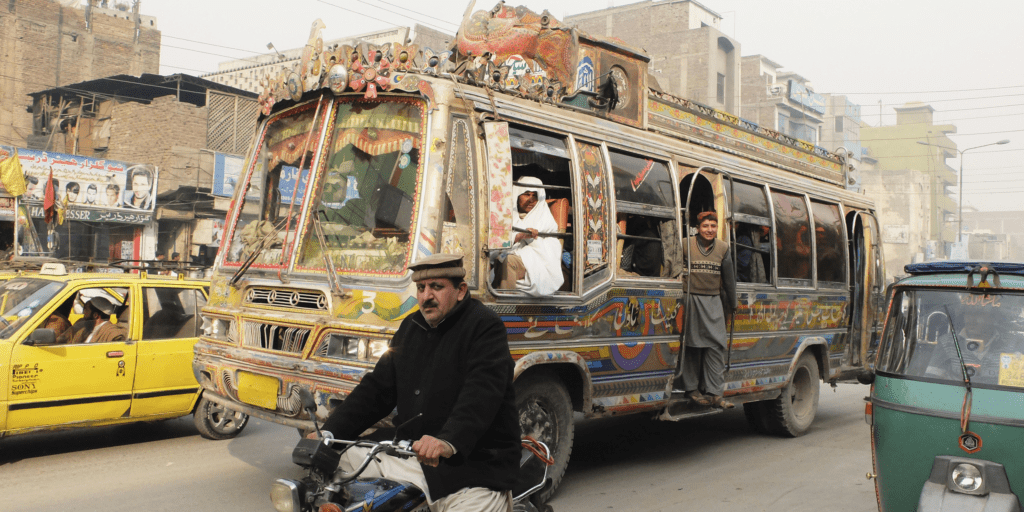

Discovering Humanity Beyond Borders: An Inspiring Journey with Explorer Leonid Pashkovsky
Join renowned travel journalist Leonid Pashkovsky as he shares captivating stories from his travels across unconventional destinations, shedding light on cultural richness, social inequalities, and the true spirit of humanity.
Leonid Pashkovsky has experienced the vibrant aromas of Mumbai's bustling slums, attended secret underground parties in Tehran, and even purchased Shiraz wine discreetly. His adventures have seen him detained, escorted under armed guard, and staying in hotels without electricity or heating. Yet, through it all, he firmly believes there are no bad people in the world, only challenging circumstances. Meet Leonid, a traveler whose perspective reshapes how we view the globe.

Leonid Pashkovsky
A travel journalist, advertiser, and musician from Minsk, Leonid is the creator of the documentary series “I Want to Go Home,” which explores destinations often overlooked by tourists, such as Iran, Pakistan, Bangladesh, and more.
— Hello, Leonid! What inspired you to showcase "unfiltered reality without retakes"? Many prefer vlogs about beaches and happiness rather than poverty and hardship.
There are countless programs highlighting beautiful places where one can spend money and enjoy themselves. As a viewer, I find those less engaging now.
For those inspired by adventure and the works of Jack London, like me, the thrill lies in discovering the unknown. How do you reach places few have visited? How do locals live there? Although geographical discoveries are long past, many blank spots remain on the map, barely understood by anyone.
— Why not visit Easter Island then? Since Thor Heyerdahl's time, little new has been learned about it.
I aim not only to be a pioneer but also an educator. When I planned my trip to Iran, people warned me, "Where are you going? They'll cut your head off!" That's absurd!
Visiting Iran reveals it as a safe destination for tourists. Streets aren't patrolled by religious fanatics. The country was secular just 40 years ago. The lifestyle and mindset carry Eastern charm but are quite similar to European norms. Locals are warm and hospitable, often inviting visitors into their homes for tea and family introductions.

People often judge countries and their citizens through stereotypes: everyone swims in Barcelona, and frogs are eaten in France. Even more misconceptions surround less popular countries like Pakistan or Bangladesh. I want to challenge the media-driven myths of head-chopping and other absurdities, hoping my project serves an educational purpose.
— Hold on! When you arrived in Pakistan, you were immediately placed under armed escort. That doesn't sound like a warm welcome.
Pakistan is a very different country, and I was unprepared. I assumed it was peaceful since global media had no recent reports. Later, I researched online.
I entered Pakistan through Balochistan province—a geopolitical hotspot. China is constructing a major port here, aiming to create a significant transit hub. The region is rich in minerals, attracting many interests. It borders Iran and Afghanistan, adding military-strategic importance. Internal conflicts between provinces further complicate the situation.
Attacks happen almost daily: bus shootings, kidnappings, military casualties. Local authorities must protect visitors. I was guarded by armed escorts until leaving the province.
After Balochistan, I traveled as a regular tourist. Locals showed great kindness to foreigners. There was no constant fear of attack or theft. Religion and culture forbid Muslims from mistreating guests.
— "You read news online." Does Pakistan have internet?
Pakistan boasts impressive 4G coverage! :)
This dispels the myth that internet exists only in big cities. I stayed connected even in remote villages in Bangladesh.
When viewers ask how I charged my camera, I find it amusing.
Globalization is all-encompassing. Electricity, mobile networks, and internet are available everywhere.
Yes, signal quality may vary, and speeds might lag, but signal boosters help ensure connectivity. While platforms like Facebook* and Instagram* are blocked in Iran, locals know how to bypass restrictions effectively.

— What about payment cards?
Visa and MasterCard are blocked in Iran, so I carried cash. In Pakistan, Bangladesh, and India, cards worked fine, and I withdrew cash from ATMs as needed.
— And you openly carried your wallet?
If you don’t want to get robbed, don’t tempt fate. I used a hidden money belt worn under my pants, completely discreet. Tourist shops sell these; they're very convenient.
I also rolled bills into tubes from vitamin containers, sprinkled with pills on top—hardly anyone would steal medicine.
I was pickpocketed only once—in India. In Muslim countries, theft is strictly controlled. Plus, I was careless, keeping money in my trouser pocket, something even risky in Moscow! :)
— Another stereotype about poor countries is complete unsanitary conditions. Did you get any vaccinations before your trips?
Sanitation can be poor—lots of trash and water supply issues. The key rule is to drink only bottled or boiled water.
 1 / 0
1 / 0 2 / 0
2 / 0 3 / 0
3 / 0Once in Bangladesh, I drank rainwater in a village without running water. Locals collect rain in barrels and live in tin huts. I had no choice but to drink it—fortunately, I was fine. I regretted not bringing a portable water filter straw, a handy tool that disinfects water like a regular straw.
I didn’t get any vaccinations since these aren’t tropical regions. If vaccines are required, you won’t get a visa without them.
— Speaking of visas, are they hard to get for unstable countries like Iran and Pakistan?
Iran is straightforward. You can get a visa on arrival for stays under two weeks. For longer visits, you obtain a reference code from the Iranian Ministry of Foreign Affairs through a travel agency, then apply at the embassy.
Pakistan is more challenging. It requires extensive paperwork and is only issued at your home country’s consulate. Luckily, I had Iranian and Indian visas beforehand and explained my plan for a quick transit through Pakistan.
— Have you decided on destinations for the second season of "I Want to Go Home"?
Still considering options. Africa is high on my list—countries like Nigeria, Rwanda, Congo, and Burkina Faso remain largely unexplored. Visa and funding hurdles remain, so we’ll see.
— How do you prepare for your trips?
I start by gathering as much information as possible. Lonely Planet guides are a good start. Then I connect with locals or contacts who can provide insights. For Nigeria, I already have some acquaintances.
I also explore English-language travel forums to ask questions about destinations and logistics.
Next, I immerse myself in local culture through literature and films by native authors and directors. This helps me understand local worldviews deeply.
— Do you book accommodation in advance?
I mostly use Couchsurfing, which connects me with English-speaking locals eager to share their country. The more closed a country is, the more open its people tend to be towards foreigners.
For Iranians and Pakistanis, Couchsurfing is a way to tell their stories and showcase their homeland.

— What do they usually share?
Both good and bad. Iranians often complain about their government and ask for European visas. They stereotype travelers as Germans or Americans with plenty of money. :)
Pakistanis tend to paint a rosy picture, perhaps to counteract the fear the world has of their country.
Indians are clever with flowery language but rarely reveal the whole truth.
— Name five essentials you always bring on a trip.
- Smartphone: It’s everything you need for travel. Download various apps and offline maps to navigate anywhere.
- Money: Traveling the world on a tight budget is admirable, but without funds, survival consumes your energy, leaving no time to connect with locals.
- Camera: I use a Panasonic HC-V770, a handheld camcorder with a flip screen. DSLRs are heavy and require constant focus and lens changes. This camera lets me blend in as a casual tourist.
- Power bank.
- Sleeping bag and mat.
— Do you really use a sleeping bag?
Absolutely! On dusty trains, slipping into a sleeping bag brings warmth and comfort. It instantly makes you feel at home. :)
— Why is your project called "I Want to Go Home"?
It’s ironic.
People say, "The grass is greener on the other side." But visiting places like Bangladesh makes you appreciate your own country more. When friends complain about Belarus, I suggest they spend a month in Bangladesh.
Our starting conditions are far better than many countries. I don’t understand why people with apartments, cars, and jobs complain when I’ve seen slum dwellers who remain dignified despite hardships.
— Does witnessing social and economic inequality bother you, especially since you often visit the U.S.?
It often fills me with despair. The more I travel, the clearer it is that justice and equality are illusions. Money rules everything. Designer sneakers cost around $150 in America, while the child stitching them in Bangladesh earns just two cents a day.
Wealthy individuals in religious countries live secular lifestyles because money grants freedom. The poor cling to traditions as their only support, which hampers cultural progress.

— You once said travel is about people, not countries. What have you learned about humanity during your journeys?
People are fundamentally the same everywhere. Regardless of religion or skin color, everyone desires a home, food, and a secure future for their children.
And all people are good.
There are bad countries, but no bad peoples.
If Islamic countries had higher living standards and education, people wouldn’t fall for extreme religious calls. Many Muslims don’t understand Arabic or read the Quran directly, relying on local imams who may interpret it arbitrarily.

— Here’s a tip: to judge a restaurant, check its restroom. What landmarks reveal a country's true essence?
None. :)
Actually, avoid tourist spots. Visit local markets, stroll through slums, and observe train stations. That’s authentic life.
— Any advice for unconventional travelers following your path to Iran, Pakistan, or Bangladesh?
- Be well-informed. I’ve seen travelers panic due to zero background knowledge. Even buying a bus or train ticket abroad can be tough without prior research.
- Don’t fear or listen to naysayers. Hot zones won’t admit tourists. If you get a green light, you’re likely safe.
- Get travel insurance. Local police may protect you from criminals but not from injuries or illness. Medical care abroad is expensive.

— Finally, what would you recommend to aspiring travel journalists?
For me, the gold standard is the American magazine Vice. They produce reports from around the world, exploring social issues through politics, religion, or fashion.
I also admire Anthony Bourdain’s "Parts Unknown," which, while food-focused, delves deeply into culture and society. The Russian-language YouTube show "Rick and Tunn" is entertaining as they test their luck worldwide. Among Russian content, "World Inside Out" earns my respect.
— Leonid, thank you for your invaluable insights and inspiring conversation!
Thank you, Lifehacker! :)
If readers have questions, I’m happy to answer in the comments.
*Meta Platforms Inc. and its social networks Facebook and Instagram are banned in Russia.
Discover engaging topics and analytical content in Travel & Leisure as of 10-04-2022. The article titled " Discovering Humanity Beyond Borders: An Inspiring Journey with Explorer Leonid Pashkovsky " provides new insights and practical guidance in the Travel & Leisure field. Each topic is meticulously analyzed to deliver actionable information to readers.
The topic " Discovering Humanity Beyond Borders: An Inspiring Journey with Explorer Leonid Pashkovsky " helps you make smarter decisions within the Travel & Leisure category. All topics on our website are unique and offer valuable content for our audience.