

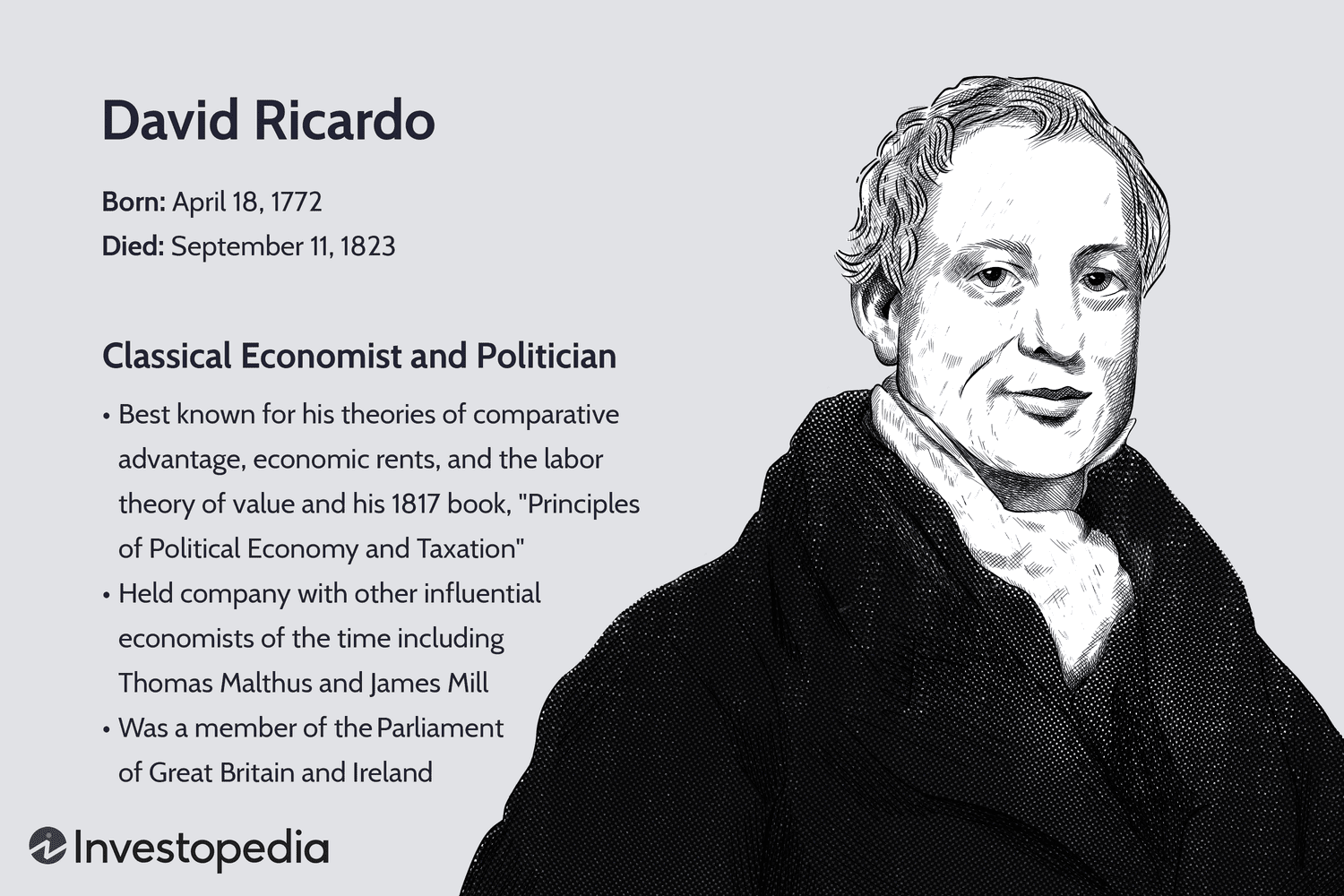

David Ricardo 1772-1823: Economics Pioneer and His Lasting Legacy
Explore the life and groundbreaking economic theories of David Ricardo, including comparative advantage, labor theory of value, and the theory of rents, which continue to influence modern economics and trade policies.
David Ricardo (1772–1823) was a pioneering classical economist whose influential theories on wages, profit, labor value, and international trade remain foundational in economics today. His seminal work, Principles of Political Economy and Taxation (1817), introduced key concepts such as comparative advantage and the theory of rents. Ricardo also independently discovered the law of diminishing marginal returns alongside his contemporaries.
Key Insights
- Ricardo developed foundational economic theories that still shape policy and trade.
- He was a successful investor who transitioned to economics after retiring early from finance.
- His comparative advantage theory revolutionized the understanding of international trade benefits.
- Ricardo’s labor theory of value emphasized the role of labor input in determining a good’s worth.
- He introduced the concept of economic rents, highlighting unearned income from asset ownership.

Early Life and Career
Born in England as one of 17 children, Ricardo began working as a stockbroker at 14. Despite being disowned by his father at 21 for marrying outside his faith, he amassed significant wealth through government securities trading, retiring at 41 after profiting from speculating on the Battle of Waterloo. Subsequently, he purchased a seat in Parliament and engaged with leading thinkers like Adam Smith, James Mill, Jeremy Bentham, and Thomas Malthus.
Major Contributions
Comparative Advantage Theory
Ricardo’s theory of comparative advantage demonstrated that nations benefit from specializing in goods they can produce at lower opportunity costs, even without absolute production superiority. For instance, China focusing on porcelain and tea while the UK specializes in machine parts creates mutual trade gains. This theory underpins arguments for free trade and critiques protectionism.
Labor Theory of Value
Ricardo posited that a product’s value is determined by the labor hours invested rather than wages paid. For example, if a table requires twice the labor time of a chair, it should be valued equivalently to two chairs, regardless of wage differences. This theory influenced later economic schools, including Marxism.
Theory of Rents
He introduced the concept that asset owners earn rents—income derived solely from ownership rather than productive contribution. Initially applied to agricultural land rents, this idea extends to political economics, explaining rent-seeking behaviors where owners influence policies to increase their unearned income.
Ricardian Equivalence
In public finance, Ricardo argued that government borrowing versus taxation yields equivalent economic outcomes. Rational taxpayers anticipate future taxes to cover deficits and save accordingly, neutralizing deficit spending’s stimulative effect on aggregate demand.
Published Works
Ricardo’s 1815 Essay on the Influence of a Low Price of Corn on the Profits of Stock introduced the law of diminishing returns. His first economics article, advocating for reduced Bank of England note issuance, appeared at age 37. His comprehensive 1817 work, Principles of Political Economy and Taxation, remains a cornerstone of economic literature.
Ricardo’s Iron Law of Wages
Ricardo argued that wage increases are ultimately futile as wages tend to stabilize around subsistence levels over time, limiting long-term improvements in workers’ earnings.
Economic Legacy
David Ricardo’s economic theories, especially comparative advantage, continue to shape international trade policies and economic thought. His insights into labor value, rents, and diminishing returns laid the groundwork for modern economics and political economy.
Summary
David Ricardo was a transformative 18th-century English economist whose theories on comparative advantage, labor value, and rents have deeply influenced economic policy and theory. Beyond economics, his role as a Parliament member connected his ideas to practical governance, cementing his legacy as a foundational figure in economic history.
Discover engaging topics and analytical content in Economics as of 06-09-2023. The article titled " David Ricardo 1772-1823: Economics Pioneer and His Lasting Legacy " provides new insights and practical guidance in the Economics field. Each topic is meticulously analyzed to deliver actionable information to readers.
The topic " David Ricardo 1772-1823: Economics Pioneer and His Lasting Legacy " helps you make smarter decisions within the Economics category. All topics on our website are unique and offer valuable content for our audience.