

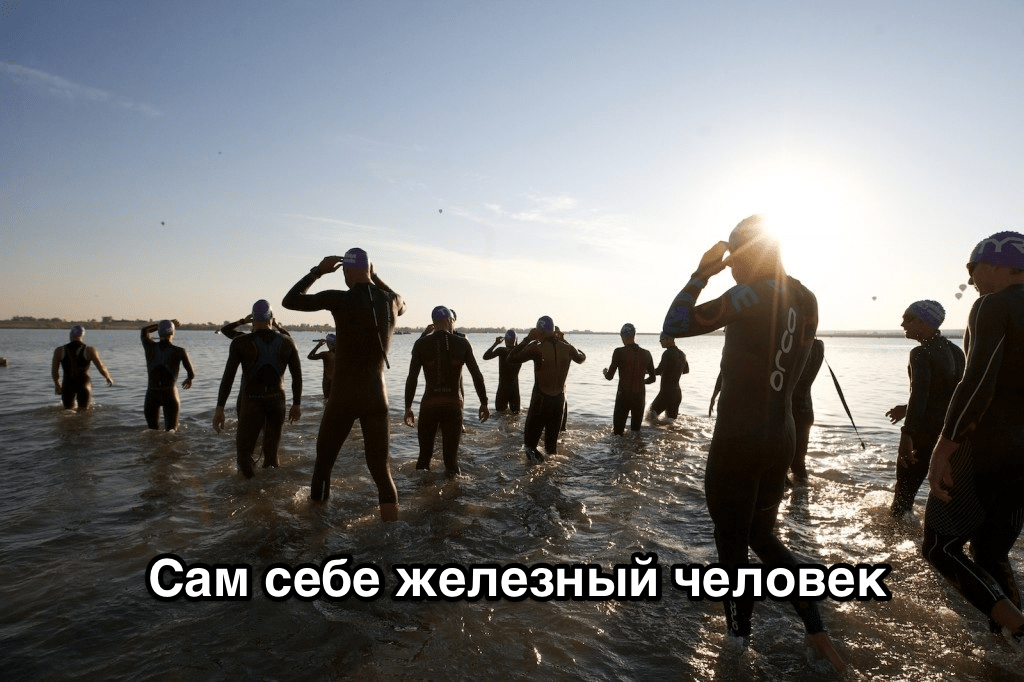

Be Your Own Ironman: How to Create a Yearly Training Plan for IRONMAN Preparation
Discover a step-by-step guide to independently crafting a comprehensive annual training plan tailored for conquering the IRONMAN triathlon, ensuring peak performance and injury-free progress.
The decision to take on an IRONMAN challenge often strikes spontaneously—a desire to change your life, to push your limits. What did I know about triathlon and IRONMAN? It involves swimming, cycling, and running. Completing the full distance seemed beyond ordinary people’s reach: 2.5 miles swimming, 112 miles cycling, and a full marathon of 26.2 miles running. Tempting? Absolutely. Could I do it? Why not! The idea was wild enough to captivate me and pull me in completely.
For days, I immersed myself in the official IRONMAN website and all related articles. The wealth of information covered nutrition, racing strategies, gear, recovery, training, skill drills, and more. My desk was scattered with notes, but I realized notes alone weren’t enough—I needed a system. A system that would help me achieve my goal: finishing an IRONMAN 70.3 (1.2-mile swim, 56-mile bike, 13.1-mile run). Having built business systems for years, I knew all systems share basic principles. One simple rule: if you don’t know where to start, look at existing systems around you.
Since running was my biggest triathlon challenge, I subscribed to a half-marathon training program via a running app. It was a solid start. I diligently followed the six-days-a-week plan and continued researching. I kept encountering Joe Friel’s "Triathlete’s Bible" and after reading reviews, I knew I had to study it cover to cover immediately.
It was the right choice.
Initially, I simply read. Then it clicked: this was the system I had been searching for! The book required serious, meticulous work to tailor the training and nutrition system to my needs. Fortunately, that’s exactly why it was written. With patience and attention, the "Triathlete’s Bible" enables creating a training and nutrition plan for triathletes and duathletes of any level.
I invested significant time and effort crafting my personalized program. Now, I want to save you time by sharing how to prepare your training plan in this series, "Be Your Own Ironman."
Creating Your Annual Training Plan
Building your yearly training plan rests on three key principles:
- Peak physical condition must coincide with your main race day.
- The year is divided into periods, each with specific goals, intensity, duration, volume, and skill focus. The goal of periodization is to reach your peak at the right time.
- Avoid overtraining and injuries caused by excessive loads.
Periodization has roots in 20th-century sports science, and you can find extensive resources online. Below is a brief overview of periods, followed by practical steps to create your annual plan. I’ll share my plan examples for clarity.
Joe Friel emphasizes athlete motivation, which I won’t cover here. If you’re reading this, you’re already motivated—that’s a quarter of the battle won.
Step 1 – Define Your Goals for the Year
What do you want to achieve this year in your sport? Whether it’s completing an IRONMAN, running a marathon, or hitting specific performance targets, clearly define and document your goals. Keep it simple—no more than three goals.
My goals for the year:
- Complete the IRONMAN 70.3 in under 5 hours.
- Complete the full IRONMAN in under 10 hours.
Step 2 – Set Your Training Objectives
Objectives should align with your goals and answer three questions:
- What needs to be done?
- When should it be completed?
- How will progress be measured?
Limit yourself to no more than five objectives.
My training objectives:
- Swim 4 km in under 1 hour by February 10, 2014.
- Run 21 km in under 1 hour 40 minutes by November 11, 2013.
- Run a marathon in under 4 hours by February 10, 2014.
- Cycle 180 km in under 5 hours by March 24.
Note these are based on my race schedule and current fitness. Achieving these ensures meeting my goals.
Step 3 – Calculate Available Training Time
Estimate how many hours per year you can dedicate to training. Consider weekday and weekend availability, vacations, business trips, and how these affect your schedule. Include all training types plus warm-ups, testing, and other physical activities.
For me, I allocated about 1.5 hours on four weekdays (resting one day) and 3.5 hours on weekends, totaling 13 hours per week. Multiplying by 52 weeks and rounding down gave me 670 hours annually.
Step 4 – Schedule Your Races and Prioritize Them
If you’re not racing, plan time trials to simulate race conditions.
Create a table listing all 52 weeks. Column 1: week number. Column 2: main race name. Column 3: Monday date of race week. Assign priority A to your most important race, B to secondary races, and C to events meant for testing your fitness. Mark all in your calendar.
Step 5 – Divide the Year into Training Periods
Now the exciting part: split 52 weeks into six periods:
- Preparatory: Easiest phase to acclimate your body to training, lasting 3-4 weeks.
- Base: Split into three parts, focusing on endurance, strength, and speed over 24-32 weeks.
- Build: Develop muscular endurance, anaerobic endurance, and power over 6-8 weeks while maintaining base training and addressing weaknesses.
- Peak: Three weeks of tapering to reach physical peak before race day.
- Race: One week for race participation or simulation.
- Transition: Recovery phase post-race, lasting 1-6 weeks depending on race impact, engaging in alternative sports but avoiding triathlon disciplines initially.
Identify your race week in the calendar, mark it, and count backward to allocate each period accordingly.
Step 6 – Allocate Training Hours per Period
Determine how many training hours to assign to each phase. Joe Friel’s "Triathlete’s Bible" provides detailed tables for this distribution.
Step 7 – Break Down Weekly Training Hours
Apply the same principle weekly, ensuring every fourth week is a recovery week with reduced volume to promote rest and adaptation.
Step 8 – Plan Which Skills to Develop Each Period
Focus on three basic and three specialized abilities:
Basic Abilities:
- Endurance: The ability to resist fatigue and its effects; the most crucial for triathletes.
- Strength: Overcoming resistance, vital for swimming in open water, cycling uphill, and battling wind.
- Speed: Efficient movement combining technique and power in swimming, cycling, and running.
Specialized Abilities:
- Muscular Endurance: Sustaining high muscle load over time, blending strength and endurance.
- Anaerobic Endurance: Combines speed and endurance to resist fatigue during high-intensity bursts; least critical for triathletes.
- Power: Ability to rapidly apply maximum strength, arising from strength and speed.
Add columns for these abilities to your training calendar and mark which to emphasize during each period based on Friel’s recommendations:
- Preparatory: Focus on endurance and speed for all sports; include testing at start and end.
- Base 1: Emphasize endurance and speed with longer sessions; adapt based on weather and terrain.
- Base 2: Add strength and muscular endurance; moderate intensity.
- Base 3: Maximize volume with increased intensity and strength work.
- Build 1 & 2: Target endurance and muscular endurance; address personal weak spots, focusing on strength for cycling and running, anaerobic endurance for swimming.
- Peak: Prioritize endurance, muscular endurance, and speed across all sports.
- Race: Engage in race or race simulation with combined sessions at race intensity.
Strength training phases include:
- Anatomical Adaptation (AA): 3 weeks during preparatory phase to prepare for heavier loads.
- Maximal Transition Period (MTP): 1 week after AA to prep for maximum intensity.
- Maximum Intensity (MI): 4 weeks during Base 1 phase.
- Strength Maintenance (SM): Ongoing except during race and transition weeks.
This comprehensive strategy forms your annual training blueprint. Here is my plan as an example:
[Insert personalized training plan image or table here]
In the next article, we will detail weekly training plans.
Final thoughts:
- Having a plan, even imperfect, is better than none. It provides structure, enabling analysis and adjustments.
- Plans are not set in stone; adapt them as you learn more about your body and progress.
- Discipline is essential—follow your plan consistently to succeed.
- Remember, you can quit any race without judgment, but only those who finish earn true respect.
Every morning, a phrase motivates me: “Roman Zaytsev, you’re an IRONMAN!” I will hear it in person next year. Let it propel you out of bed too.
Good luck on your journey!
Discover engaging topics and analytical content in Sports and Health as of 29-06-2024. The article titled " Be Your Own Ironman: How to Create a Yearly Training Plan for IRONMAN Preparation " provides new insights and practical guidance in the Sports and Health field. Each topic is meticulously analyzed to deliver actionable information to readers.
The topic " Be Your Own Ironman: How to Create a Yearly Training Plan for IRONMAN Preparation " helps you make smarter decisions within the Sports and Health category. All topics on our website are unique and offer valuable content for our audience.