

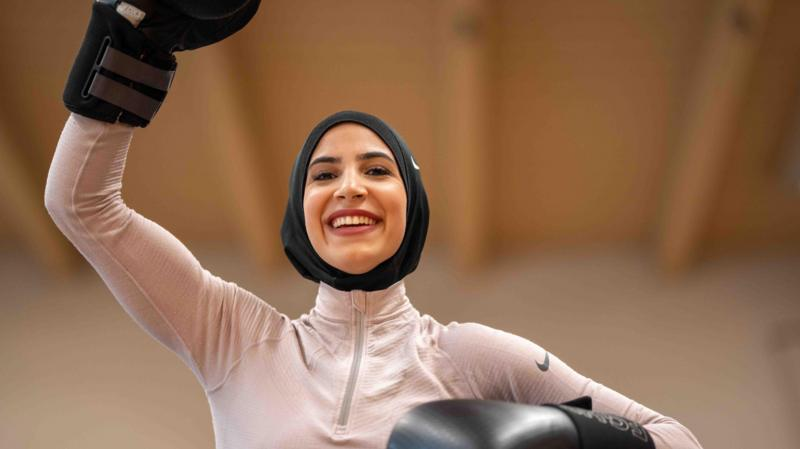

Zeina Nassar makes history as hijab-wearing boxer debuts pro career in Pakistan
Zeina Nassar makes history as a hijab-wearing boxer making her pro debut in Pakistan, after a landmark global push to allow hijabs in boxing and inspire a new generation of fighters worldwide.
Introduction
In Berlin, Zeina Nassar grew up challenging boxing norms while wearing a hijab. Now preparing for a pro debut in Pakistan, her trailblazing journey shows how persistence and advocacy can reshape the sport for athletes who choose to wear faith-based head coverings.
From Berlin to the ring: early spark
As a teenager, Nassar studied training videos of female fighters and built a persuasive case to her parents. She explained that boxing would sharpen focus, keep her in an all-girls gym, and embody discipline and respect.
Born in Germany with Lebanese roots, the future champion wore the hijab in a sport where rules once barred it. The challenge was not just family consent but breaking a broader barrier in competition.
Rule changes and a global campaign
At 14, she helped push through a German rule change to allow long sleeves and headscarves in amateur bouts. She recalls the uneasy gaze of spectators and critics who argued she could not compete this way, while she argued rules should measure performance, not appearance.
Her early success paved the way for international action. When she reached the European Championships, hijabs were still banned. She did not give up, eventually joining a global push that led to the IBA lifting the ban in 2019, and later alignment with World Boxing for Olympic boxing.
Because of her efforts, many women in amateur boxing can fight with a hijab and be who they want to be, her supporters say.
Professional boxing and hijab rules
In pro boxing, rules vary by federation. The World Boxing Organisation typically defers attire matters to local commissions; the IBF has no explicit hijab ban; the British Boxing Board of Control allows sports hijabs. German officials express safety concerns about fit and securing the hijab, while Nassar notes her 100 amateur fights never posed problems. Medical experts say hijabs are safe and breathable when properly fitted.
Pakistan: a four-day boxing festival
Pakistan hosts a major four-day show in Lahore expected to attract more than 20,000 fans, featuring local and international stars. Nassar will headline in hijab, with Roy Jones Jr. guiding her corner as mentor and coach.
Her goal is ambitious: win a world title within six to seven professional bouts.
Key Takeaways
- Nassar’s campaign helped change national and international boxing rules to accommodate hijabs in competition.
- Professional boxing varies by federation, but hijabs are permitted by several bodies and major commissions with proper safety measures.
- The Lahore event signals growing global inclusion and a new era for Muslim athletes in boxing.
- Jones Jr. brings expert guidance on footwork, power and mindset to Nassar’s pursuit of a title.
- Her journey illustrates how sport can adapt to diverse identities while maintaining performance and safety standards.
Expert perspective
Medical experts describe hijabs as lightweight and breathable, posing no safety risk when properly fitted. With proper coaching and equipment, hijab-wearing athletes can compete at the highest levels.
Summary
Zeina Nassar’s path from a Berlin gym to a pro debut in Pakistan encapsulates a broader movement to make boxing more inclusive. Her advocacy changed rules, inspired fellow athletes, and drew global attention to the question of faith and sport. As she trains for a landmark fight, the world watches how far inclusive rules can take a sport once defined by strict norms.
Zeina Nassar’s story shows that determined advocacy can rewrite sports rules and open doors for hijab-wearing athletes to compete on their terms. Source: BBC