

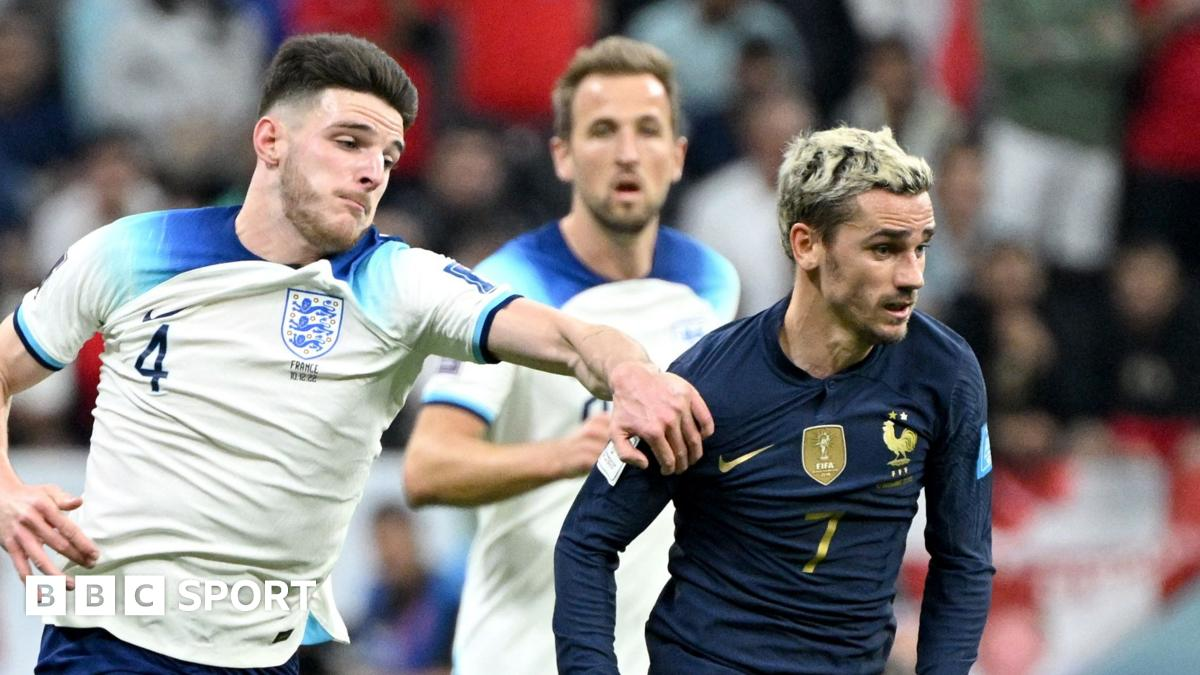

World Cup 2026 Draw: Top Seeds Paired to Shield Blockbuster Knockouts
FIFA's seed-pairing rule for the 2026 World Cup keeps the four top teams apart until the later rounds, shaping a dramatic knockout phase and potential blockbuster matchups.
The 2026 World Cup introduces a seed-pairing system designed to prevent early clashes among the sport's strongest nations. FIFA confirmed that the top four ranked teams will be kept in separate halves of the knockout bracket, increasing the likelihood of late-stage, high-stakes encounters.
How the draw works
The 12 groups will be filled from four pots, drawing one team from each pot into every group. The four top seeds—Spain, Argentina, France, and England—are assigned to opposite halves so they cannot meet before the semifinals, assuming they win their groups.
Co-hosts Mexico (A1), Canada (B1), and the United States (D1) carry pre-determined group positions with colored markers to indicate their status; they will play all their games in their own countries. The draw then places each newly drawn team into the first available group in alphabetical order, while a separate bracket ensures the seed pairing stays intact.
No group may contain more than one team from the same confederation. With 16 European qualifiers, four groups will feature two European nations, while other groups mix teams from different regions. Inter-confederation play-offs add further constraints: Pathway 1 teams (New Caledonia, Jamaica, DR Congo) cannot be grouped with CONCACAF or African sides, and Pathway 2 (Bolivia, Suriname, Iraq) avoids South America, CONCACAF and Asia.
The final draw is scheduled for Friday, 5 December at 17:00 GMT, with the exact venues and kick-off times confirmed only after the event.
Pot details and notable entrants
Scotland is placed in pot three, while the six play-off winners—potentially Wales, Northern Ireland, or the Republic of Ireland among them—will be in pot four. Debutants Uzbekistan are in pot three, with Jordan, Cape Verde, and Curacao among the new sides in pot four.
Key Takeaways
- Seed pairing keeps Spain and Argentina, and France and England, apart until the later rounds.
- No group contains more than one team from the same confederation, balancing regional strength.
- Co-hosts Mexico (A1), Canada (B1), and the United States (D1) have fixed group positions.
- Uzbekistan enters as a pot-three debutant; Jordan, Cape Verde, and Curacao join pot four as first-time participants.
- The draw on December 5 will set fixtures, with venues announced later.
Expert perspective
Football analyst Dr. Priya Kapoor welcomed the change, saying the pairing system adds strategic depth and heightens anticipation for the knockout rounds, while maintaining fairness across groups.
Summary
The 2026 World Cup introduces seed pairing to shield the top teams from early clashes, preserving marquee matchups for the later stages. The event uses a four-pot draw with confederation rules and fixed host placements to balance group strength. The December 5 draw will finalize group compositions and fixtures, with venues to be confirmed subsequently.
Seed-pairing protects marquee meetings for the later rounds, ensuring a drama-filled road from group stages to the final. For full details, see the BBC report: BBC coverage.