


The Rising Trend of Double Names: Challenges and Stories Behind Unique Baby Names
Explore the growing popularity of double and even triple baby names worldwide, their historical roots, cultural significance, and the challenges parents and children face with these unique identities.
In recent years, experts have observed a significant rise in the use of double and even triple names for children. This trend isn’t limited to celebrities; many everyday parents want their children to stand out from the crowd.
Some compelling statistics: According to a UNICEF report, since 2001, the number of children with double names has increased 4.5 times, with girls most often receiving such names.
Back in 2007, when a classmate of mine named her daughter with a double first name, whispers circulated: “That’s crazy!” It seemed too long, complicated to pronounce, and overly elaborate. Fast forward to the third decade of the 21st century, and not only double surnames but also double and triple first names are in vogue — and soon, double patronymics may join the trend.
Congratulations, we are raising a generation that will definitely face challenges with their full names!
The Origins of Double Names
Double names gained popularity in 17th-century England when King Charles I ascended the throne. Nobility began giving their children long names, sometimes with up to ten parts, to showcase their high social status, often written consecutively, such as Anna Maria Elizabeth Emma Christina.
By the late 18th century, this tradition spread throughout Europe and later globally. Long names became common not only among the elite but also ordinary citizens, either to honor beloved relatives or to give children unique identities.
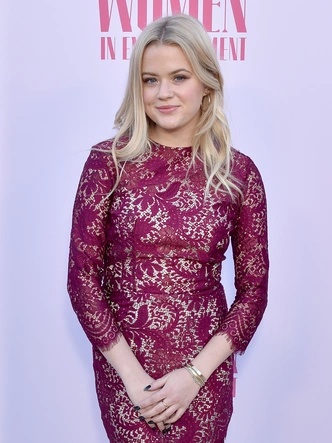
However, with the rise of digitalization, lengthy names were often shortened to initials or confused with surnames, creating a need for hyphens. While not universally adopted, many embraced this style. For example, actor Johnny Depp named his daughter Lily-Rose in May 1999, whereas Reese Witherspoon chose the traditional Ava Elizabeth.

Double Names in Russia
Trends often reach Russia with a delay, and double names are no exception. They became noticeable only in the early 2000s, initially embraced by celebrities unafraid of public opinion or the compatibility with patronymics.
In 2002, Nikita Dzhigurda named his son Artemiy-Dobrovlad, and a year later, TV host Vladimir Solovyov gave his newborn daughter the name Sofia-Betina.
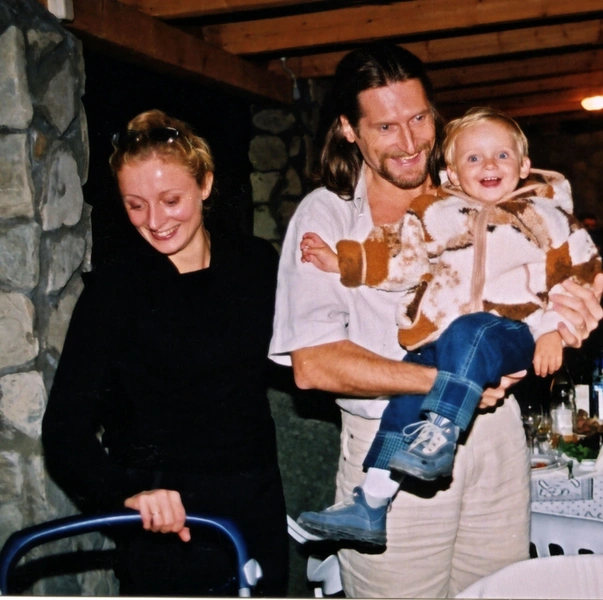
Both parents liked double names so much that they repeated the practice with younger children, resulting in names like Emma-Ester Solovyova, Ilya-Maximilian, Mik-Angel-Christ, and Eva-Vlada Dzhigurda. Later, Alla-Victoria Kirkorova and her brother Martin-Christin followed suit.

By 2019, more celebrity children had double names. Tanya Tereshina, former Hi-Fi group vocalist, named her son Arseniy-Ostap after months of deliberation.
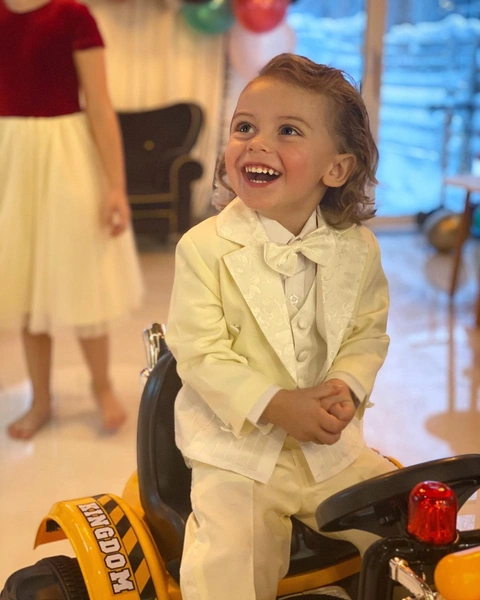
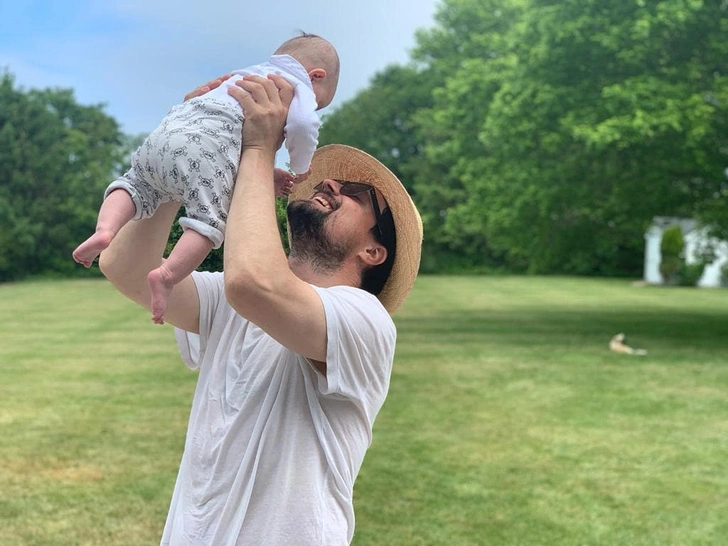
Victoria Lopyreva named her son Mark-Lionel, inspired by famous footballer Lionel Messi. Around the same time, singer Suzanna announced the birth of her daughter Evangelina-Sophia, and actor Danila Kozlovsky and Olga Zueva introduced their daughter Oda-Valentina.
Following celebrities, many other parents began choosing double names for their children.
According to Moscow’s civil registry, recent years have seen births of children named Venus-Veronica, Alexander-Sever, Lev-Moses, Ludwig-Alexander, Rachel-Tatyana, Alice-Vasilisa, Daisy-Anastasia, Linda-Maria, Martin-Pavel, Vera-Elizabeth, Lyubov-Maria, Milana-Nadezhda, and more.
Personal Stories from Parents
Yegor-Georgiy from Belgrade, mother Elena:
“We chose this name because my husband and I couldn’t agree. I wanted Yegor; he wanted Georgiy. Relatives and kindergarten kids call him Yegor, and he introduces himself that way, but his father calls him Gosha. Initially, it felt unusual, like we stood out in our small town, and paperwork was cumbersome with such a long name. Now, I’ve accepted it and even enjoy the surprised reactions when people learn his name. When it’s time for his passport, he can decide which name to use.”
Sofi-Alvina and Sami-David from Moscow, mother Yana (stage name Ioanna Vois):
“I dreamed of a daughter named Alvina since childhood, while my husband’s family expected Sofi. Sami is a shortened form of Semyon, inspired by my father-in-law’s affectionate nicknames for my husband. David came after watching the film ‘Liquidation’ and was accepted without dispute thanks to Vladimir Mashkov’s brilliant portrayal of David Gotsman. The names are harmonious, making it hard to mispronounce them. Sometimes we ask people not to decline our daughter’s name — she is neither Sofia nor Sonya!”
Alfran Lillard from Khabarovsk, mother Anna:
“Choosing a name for our son took a long time. I started with social media and ended with a worn-out book of '1000 Names' older than me, but none fit. Around the 20th week of pregnancy, my husband suggested Lillard as a second name, and I loved it immediately. Then came the challenge to find a first name. My husband combined our names — Alfred and Anna — into Alfran, and I fell in love again. We often have to spell it out for doctors, but it’s not a big deal. We’re very happy with our choice.”
Alice-Maria from Saint Petersburg, mother Lyudmila:
“We agreed early on for the first name to be Alice, but when I became pregnant, my husband wanted a different name. One option was Maria, after his late grandmother, a strong-willed woman. I had never liked that name, so he suggested Alice-Maria. After birth, I agreed. We haven’t faced social challenges yet, but recently, at kindergarten enrollment, the nurse asked, ‘Two names? Haven’t seen that before. Watched too many TV series?’ I found the question tactless, reflecting more on the asker’s culture than on us.”
Elizabeth-Eulalia from Smolensk, mother Olga:
“We followed pre-revolutionary family traditions: our ancestors gave children beautiful names. It felt odd to name our daughter simply, as it wouldn’t suit our surname. We’ve never faced difficulties; instead, people often compliment the choice. The name stands out instantly. Grandma calls her Lizochka; I use the full name or sometimes just Eulalia. I like the second name even more.”
Double Patronymics — The New Future
One aspect often overlooked in this naming trend is the patronymic. Introduced in Russia in 945 AD, it remains a national characteristic assigned during birth registration. It can be omitted only if the father is a foreigner.
According to the Federal Law on Civil Status Acts, a child's patronymic is mandatory and formed by adding a gender-specific suffix to the father's name.
But what patronymic will children with double first names receive? Official guidelines are scarce due to the rarity of such cases. However, civil registry experts say that if the father has a double name, parents may choose which part to base the patronymic on.
“For example, if the father is Ivan-Philip and the child is Nikita, the patronymic could be Ivanovich, Philipovich, or Ivan-Philipovich,” explains Olga Yuryevna Malakhova, Deputy Head of the Moscow Region Civil Registry Office.
Conclusions
Even with a simple surname, people often make mistakes in spelling or pronunciation. Imagine the challenges for someone named Anna-Christina Igor-Alexandrovna Medvedeva. The evolving trend of double and triple names brings uniqueness but also complexities for individuals and society alike.
Explore useful articles in Children as of 15-04-2024. The article titled " The Rising Trend of Double Names: Challenges and Stories Behind Unique Baby Names " offers in-depth analysis and practical advice in the Children field. Each article is carefully crafted by experts to provide maximum value to readers.
The " The Rising Trend of Double Names: Challenges and Stories Behind Unique Baby Names " article expands your knowledge in Children, keeps you informed about the latest developments, and helps you make well-informed decisions. Each article is based on unique content, ensuring originality and quality.