

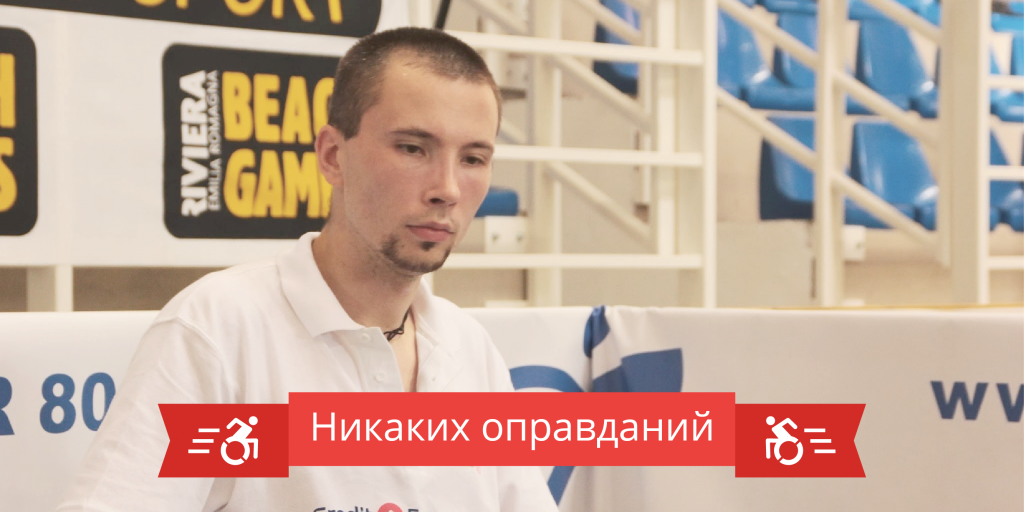

No Excuses: 'Spirit in Motion' – Interview with Alexander Gromov, Captain of Russia's Disability Foosball Team
Discover the inspiring journey of Alexander Gromov, a former medical doctor turned captain of Russia's disability foosball national team, overcoming adversity through passion and resilience.
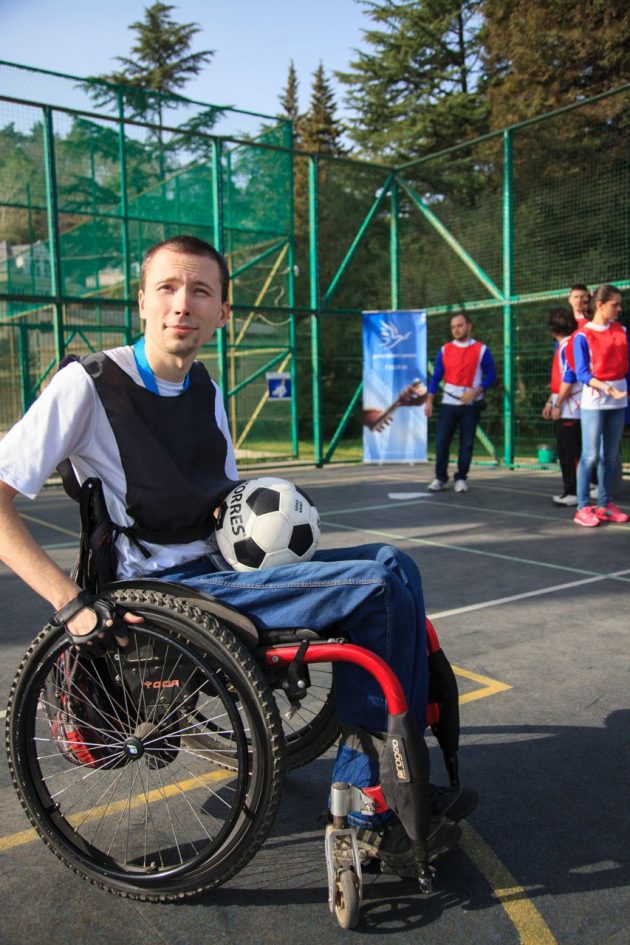
Here is another inspiring story, this time about Alexander Gromov. Trained as a medical doctor, an unfortunate motorcycle accident forced him to seek new paths for self-fulfillment. Alexander found his calling as the captain of Russia's national disability foosball team.
Unshakable Attitude at 80 Level
— Hi Alexander! Welcome to Lifehacker!
— Hi, Nastya!
— Tell us about your childhood.
— I was born, raised, and still live in Moscow. I'm an only child in an intellectual family: my mother is an obstetrician, and my father is an astrophysicist.
— Were you a diligent student with excellent grades?
— Not exactly. I excelled in subjects that interested me and came easily, like foreign languages. I also did well in chemistry for a while, but lost interest after a good teacher left.
Overall, in my youth, I was quite carefree, focusing on what I enjoyed.
— What extracurricular hobbies did you have?
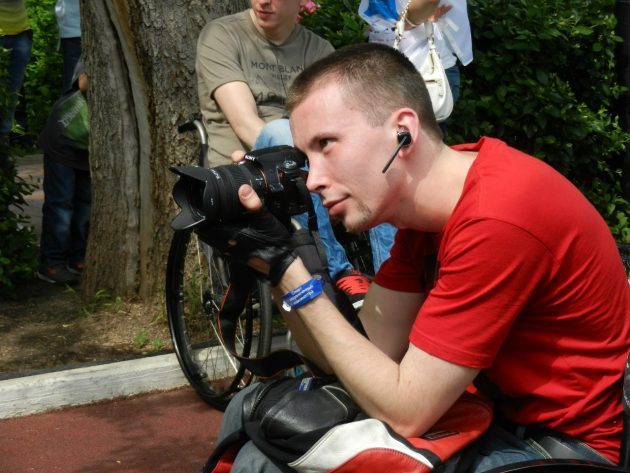
— Computers. My father worked at a research institute that had early access to computers. He brought one home to work remotely, and I became fascinated, especially with gaming.
As a former avid gamer, I believe children shouldn’t be banned from playing computer games. Firstly, bans are ineffective; limits are better than outright prohibitions. Secondly, games provide emotional relief and opportunities to connect with like-minded people. Thirdly, they improve English skills. I personally enhanced my English through gaming before attending courses.
— Did you play sports?
— Paradoxically, no. I disliked physical education and never played football in the yard. Back then, sports didn’t appeal to me, and I never imagined I would be involved in them later.
Hope
— What profession did you choose?
— After school, I enrolled in medical university to study pediatrics. My parents didn’t limit my choice, but without strong preferences, I followed their path. Medicine interested me because it involves working with people.
I specialized as a pediatric otolaryngologist, completed residency, and studied in postgraduate school for a year.
— Until the accident happened?
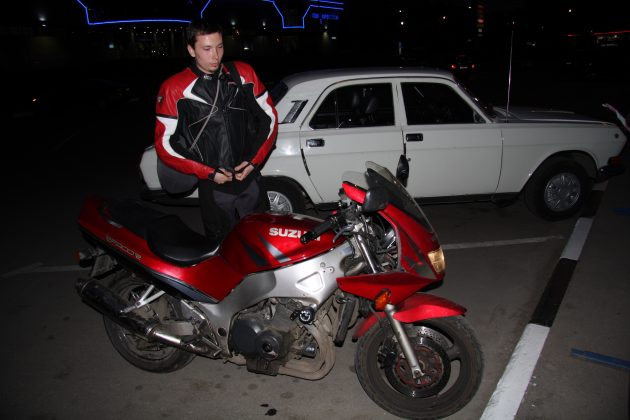
— Yes, in 2007 I had a motorcycle accident. I spent a year in hospitals for spinal treatment, followed by rehabilitation at the "Preodoleniye" center.
— As a doctor, did you understand the severity of your condition?
— I’m both a doctor and a human being. My education helped me objectively assess the situation, but emotionally, I went through the same stages as anyone else.
During the first year, I was absolutely sure I would walk again soon. This mindset helped me keep going.
But gradually, I came to accept that I wouldn’t walk again.
— Did you lose hope?
— That sounds too sad. :) I simply accepted the fact, which allowed me to move on to the next stage—adaptation and shifting my interests.
There’s an American TV series called Push Girls about four women with spinal injuries using wheelchairs. One line struck me: "The value of walking upright is greatly exaggerated."
That’s largely true. With the right tools, you can adapt and engage in almost anything.
Foosball
Also known as kicker or table football, this game was invented in the 1920s.
— Alexander, what is foosball?
— It’s a game played on a small table with footballer figurines attached to rods. You rotate the rods to score goals against your opponent.
At first glance, it seems simple. But when playing by official rules against serious players, you realize it’s much more complex. Beginners often experience cognitive dissonance: you see the figurines, the goals, the ball, but can’t make anything work and get outplayed.

— How did you discover this sport?
— When I first arrived at "Preodoleniye," I was lucky to have a roommate with a similar injury and timeline. Besides therapy, we needed entertainment. The center had a foosball table, and my roommate kept inviting me to play. That’s how I got hooked.
Eventually, a team formed, and we began holding local and external championships.

— Did these tournaments lead you to the world championship in France?
— Yes.
We first competed in the Moscow championship. My partner and I barely won. We lost the first match but, thanks to a double-elimination format, we regrouped, defeated all opponents, and reached the final. There, we faced the same team that beat us initially. It was a tight match, and we won by a miracle, earning our ticket to France.
There, we experienced what serious foosball is. We met people truly passionate about the sport. Before, I saw it as a hobby—just little figures and balls, fun but casual.
Seeing grown men with beards crying over wins and losses, witnessing the passionate crowd cheering loudly, I realized it’s a real sport.
It deeply moved me.
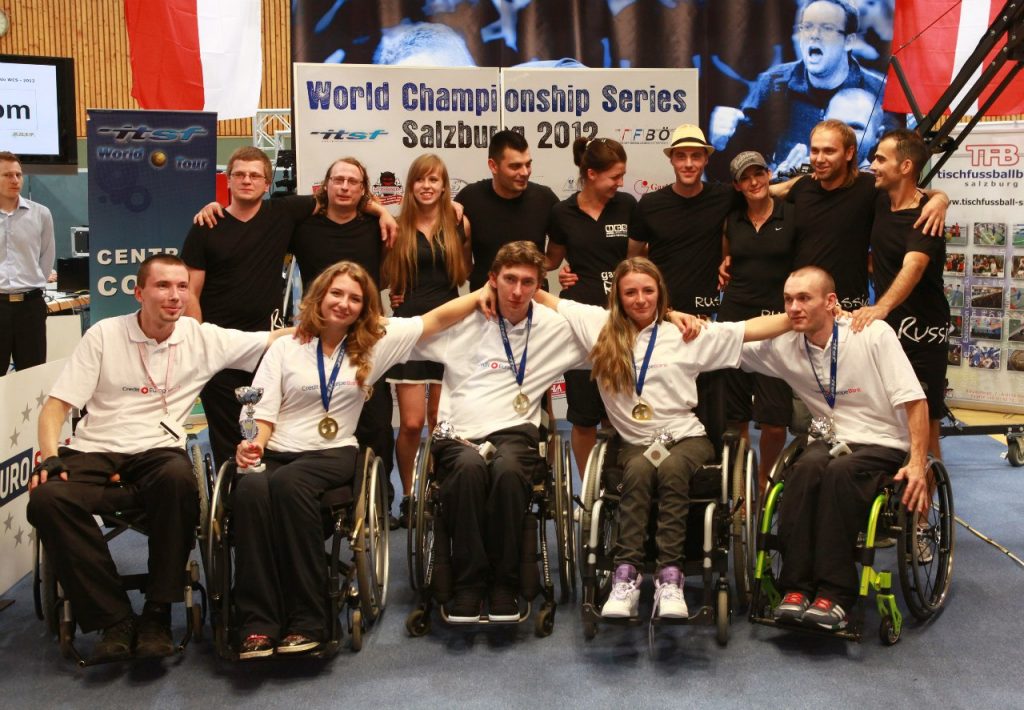
— Did you bring home an award from France?
— We placed second. The "newcomer’s luck" principle applied. Our skill level was still below that of European teams.
 1 / 0
1 / 0 2 / 0
2 / 0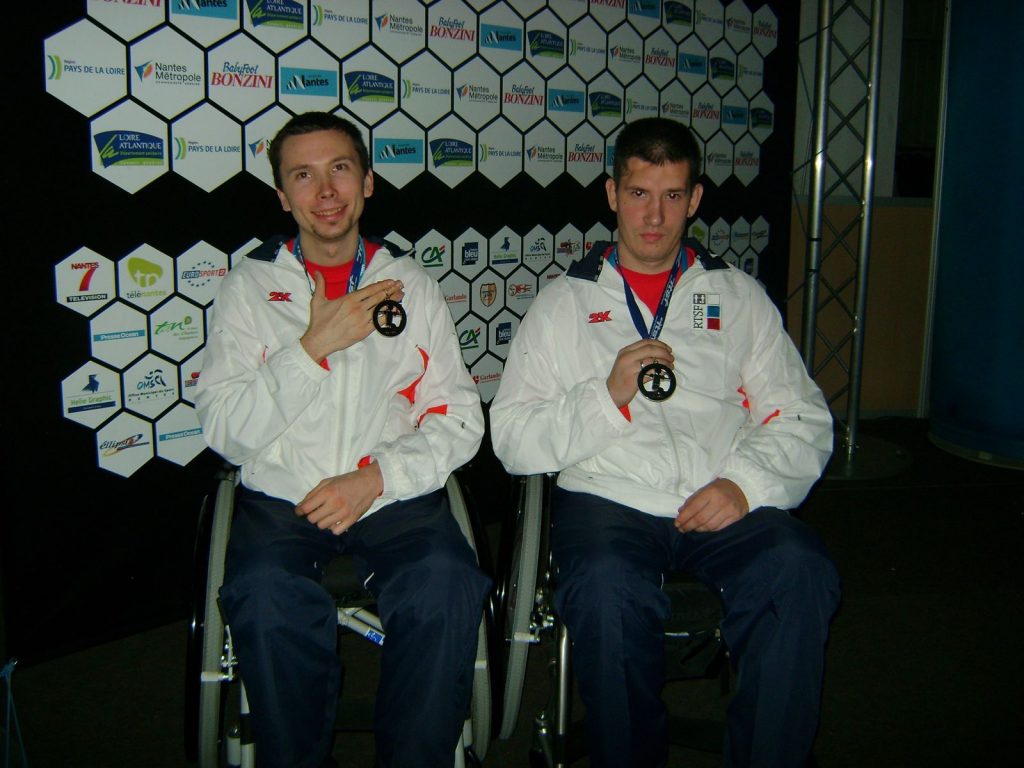 3 / 0
3 / 0— How does disability foosball differ from regular foosball?
— Almost not at all. Technically, we can compete with able-bodied players. However, there are two major differences: the tables and the regulations. Our tables are adapted—regular tables are taller, making it hard to see and turn handles while seated. Able-bodied players can play at our tables, but not in official competitions, as regulations require equal conditions for all players.

— Can anyone with a disability play foosball?
— Unfortunately, not everyone professionally. It depends on hand function. For example, people with severe cerebral palsy or high spinal injuries may find it difficult to play professionally. But as a hobby, foosball is accessible to everyone and is a fantastic way to spend time.
Current Challenges
— You currently lead Russia's disability foosball team. What do you feel is missing?
— Two things.
First, mass participation. Some teams, like Italy’s, have many players, and quantity often leads to quality. Unfortunately, our team is still relatively small. The community is very positive, but the low numbers relate directly to the second issue.
Second, there’s a lack of venues for meetings and training, and places where people can simply try the game. Able-bodied people often discover foosball in bars or cafes with tables where groups spontaneously play. Many professional players started this way.
For people with disabilities, such places don’t exist. The only place to try foosball is often rehabilitation centers, which not everyone returns to. We need clubs where people can enjoy informal, fun gatherings and compete.
— Is foosball played outside Moscow?
— Disability foosball is mostly concentrated in Moscow. In the regions, the issues I mentioned—lack of facilities and players—are even more severe.
A new adapted foosball table costs around $600–$750. Considering no additional equipment is needed besides a space, this is affordable. Any rehabilitation center or social organization could start a foosball club. However, this requires serious awareness efforts, as some administrators might dismiss it as frivolous, preferring to invest in gym equipment instead. I plan to focus on this area in the future, as interregional tournaments would be amazing!
— How often does the national team train?
— Once a week. Most players have jobs, so we can’t dedicate all our time to foosball. Usually, we meet on weekends when there’s free time and less traffic.
Spirit in Motion
— What is your current job?
— I work as a sports organizer at the "Preodoleniye" rehabilitation center.
Previously, I worked on the organizing committee for the Sochi 2014 Winter Olympics.
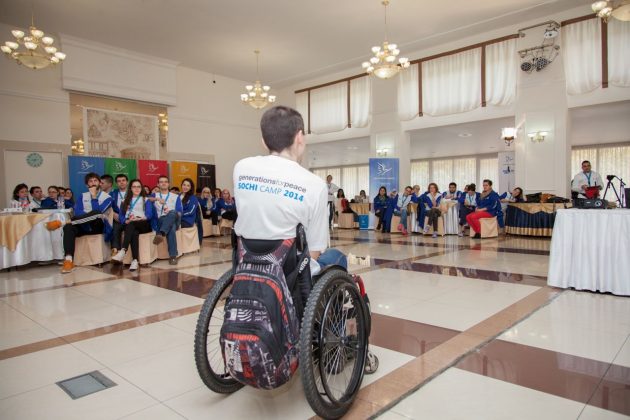
— How did you get involved?
— There was a vacancy, and I was invited to apply. I thought, why not? The workplace was well-equipped, with a nice office. After the interview, I was hired.
I worked there for a year. It was there I learned about the Paralympic torchbearer movement and applied to become one myself.

— Did you enjoy the Paralympics?
Sochi was an unforgettable experience!
I didn’t expect it to be so amazing. Walking from the Olympic Village to the Fisht Stadium for the opening ceremony, locals said the Olympics had even more people. I wondered, "How could there be more?" At the stadium, I saw 40,000 happy spectators from the top stands—laughing, doing waves. I’ve never seen anything like it!
Despite skeptics, I believe the Olympics and Paralympics are incredible events that unite people.
— So the investment was worthwhile?
— Working on the organizing committee, I realized the Olympics is a massive collective effort with years of standards and global collaboration. I’m proud our country participated and succeeded.
Regarding money, as with foosball tables, some will always argue for other priorities.
But sports is a worthy cause.
In my opinion, it was a 110% success. Just look at how Sochi has transformed.
— Yes, much has been done for accessibility. How is Moscow doing?
— Quite well. Of course, it’s not comparable to France—there’s a huge gap. But compared to five years ago, Moscow has become much more wheelchair-friendly. There’s still work ahead, but progress is encouraging.
— The heroine of the previous interview, the smart and beautiful Daria Kuznetsova, mentioned you use a wheelchair in the metro. Is that true?
— Yes, but I don’t recommend it to others! :)
— Why not?
— Moscow’s subway dates back to the 1930s. Like many old infrastructures, it lacks accessibility. Some new stations have elevators, but they’re rare. I use routes with escalators and no stairs—enough strength and skill are needed. However, I can’t advise anyone to navigate the metro without assistance.
— Alexander, what are your dreams?
— For my team and me to become the best in the world! Football is a vital and beloved part of my life.
Being number one is a goal worth striving for. It’s exciting and incredibly rewarding.
Everything else I have. I’m a happy person. :)
— Do you have a motto?
— "Spirit in motion." It’s the motto of the Paralympic community.
— Any wishes for Lifehacker readers?
Sitting on the couch is boring! After a couple of days, it drives you crazy—you become like a vegetable. Don’t do that. Move—movement is life! Do whatever you love, but keep moving forward!
— Thank you, Alexander! It was fascinating!
— You’re welcome! Likewise! :)
Discover engaging topics and analytical content in Life Transformation as of 25-06-2021. The article titled " No Excuses: 'Spirit in Motion' – Interview with Alexander Gromov, Captain of Russia's Disability Foosball Team " provides new insights and practical guidance in the Life Transformation field. Each topic is meticulously analyzed to deliver actionable information to readers.
The topic " No Excuses: 'Spirit in Motion' – Interview with Alexander Gromov, Captain of Russia's Disability Foosball Team " helps you make smarter decisions within the Life Transformation category. All topics on our website are unique and offer valuable content for our audience.