


Indonesia Searches for Hundreds Missing After Rare Cyclone Floods
Rescuers race to locate hundreds feared buried as Cyclone Senyar triggers floods across Sumatra, while storms lash Southeast Asia, affecting millions and testing relief efforts.
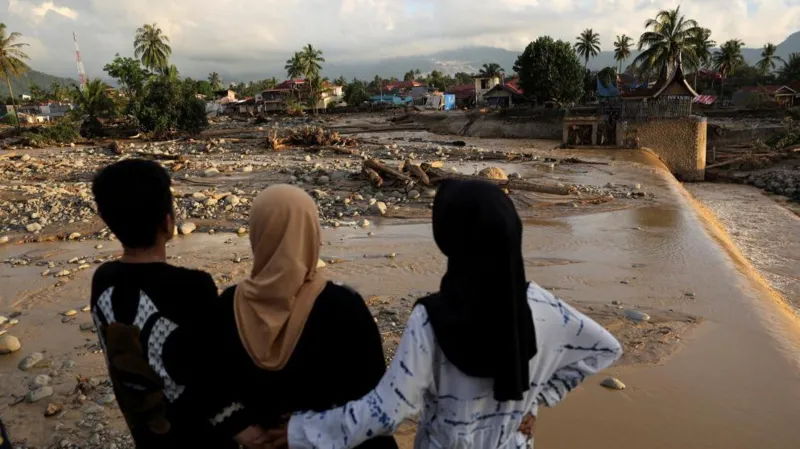
A rare tropical storm, Cyclone Senyar, unleashed devastating floods and landslides across Indonesia, hitting Sumatra especially hard. Rescue teams are combing affected areas for hundreds reported missing as waters begin to subside in some places.
What happened
In Indonesia, authorities say more than 400 people remain unaccounted for, many believed buried beneath mud and debris after days of heavy rain driven by the unusual cyclone.
Impact and response
The confirmed death toll on Sumatra has risen above 440 people. Aid is arriving by air and sea to reach isolated villages, but some communities have not yet received supplies, raising concerns about food and clean water. Looting has been reported as residents scramble for essentials before relief arrives.
Regional spread
The same weather system has triggered widespread damage across Southeast Asia: fatalities in Thailand and Malaysia, and severe floods in Sri Lanka with hundreds killed. In the Philippines, floods and aftershocks have prompted protests against government corruption amid disaster relief failures.
Aceh and other hard-hit areas
Authorities say Aceh, North Sumatra, and West Sumatra were among the hardest hit. Remote towns such as Central Tapanuli and Sibolga faced isolation, with ships expected to deliver supplies to Sibolga soon.
Local situation
In Sungai Nyalo, about 100 kilometers from Padang, floodwaters have mostly receded, leaving homes and crops coated in thick mud. Roads remain uncleared and some residents say outside help has not yet arrived. Many chose to stay in their houses rather than risk venturing out without support.
Public safety and aid logistics
Police report looting in some areas before aid could reach communities, prompting security teams to restore order and protect relief convoys.
Technology aid
Tech billionaire Elon Musk offered free Starlink satellite internet to maintain communications during the emergency, aiming to keep remote areas connected when cell networks fail.
Regional context
Beyond Indonesia, Thailand and Malaysia reported deaths, while Sri Lanka faced one of its worst weather disasters in years. In the Philippines, protests by churches, workers and students condemned corruption in flood-control programs and demanded accountability from leaders.
Public anger centers on funds earmarked for flood defenses that were allegedly diverted to others, undermining safety for many communities. In Manila, demonstrations highlighted concerns over who benefits from disaster spending and how quickly help reaches people in need.
Expert view
Expert note: Analysts say rapid, transparent disaster funding and better coordination are essential to saving lives in flood-prone regions. Maintaining essential communications networks during emergencies is equally critical for relief operations.
Bottom line
In summary, Cyclone Senyar has triggered some of the region’s worst floods in years, affecting millions and leaving hundreds missing in Indonesia. While aid is arriving, isolated areas and reports of looting complicate relief work, underscoring the need for stronger disaster planning, accountability, and reliable communication across Southeast Asia.
Key takeaway: Effective disaster response depends on fast, transparent aid and robust communications to protect vulnerable communities in the face of extreme weather. BBC