

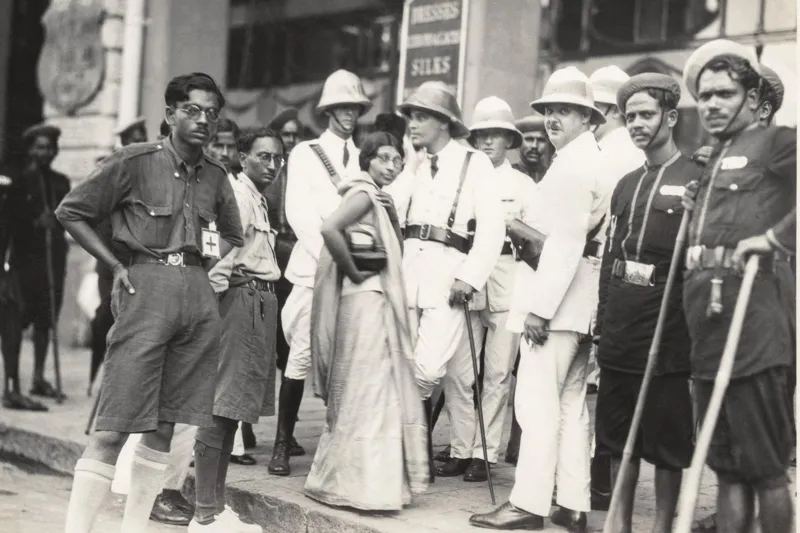

Hidden heroines of India's freedom struggle revealed in long-lost photos
Newly uncovered photos spotlight women leading Gandhi's civil disobedience movement, reshaping public life under British rule.
Newly discovered photographs are rewriting the story of India’s struggle for independence. They spotlight women who led and organized protests during Gandhi’s civil disobedience campaign, revealing a public role once largely unseen in this historic movement.
The collection, part of the Nursey album, shows women driving actions as men often stood in the background. It provides visual evidence of leadership roles that challenged traditional gender norms of the era.
Rediscovering the Nursey album
In the mid 20th century, a slim album with a coal-gray cover surfaced at a London auction. A Delhi-based foundation, the Alkazi Collection of Photography, later acquired it, tracing its origins to a volume titled "Collections of Photographs of Old Congress Party- K. L. Nursey". The person behind the name remained a mystery for years, and the captions were sparse and sometimes inaccurate. In 2019, two Duke University historians joined the Alkazi curator to reexamine the set.

Women at the center of the movement
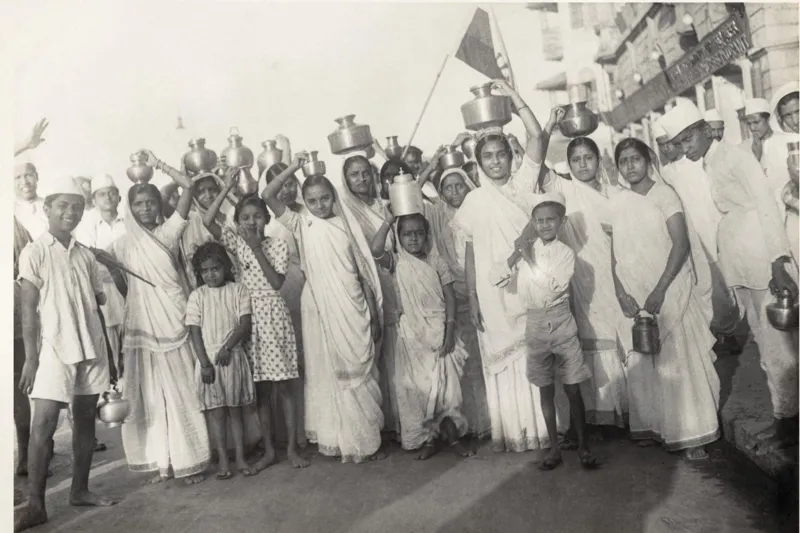
Before the salt satyagraha, Gandhi had warned against women joining in, yet persistent female leaders pressed for a stronger role. The Nursey images reveal thousands of women stepping forward to organize, mobilize, and endure arrests as part of the broader anti-colonial effort.
Media played a crucial part in this shift. The movement leveraged emerging technologies—radio, cinema, and photography—to broadcast its message beyond local streets, reaching audiences abroad and strengthening international sympathy for India’s cause.
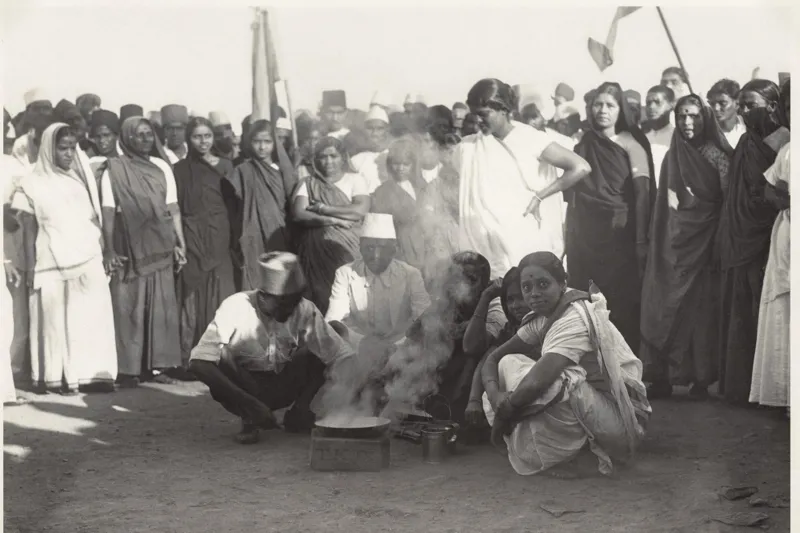
In many photos, women are seen actively coordinating acts of protest, not simply participating passively. The collection captures scenes of salt production on the shore, boycotts of British establishments, and women leading marches—often with daughters in tow, signaling a new generation of activists.
Shifting gender dynamics and urban power
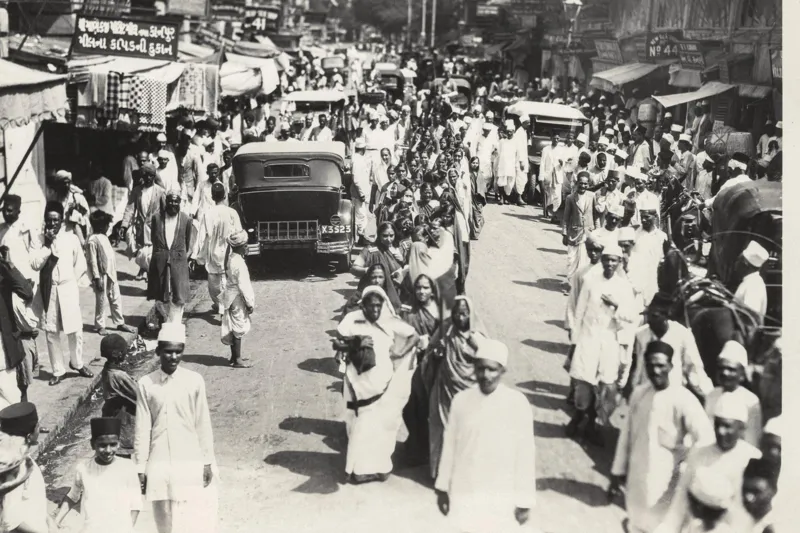
The Nursey album shows an inversion of gender norms. Women, often carrying symbols of self-reliance like the takli or spinning wheel, took over the streets of Bombay, while some men educated others in practical tasks like boiling and salting, reflecting a collective push toward homespun independence (khadi) and public leadership.
Researchers emphasise that the images illustrate how nationalist activity fostered a public sphere for women, transforming private and domestic spaces into sites of political action. As Sumathi Ramaswamy of Duke University notes, the photographs cast a new light on the movement’s structure in Bombay—arguing that the city’s people helped propel Gandhi to global prominence, not just the famous leader himself.
In many frames, volunteers from Desh Sevika (country volunteers) march with purpose, showing how women and families embedded themselves in the anti-colonial campaign and created a lasting imprint on the city’s streets.
Scholarly impact and current displays
The Nursey album’s significance goes beyond individual portraits. It documents public demonstrations at major Bombay landmarks, from Victoria Terminus (now CSMT) to the city’s grand fountains, and even the authorities’ use of Worli tenement housing as temporary detention spaces. These scenes reveal a shift in who held public space and who defined political action.
Two historians, along with a Duke University colleague, assembled a book titled Photographing Civil Disobedience, pairing striking images with scholarly essays. In addition, two museum exhibits—Disobedient Subjects—opened at the Chhatrapati Shivaji Maharaj Vastu Sangrahalaya (CSMVS) in Mumbai and at Duke University’s Center for Documentary Studies, showcasing the women’s leadership and the broader social impact of the movement.
These exhibitions run through March 31, 2026 in Mumbai and through January 19, 2026 in Durham, offering fresh context for learners and historians alike.
Expert comment: Sumathi Ramaswamy notes that the photos emphasize women’s agency in action, while Avrati Bhatnagar adds that the movement created new public roles for women. Together, they argue the urban experience of Bombay helped shape global perceptions of India’s struggle.
Short summary
Newly found photographs from the Nursey album shed light on women’s leadership during Gandhi’s civil disobedience campaign and challenge the idea that men were the sole drivers of the movement. The images capture women organizing salt production, leading protests, and confronting police, illustrating a broader shift in public life. Scholarly researchers and curators highlight how these photos reveal a city-wide network of activists and a public space transformed by women. The exhibitions and accompanying book bring this largely underrecognized chapter of Indian history into clearer focus for learners and visitors.
Key takeaway: The Nursey album demonstrates that women played a central, previously underappreciated role in India’s freedom movement, shaping public space and political action as much as Gandhi himself. BBC coverage