

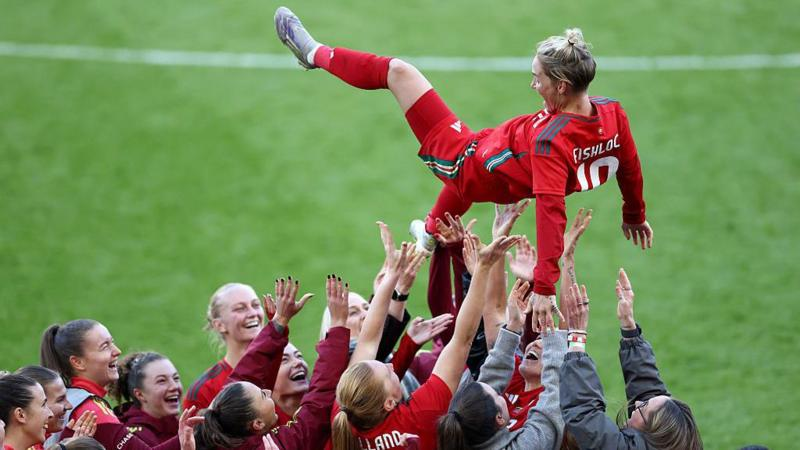

Fishlock's trailblazing career guides Wales as Wilkinson pushes for regular club minutes
Rhian Wilkinson urges Wales players to seek regular club minutes, using Jess Fishlock's global career as a blueprint for resilience, leadership, and growth ahead of World Cup qualifiers.
Wales' women’s program is sharpening its focus under head coach Rhian Wilkinson as the team prepares for World Cup qualification and a renewed push after Euro 2025. With Jess Fishlock's 19-year international career recently concluded, Wilkinson sees her former teammate’s example as a guiding light for a squad eager to raise its game on and off the field.
The team gathered this week in Spain for friendlies against South Korea and Switzerland, aiming to build cohesion and raise standards ahead of a busy 2025-27 cycle.
Fishlock’s enduring influence
Fishlock’s career spans clubs in the Netherlands, Australia, the United States, England, Scotland, and more, a rare blueprint of leadership and adaptability. Wilkinson notes that Fishlock repeatedly pursued tough moves to raise her level, a mindset she hopes to see echoed in Wales as players seek more regular minutes with their clubs.
Moving beyond comfort zones
“Jess built her reputation by stepping into unfamiliar leagues and competing at the highest level,” Wilkinson said. “We want players to assess where they can grow and be prepared to take bold steps.” The coach stressed that career choices now can shape future opportunities for both club and country.
The current landscape: Wales players and moves
The number of Welsh players regularly starting in top leagues remains limited, with many competing in England and a few seeking game time abroad. Goalkeeper Safia Middleton-Patel has earned minutes with Manchester United during a spell of injuries to the starter, while Olivia Clark has served as a back-up at Leicester City. Defenders Gemma Evans and Lily Woodham feature in the WSL with a struggling Liverpool side, and captain Angharad James has experienced more bench time since a spell in the United States with Seattle Reign earlier this year.
Midfield and attack options show similar patterns, with some players carving out regular roles in the WSL and others still trying to establish themselves in foreign leagues. The federation and Wilkinson are weighing how best to broaden the talent pool and provide more consistent exposure to high-level competition.
Strategic responses and challenges
Wilkinson points to a FAW review that highlighted a gap in regular club minutes among Euros squads. A notable figure from the analysis is that a significant portion of the Wales squad did not play regular minutes before the tournament, underscoring the need for the team to push players to secure more time on the pitch with their clubs.
“Not all issues can be solved quickly, but we must keep the conversation going and support players who seek better experiences,” she said. “If a player is in their prime and not getting minutes, tough decisions may be necessary.”
While most players currently operate in England, Wilkinson says exploring opportunities abroad can be crucial. “Sometimes you need to be bold, like Carrie Jones moving to Sweden or Angharad James in the US, to accelerate development,” she added.
How big is Wales' challenge?
The reality is that regular game time for Welsh players in top leagues remains scarce. Some players have started to break through in recent weeks, but many are still balancing club commitments with national team duties in leagues that run at different paces. The challenge is not just about depth but consistency of competition across positions, which Wilkinson believes will only improve if players seek regular minutes in competitive environments.
In attack, players such as Hannah Cain are regulars in the top flight, while younger talents like Mared Griffiths and others continue to push for more consistent exposure. The overall picture shows a mix of upstairs strides and ongoing development in the seconds tier, highlighting the need for a longer-term plan to diversify the pathways for Welsh players.
Looking ahead
Wilkinson’s overarching aim is to widen Wales’ player pool and deepen the experience of regular competition at higher levels. In the short term, the focus remains on improving match readiness and ensuring players push for more minutes, both domestically and abroad, so the national team can be more competitive on the European stage and well-placed for the 2027 World Cup cycle.
Key Takeaways
- Leadership example matters: Fishlock’s global career offers a clear model for resilience and ambition.
- Club minutes are crucial: Regular minutes at club level are essential for Wales to grow as a tournament regular.
- Bold moves can accelerate development: Players may need to seek opportunities abroad beyond England for game time.
- Strategic development plan needed: The FAW and Wilkinson are pursuing long-term strategies to widen the talent pool and exposure.
Expert comment
Expert opinion: Regular, high-quality minutes in strong leagues are the cornerstone of national-team progress. If Wales wants to compete regularly at the top, players must chase tougher club experiences and be supported in those moves.
Summary
Wales faces a pivotal period as Rhian Wilkinson pushes players to secure more consistent minutes with their clubs. By drawing on Fishlock’s international career, Wilkinson aims to elevate the standard across the squad and create a broader, more competitive pipeline. The journey toward becoming a regular European tournament side will require time, bold moves, and sustained commitment from both players and the federation.
Key insight: Regular club minutes are essential for Wales to rise as a consistent European contender, a standard reinforced by Jess Fishlock’s trailblazing path. Source