



Earliest kiss evolved around 21.5 million years ago, study finds
New research traces the origin of kissing to ancient ancestors, suggesting Neanderthals may have kissed too.
A new study traces the evolutionary roots of kissing, a gesture familiar to humans and observed in other primates and even some animals. The researchers suggest the mouth-to-mouth kiss evolved more than 21.5 million years ago, likely in the common ancestor of humans and the great apes.
The study also finds evidence that Neanderthals may have kissed too, indicating that humans and our close evolutionary cousins shared this behavior thousands of years ago.
Kissing has puzzled scientists because it offers no obvious survival or reproductive advantage, yet it is widespread across many human societies and appears in various animal species.

By examining other species for similar behavior, researchers built an evolutionary family tree to estimate when kissing likely emerged. They needed a precise, non-romantic definition of a kiss to compare across animals.
In their study, published in Evolution and Human Behaviour, the team defined kissing as nonaggressive, directed oral contact with some movement of the lips or mouthparts and no food transfer.
Dr. Matilda Brindle, an evolutionary biologist at the University of Oxford and the study's lead author, says the findings point to a kiss in the most recent common ancestor of humans and great apes. The team estimates the timing at around 21.5 million years ago in the large apes.
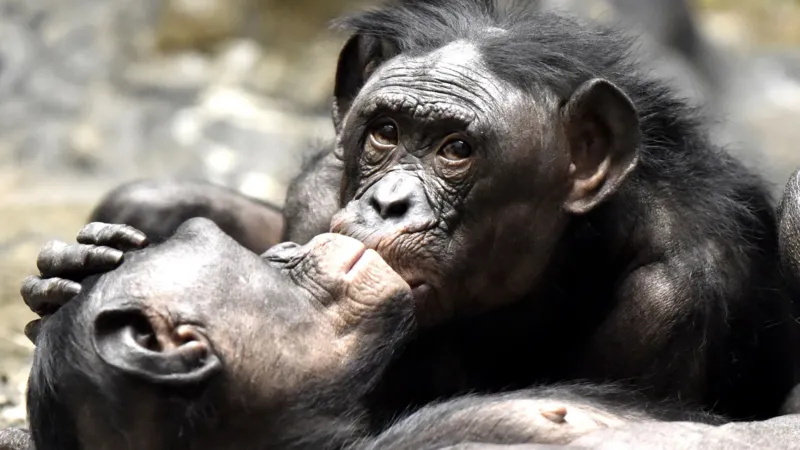
Beyond primates, the researchers found behaviors that fit their definition of kissing in wolves, prairie dogs, polar bears (noted for very tongue-leaning displays), and even albatrosses. The project focuses on primates to piece together the human story of kissing.
The study also concluded that Neanderthals—our closest ancient relatives who disappeared about 40,000 years ago—likely shared kisses with early modern humans. A separate line of evidence showed that modern humans and Neanderthals carried a common oral microbe, hinting at saliva exchange over tens of thousands of years after the species split.

While the study helps pin down when kissing evolved, it cannot fully explain why. Theories range from grooming-related origins to a way to assess a partner’s health or compatibility.
Brindle hopes the findings invite broader study of this shared behavior rather than dismissing it as mere romance.

Key takeaway: The earliest kiss likely evolved about 21.5 million years ago among large apes, a behavior shared with Neanderthals. BBC News
Discover engaging topics and analytical content in World News as of 21-11-2025. The article titled " Earliest kiss evolved around 21.5 million years ago, study finds " provides new insights and practical guidance in the World News field. Each topic is meticulously analyzed to deliver actionable information to readers.
The topic " Earliest kiss evolved around 21.5 million years ago, study finds " helps you make smarter decisions within the World News category. All topics on our website are unique and offer valuable content for our audience.