


Delivered Duty Paid (DDP) Explained: Ultimate Guide for Importers and Exporters
Discover how Delivered Duty Paid (DDP) shifts shipping responsibilities to sellers, covering all transport, customs, and duty costs until goods reach the buyer’s destination.
What Is Delivered Duty Paid (DDP)?
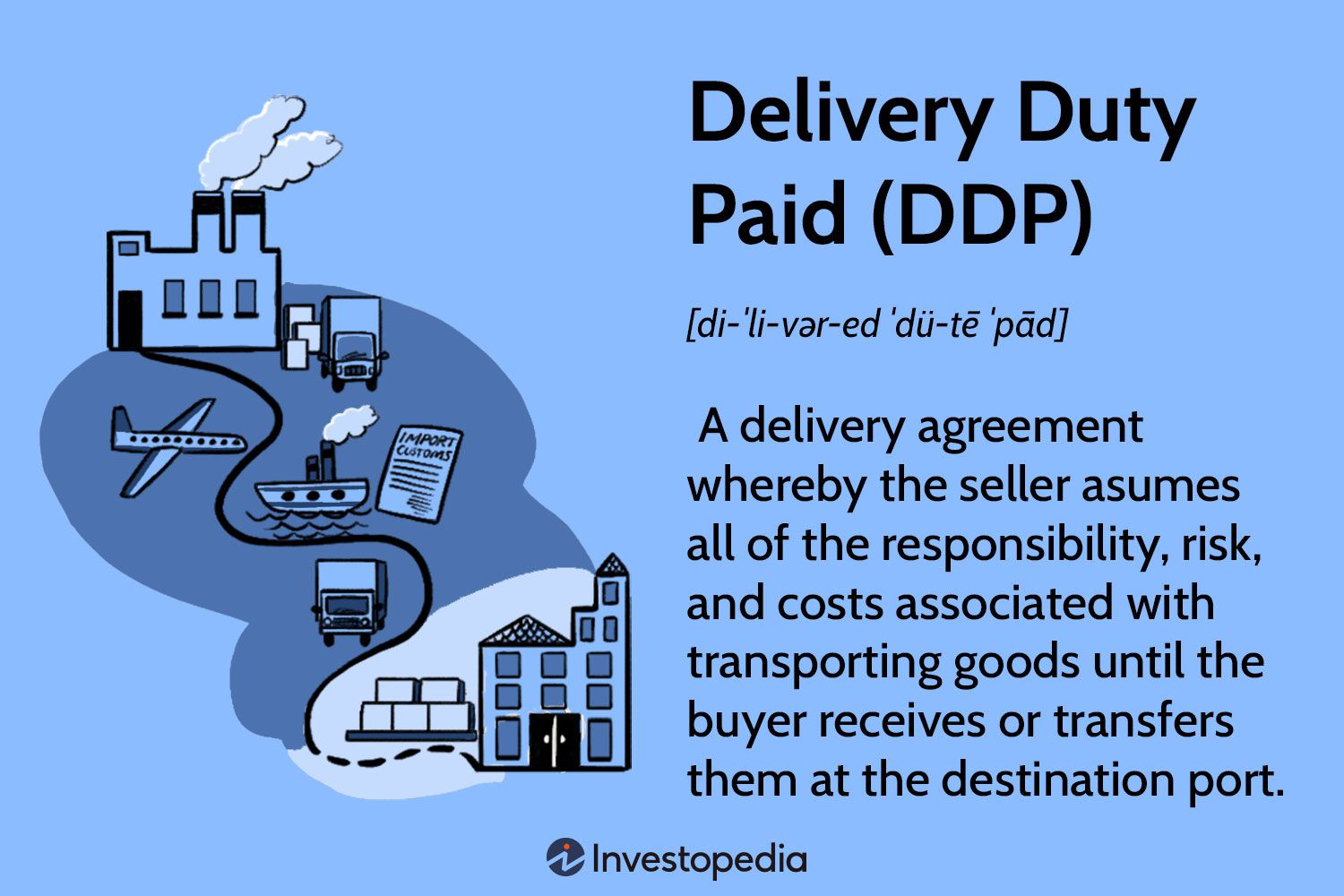
Delivered Duty Paid (DDP) is a comprehensive shipping term defined by the International Chamber of Commerce (ICC) that places full responsibility on the seller for delivering goods to the buyer’s specified destination. This includes all transportation costs, customs clearance, import duties, taxes, and insurance until the shipment reaches the agreed location in the buyer’s country.
Key Points to Remember
- DDP requires the seller to manage and pay for all shipping and customs-related expenses until goods arrive at the destination.
- It is one of the official Incoterms established by the ICC to standardize international trade responsibilities between buyers and sellers.
- The risk transfers to the buyer only after goods are delivered to the named place.
- DDP benefits buyers by minimizing their involvement and financial risk in import logistics.
How Delivered Duty Paid (DDP) Works
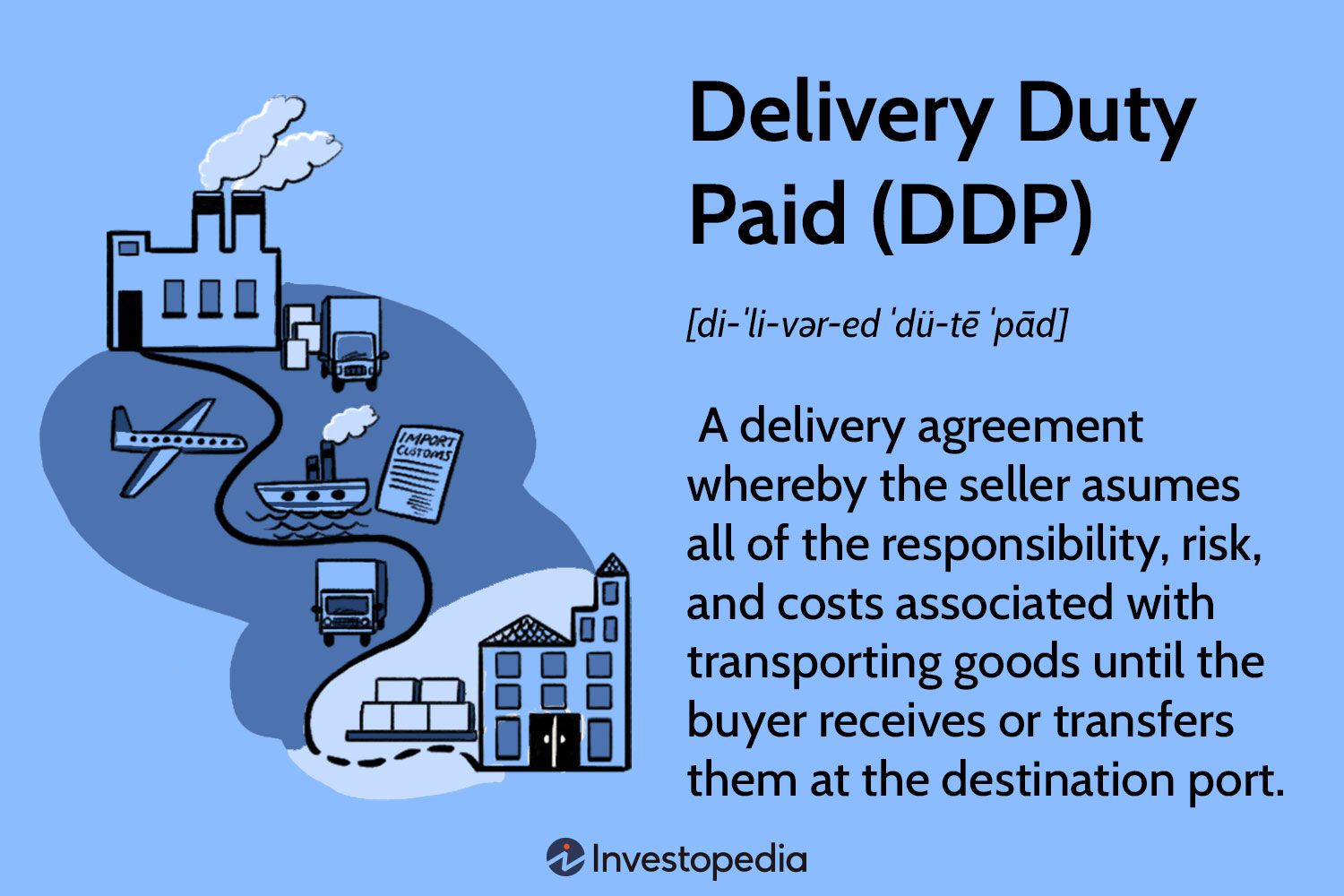
Under a DDP agreement, the seller handles every aspect of the shipment—from export packaging and transportation to customs clearance and payment of all applicable import duties and taxes. The buyer’s responsibility begins only when the goods are ready for unloading at the final destination.
Both parties must clearly specify the delivery location and payment terms before finalizing the contract to avoid disputes.
Seller’s Obligations in DDP
The seller must arrange transport with carriers, obtain export licenses, complete export and import customs formalities, and pay all associated costs including duties and taxes. However, unloading the goods at the destination is typically the buyer's responsibility.
The seller also needs to provide proof of delivery and notify the buyer once the shipment arrives safely. If goods are lost or damaged during transit, the seller bears the financial risk.
Challenges with Customs Clearance
Clearing customs under DDP can be complex, as regulations vary widely by country. In some cases, buyers prefer to handle customs clearance due to their familiarity with local procedures. Delays or refusals in customs clearance can lead to additional costs and logistical complications for the seller.
When to Use DDP
DDP is ideal for transactions where shipping costs and import requirements are predictable and manageable. It is favored by experienced sellers willing to take on logistical risks to provide a hassle-free experience for buyers.
However, some exporters, especially from the U.S., may face challenges such as VAT liabilities, unexpected storage fees, or regulatory risks, making DDP less attractive in certain markets.
DDP vs. Delivered Duty Unpaid (DDU)
Unlike DDP, Delivered Duty Unpaid (DDU) places the responsibility for import duties and customs clearance on the buyer. This means buyers must handle payments and paperwork upon arrival, potentially causing delays.
Understanding Incoterms
Incoterms are standardized trade terms published by the ICC that define the responsibilities of buyers and sellers globally. Besides DDP, common Incoterms include EXW (Ex Works), FOB (Free on Board), CIF (Cost, Insurance, and Freight), and many others, each specifying different obligations.
Summary
Delivered Duty Paid (DDP) is a powerful shipping term that simplifies international trade for buyers by transferring all transportation, customs, and duty responsibilities to the seller. While it offers convenience and reduced risk for buyers, sellers must be prepared to manage complex logistics and potential regulatory hurdles.
Choosing DDP is best suited for suppliers with robust shipping capabilities and knowledge of import regulations in the destination country, ensuring smooth delivery and customer satisfaction.
Explore useful articles in Supply Chain as of 28-09-2024. The article titled " Delivered Duty Paid (DDP) Explained: Ultimate Guide for Importers and Exporters " offers in-depth analysis and practical advice in the Supply Chain field. Each article is carefully crafted by experts to provide maximum value to readers.
The " Delivered Duty Paid (DDP) Explained: Ultimate Guide for Importers and Exporters " article expands your knowledge in Supply Chain, keeps you informed about the latest developments, and helps you make well-informed decisions. Each article is based on unique content, ensuring originality and quality.