



Cartel de los Soles: US designation of a terrorist group amid Venezuela’s denials
The US says Cartel de los Soles is led by Maduro and top officials, but Caracas rejects the claim, framing it as political manipulation in a broader drug-trafficking crisis.
The United States has designated the Cartel de los Soles as a foreign terrorist organization, claiming it is led by Venezuela's president, Nicolás Maduro, and senior government figures. The move broadens law enforcement and security powers to disrupt what Washington describes as a nationwide scheme tied to drug trafficking and corruption.
Venezuela's government immediately rejected the designation, calling it a new and ridiculous lie designed to justify intervention. The push comes amid continued pressure over a controversial election last year that many observers said was tainted by irregularities.

Some Venezuelan officials, including Interior Minister Diosdado Cabello, have long dismissed the Cartel de los Soles as a fabrication used by opponents to smear the government. Cabello is often cited in discussions about the cartel, though he denies any involvement.
Regional leader Gustavo Petro of Colombia has also questioned the existence of the cartel, arguing that it is used by opponents to destabilize governments that resist outside pressure.

U.S. officials insist the Cartel de los Soles exists and has corrupted Venezuela's military, intelligence services, the legislature, and the judiciary. They point to past indictments and testimonies that link Maduro and other high-ranking figures to the drug networks, arguing the influence touches multiple state institutions.
The debate over the cartel's form is nuanced. Experts describe Cartel de los Soles not as a formal organization with a single chain of command, but as a sprawling system of corruption that facilitates drug trafficking at various levels of power. The regime's economic crisis has strengthened incentives for officials to tolerate or participate in illicit activity to maintain loyalty and control over strategic ports and air links.
Mid- and lower-ranking officers who oversee key entry and exit points are said to play central roles in moving narcotics, enabling networks that stretch into Colombia and the United States. This has fueled a long-running debate about whether a unified cartel exists or a loose coalition of corrupt actors connected to the state.
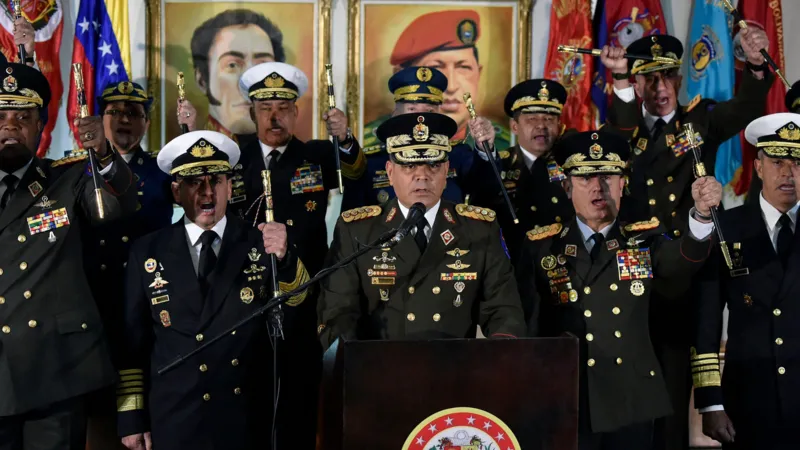
U.S. prosecutors have charged Maduro and 14 others in relation to drug trafficking, alleging collaboration with Colombian armed groups to ship cocaine to the United States. Names tied to leadership roles include Defence Minister Vladimir Padrino López and the former head of the Supreme Court, Maikel Moreno, among others. Accusations rely in part on statements from former senior Venezuelan officials who described the Cartel de los Soles as a centralized nexus for drug trafficking.
In recent years, former security officials such as Leamsy Salazar have provided information to U.S. investigators about the cartel, strengthening the view among Washington that high-level involvement exists. Maduro and Cabello have denied these charges, characterizing them as part of an international plot to topple the government.
As part of ongoing efforts, U.S. authorities have increased rewards for information leading to the capture of Maduro and Cabello, underscoring the seriousness with which Washington regards the allegations.
When approached for comment, the Venezuelan foreign ministry reiterated that the Cartel de los Soles is non-existent and condemned the designation as a political maneuver aimed at legitimizing external intervention. The government insists the claim is unsupported and meant to undermine Venezuela’s sovereignty.
The Cartel de los Soles remains a contested label that highlights a broader tension between allegations of state complicity in narco-trafficking and the reality of a fragmented, illicit network that is difficult to define as a single organization.
Key Takeaways
- The US asserts the Cartel de los Soles operates with high-level involvement across Venezuela's security institutions.
- Venezuela and many regional observers reject the existence of a formal cartel, framing the issue as systemic corruption and political confrontation.
- Indictments and testimonies point to deep-rooted links between state actors and drug trafficking, though the organizational structure remains debated.
- The dispute reflects broader tensions over governance, sovereignty, and U.S. policy in the region.
Expert perspective
Expert comment: Analysts say the situation reflects systemic corruption tied to drug trafficking, not a single, centralized cartel. The U.S. designation signals ongoing concerns about governance and narcotics in Venezuela.
Summary
The Cartel de los Soles is a highly debated concept rooted in decades of drug trafficking and political entanglement in Venezuela. While U.S. authorities point to a direct leadership link from Maduro and other officials, many experts view it as a broader system of corruption rather than a formal organization. Venezuela rejects the claim as a strategic move to justify intervention, leaving the truth contested and unresolved as investigations continue. The debate underscores the challenges of disentangling criminal networks from state power in a crisis-prone region.
The core takeaway is that governance and crime can become deeply interwoven, making a single cartel label insufficient to describe the realities in Venezuela. BBC News
Discover engaging topics and analytical content in World News as of 24-11-2025. The article titled " Cartel de los Soles: US designation of a terrorist group amid Venezuela’s denials " provides new insights and practical guidance in the World News field. Each topic is meticulously analyzed to deliver actionable information to readers.
The topic " Cartel de los Soles: US designation of a terrorist group amid Venezuela’s denials " helps you make smarter decisions within the World News category. All topics on our website are unique and offer valuable content for our audience.