

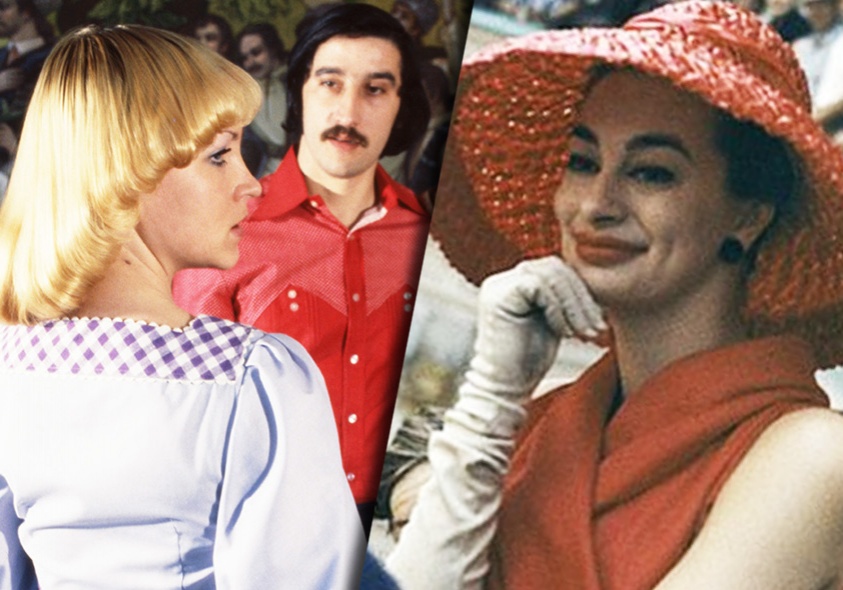

When Soviet Women Started Wearing Pants and How Brezhnev Became a Dandy: The Hidden Story of Soviet Fashion
Explore the fascinating history of Soviet fashion, where a small group of designers transformed the style of Soviet women and leaders despite strict party restrictions. Discover the legacy of the All-Union House of Models and the creative genius of Vyacheslav Zaitsev.
The history of fashion during the Soviet era is endlessly captivating; no other period in the country's light industry history compares. It is truly remarkable how, in times when resources were scarce and the party imposed countless bans, a small group of individuals managed to uplift not only the appearance of Soviet women but also the image of the government and the nation as a whole. This group was led by the dedicated staff of the House of Models, headed by Vyacheslav Zaitsev.
This spring marked the 78th anniversary of the founding of the All-Union House of Clothing Models (AUHCM). The order to establish it was signed by Joseph Stalin in March 1944, marking the birth of the Soviet fashion industry. Although the institution itself no longer exists, its impressive five-story building on Kuznetsky Most remains, once home to the luxury department store Podium.
Many people today are unaware that such an organization ever existed, yet it played a significant role in the lives of its employees and the history of the country's light industry.
Located at building number 14, the House of Models was a world of its own. For just five rubles, anyone could attend daily fashion shows held Monday through Friday.
There were three shows scheduled each day, each attracting full houses. The excitement was understandable: Soviet light industry strictly followed GOST standards, which allowed no variety, leaving citizens to wear rather dull clothing. Here, however, were fresh designs, interesting combinations, and vibrant colors. A wonderful new world! A sweet forbidden fruit…

Vyacheslav Zaitsev was the mastermind behind it all. Though he held the modest title of artistic director with a salary comparable to that of a regular engineer, he was one of the key figures at AUHCM.

Ministers and officials visited him at Kuznetsky Most, models confided in him about missed opportunities to travel abroad (Zaitsev himself was long barred from leaving the country—thanks to the very government he dressed). Ultimately, every Soviet woman wanted to wear his designs!
Despite his popularity and connections, Zaitsev was not granted complete creative freedom. But where there’s a will, there’s a way. True artists often create best when constrained. "Slavochka" (a nickname given by a Soviet official, which you will soon learn about) was well taken care of by his sewing department colleagues but could only realize his creative ideas occasionally. Even under such restrictions, his contribution to Soviet and later Russian fashion remains invaluable.

Power and Fashion
From his student days, Vyacheslav Zaitsev was passionate about Russian folk motifs. His first full collection, praised by journalists from the French magazine Paris Match, featured colorful quilted jackets, embroidered sarafans, and headpieces reminiscent of kokoshniks. Bright palettes and national flair were always central to his work. However, one of his most famous creations was quite atypical for him: the little black dress, tailored for the USSR's Minister of Culture, Ekaterina Furtseva.

Following Coco Chanel’s principles, Zaitsev crafted a simple yet elegant dress for the high-ranking official: a neat neckline, knee-length hem, and a silhouette neither too tight nor too loose. Ekaterina Alekseevna looked stunning and recalled feeling very comfortable in the dress.
She loved wearing it at important international negotiations, where her stylish appearance was immediately noticed and appreciated.
Zaitsev even convinced Furtseva to pierce her ears, explaining that a woman of her rank shouldn’t appear in public without diamonds. She resisted fiercely but eventually agreed.
Furtseva preferred custom-made clothing but disliked fittings, unwilling to spend her precious time on them. Zaitsev recalled in an interview that she always urged him: "Slavochka, let’s keep it under 15 minutes, or better yet, even faster."
While Zaitsev was responsible for Furtseva’s style, Leonid Brezhnev’s image was crafted by Alexander Igmand. This designer’s name has been unfairly forgotten, yet in the West, he was known as the "Russian Cardin."

Thanks to Igmand, Brezhnev looked impeccably stylish. His suits fit perfectly without wrinkles, jackets had three or four buttons (never more), ties were imported, but shirts came from the local Bolshevichka factory. Brezhnev was the first Soviet leader to wear sunglasses!

The government valued domestic talent and supported them to an extent but kept them tightly controlled. Creative individuals, who thrive on inspiration and new ideas, were deprived of the ability to travel abroad. They were prohibited from meeting foreign journalists visiting the USSR, as the authorities feared defections. In reality, it was a form of concealment.
For example, every time a delegation visited the House of Models, Vyacheslav Zaitsev suddenly fell ill—not by his own choice but by party orders.
Designers’ services were also sought by wives of officials. Their visits to Kuznetsky Most were treated like grand receptions: the small demonstration hall was closed for the entire day, top models gathered early, and waiters served drinks and light snacks.

These high-ranking ladies typically ordered at least ten outfits per visit and felt entitled to behave arrogantly, sometimes insulting younger, more attractive models. Once, Zaitsev gathered the models backstage and told them, "Hold yourselves with dignity! Don’t you realize you are the 'law' for them? But precisely for that, you must remain even more untouchable!"
Fashion for Everyday Women
While wealthy clients enjoyed the finest fabrics, unique accessories, and one-of-a-kind garments, what about ordinary women? As mentioned earlier, factories strictly adhered to GOST standards, set by people who lacked any sense of style or even basic beauty in clothing.

Fashion designers had to take matters into their own hands. Besides the well-known Zaitsev and Igmand, others like Svetlana Kacharava, Tamara Mokeeva, Yulia Denisova, Tatyana Osmerkina, and Natalia Orskaya were responsible for creating stylish looks for Soviet women. Sadly, most of their names remain unknown to the public, and even many fashion industry workers don’t recall them.

Working alongside AUHCM tailors, these artists developed collections for 300 enterprises across the USSR and conducted training sessions for seamstresses and cutters.
However, progress was slower than planned. The country faced shortages, and factories could not always fulfill the designers’ visions exactly.
Complaints often arrived by telegram: "We don’t have such buttons, please change," "We can’t sew this detail, simplify it," "This lining will be too expensive, modify it," and so on. Although fabrics were generally available in stores, finding quality materials was difficult. Poor dyes made textiles look dull and sad, and the artistic quality of the fabric was often lacking. Nevertheless, the fashionable appearance of Soviet women gradually improved.
Colorful robes (often literally robes!) were replaced by dresses, godet skirts, and knitted turtlenecks nicknamed "noodles." The limited shoe selection began to expand, with most supplies coming from the Yerevan shoe factory for a long time.
In the mid-1960s, layering became fashionable. Fifty years ago, this meant wearing vests over blouses, then cardigans or jackets on top. For the first time, high-heeled shoes and platforms appeared in stores, although they differed greatly from today’s styles.
Women were finally allowed to wear pantsuits. Quite a revolution, wasn’t it?
At that time, wearing pants was considered a social taboo. Pants were acceptable only for hiking or skiing. Choosing pants for a walk, a movie outing, or work was strictly forbidden! Fortunately, these dark times ended, and women embraced cropped pants paired with elegant pumps or ballet flats.
Trendsetters included not only models showcasing stylish outfits on the AUHCM runway but also pop stars, who had their stage costumes custom-made at Kuznetsky Most.

The influence of the All-Union House of Clothing Models grew stronger, and it became the country’s leading fashion enterprise. However, an unexpected event occurred in the early 1980s: Vyacheslav Zaitsev left. Tired of constant top-down control, he ventured out independently to establish his own brand. In 1982, he debuted the Slava Zaitsev collection and, at age 48 in 1986, traveled abroad for the first time.
Following Zaitsev, many colleagues left AUHCM—designers, cutters, and art historians. Some continued their fashion careers with Vyacheslav Mikhailovich, while others entered business as the 1990s brought economic challenges and survival struggles.
In 2003, the story came to a somber close: the remaining House of Models employees were dismissed, and the building was sold. This marked the end of one of the most vibrant, creative, and productive eras in the history of the nation's fashion industry. Whether today’s designers can make an equally lasting impact remains to be seen.
Photos: ITAR-TASS, Boris Kavashkin/TASS, Viktor Velikzhanin/TASS, Vitaly Sozinov/TASS, Yuri Belinsky/TASS, P. Fedotov/TASS, Nikolai Naumenkov/TASS, Ya. Kruminsh/TASS, I. Zmitrovich/TASS, Vitaly Sozinov, Vladimir Yatsina/TASS, Anatoly Lykov/TASS, Algis Palenis/TASS, Getty Images
Discover the latest news and current events in Nostalgic Memories as of 25-11-2023. The article titled " When Soviet Women Started Wearing Pants and How Brezhnev Became a Dandy: The Hidden Story of Soviet Fashion " provides you with the most relevant and reliable information in the Nostalgic Memories field. Each news piece is thoroughly analyzed to deliver valuable insights to our readers.
The information in " When Soviet Women Started Wearing Pants and How Brezhnev Became a Dandy: The Hidden Story of Soviet Fashion " helps you make better-informed decisions within the Nostalgic Memories category. Our news articles are continuously updated and adhere to journalistic standards.