



The Fascinating Evolution of Toilets: From Ancient Pit Latrines to Modern Bidet Toilets
Explore the intriguing history of toilets, tracing their development from primitive rock pits to today's advanced bidet toilets, and discover why these innovations are vital for hygiene and health worldwide.
Chances are, you might be reading this article while sitting on a toilet—a comfort that hasn’t always been available throughout human history. Partnering with the German company TECE, we've explored how toilets have evolved from their earliest forms to today’s sophisticated designs, uncovering reasons to truly appreciate modern toilets.
For more insightful tips and fascinating stories about toilets, check out our dedicated resources.
Everyone uses toilets, yet for much of history, society avoided openly discussing this basic human need. Even when cities were overwhelmed with waste, the topic remained taboo—until disease outbreaks caused by bacteria forced awareness. Despite the invention of sewer systems, toilets remained a sensitive subject. For example, in the 1970s sitcom The Brady Bunch, the family’s bathroom lacked a toilet because showing toilets on screen was once considered inappropriate.

In reality, the toilet is one of humanity’s greatest achievements. In 2007, readers of the British Medical Journal named sanitation facilities the most important invention since 1840—not antibiotics or vaccines, but toilets and clean water at home. Yet even today, according to the World Health Organization, two billion people lack access to toilets connected to sewage systems. Approximately 673 million people must relieve themselves outdoors, leading to soil contamination, water pollution, and the spread of parasitic and bacterial infections.
Rose George, author of "The Big Necessity," stated:
The way a society disposes of its waste reveals much about how its people treat one another.
World Toilet Day, celebrated annually on November 19, serves as a reminder of the importance of safe, private, and hygienic sanitation facilities and our right to access them. Let's journey through the history of toilets, from primitive pit latrines to modern bidet-equipped toilets.
Ancient Times: Pit Latrines and Rock Toilets
Since early human existence, there has been an instinct to avoid dirt, spoiled food, and bodily waste. This biological urge even influenced religious teachings. For instance, the Old Testament advises that defecation should occur outside dwellings, in a dug pit that is then covered.

The earliest known seated toilet dates back about 5,000 years to the Skara Brae settlement in present-day Scotland. It featured a hole carved into a large stone, with waste dropping into a grotto below.
Roman Empire: The Dawn of Public Toilets
The ancient Romans were not only formidable conquerors but also remarkably open-minded and unashamed about sanitation. Toilets were social spaces for conversation and debate. Roman public toilets consisted of long benches with holes, where people would spend hours chatting. Historical accounts mention the use of a sea sponge on a stick as shared toilet paper—a communal hygiene tool that some believe was an early version of a toilet brush.
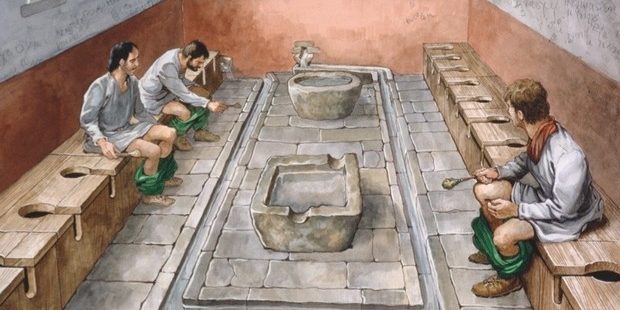
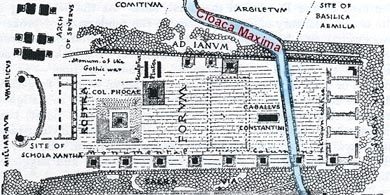
Romans also engineered one of the world's first sewer systems, the Cloaca Maxima (“Great Sewer”), which channeled waste into the Tiber River. They even had a goddess, Cloacina, who protected sewage systems. Unfortunately, after the fall of the Roman Empire, public hygiene regressed, and for centuries, people reverted to using chamber pots.
Medieval Europe: Chamber Pots and Plagues
Sanitation in medieval Europe was dire. Most people relied on chamber pots, which were emptied into nearby rivers or simply thrown out of windows onto the streets.

The resulting stench was overwhelming, and rampant bacteria caused numerous diseases and epidemics. Without knowledge of germs, people believed foul odors themselves caused illness. Plague doctors wore beaked masks filled with aromatic herbs to block the smell and supposedly protect against disease.
Private toilets were a luxury reserved for the wealthy. In large castles, latrines were often located in wardrobes to deter moths and fleas from royal clothing. Waste would drop into water moats through wall openings or be manually emptied by servants who disposed of chamber pot contents into rivers—ironically, the same rivers that supplied drinking water.

Modern Era: The Advent of Flush Toilets
Sir John Harington invented the first flush toilet in 1596, featuring a mechanical valve and water tank. However, the noisy flush was met with skepticism by the public.

In 1775, Alexander Cummings improved upon Harington’s design by adding an S-shaped water trap that prevented sewer odors from rising—a mechanism still used in plumbing today.

Flush toilets gradually gained acceptance, but chamber pots remained common even after the Industrial Revolution. Overcrowded cities struggled with waste management, culminating in a cholera outbreak in London in 1854. Dr. John Snow was the first to link the disease to bacteria in contaminated water rather than foul smells. This discovery led to the separation of drinking water and sewage, cementing the flush toilet’s place in society.
Although often credited with inventing the toilet, Thomas Crapper’s real contribution was popularizing sanitary ware by opening the first showroom and selling bathroom fixtures—revolutionizing public perception of toilets.
Toilet paper in rolls was introduced in 1880 by Edward Irvin and Clarence Scott. Prior to that, people used old newspapers, hay, sheep’s wool remnants, or even lace.
Shortly thereafter, the float valve was invented to silence flushing sounds.
Contemporary Toilets
In the 20th century, flush tanks were integrated directly with ceramic toilet bowls, enabling flushing at the touch of a button. While the mechanical principles remain largely unchanged, toilet design continues to evolve with varied shapes, colors, sizes, floor-mounted or wall-hung models, and concealed flush tanks.

As hygiene standards rise, plumbing technology becomes more advanced. For instance, German company TECE developed a bidet toilet that combines toilet and bidet functions. A simple turn of a knob extends a nozzle that sprays warm water, ensuring optimal cleanliness and freshness.

Water pressure and temperature are easily adjustable via handles on either side. This device operates without electricity or water heaters, making installation quick and convenient. TECE engineers also designed a rimless toilet bowl for effortless cleaning and equipped the seat with a soft-close mechanism, preventing slamming.
Discover more about the innovative TECE bidet toilet and how it represents the future of sanitary comfort.
Discover the latest news and current events in Life Transformation as of 05-02-2022. The article titled " The Fascinating Evolution of Toilets: From Ancient Pit Latrines to Modern Bidet Toilets " provides you with the most relevant and reliable information in the Life Transformation field. Each news piece is thoroughly analyzed to deliver valuable insights to our readers.
The information in " The Fascinating Evolution of Toilets: From Ancient Pit Latrines to Modern Bidet Toilets " helps you make better-informed decisions within the Life Transformation category. Our news articles are continuously updated and adhere to journalistic standards.