


The Curious Case of 'Sherlock in Russia': Why It Misses the Mark
Explore the intriguing flaws behind the new Russian series 'Sherlock in Russia' and why it struggles to capture the essence of the iconic detective.
The newly released Russian series 'Sherlock in Russia' presents at least five notable shortcomings, without any clear strengths. Let's delve into where the creators may have faltered.
Available on the streaming platform START, the series from the production company Sreda—known for hits like 'Gogol' and 'The Last Minister'—premiered with two episodes.
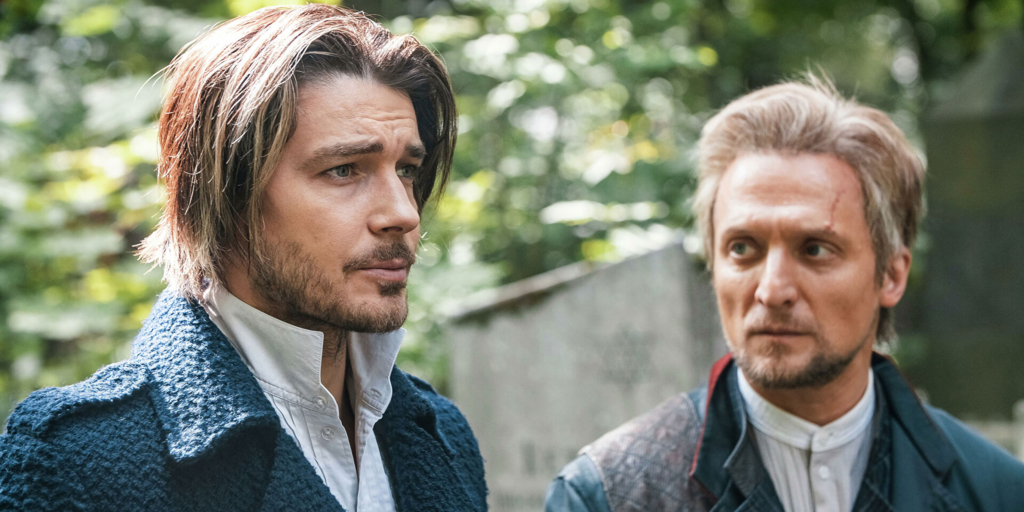
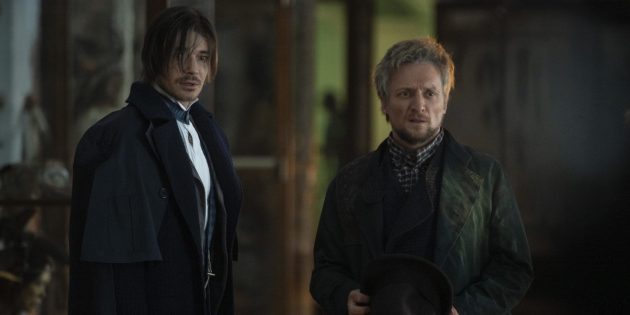
The storyline follows Sherlock Holmes (played by Maksim Matveev) as he hunts Jack the Ripper in London, only to discover that the culprit is Russian. After the villain injures Dr. Watson, Holmes pursues the case to Saint Petersburg. There, he teams up with a new partner, the reclusive and cynical Dr. Ilya Kartsev (Vladimir Mishukov), while facing obstacles from local law enforcement.
Critiquing the non-canonical plot might be futile since countless new Sherlock Holmes adaptations exist, and Russia has seen numerous imaginative versions of the detective. Moreover, Holmes' encounter with Jack the Ripper has appeared in books, films like 'Murder by Decree,' and even video games.
However, the series' issues lie elsewhere. From the very first trailer—featuring jokes about traditional Russian aspic and an unexpected soundtrack of Britney Spears' 'Toxic'—one could anticipate an absurd viewing experience. Unfortunately, the initial two episodes, which form a self-contained story, confirm the worst expectations.
1. Illogical Plot Development
The series gives the impression of starting mid-story, as if viewers are jumping into a second season. There's no gradual character introduction. Watson falls into a coma after a brief appearance, making it hard to emotionally connect with Sherlock. Soon after, Holmes, coincidentally fluent in Russian, travels to Saint Petersburg.

While it's a stretch that this Sherlock learned Russian through Dostoevsky’s novels—contrary to Conan Doyle's Holmes, who disliked fiction—numerous other inconsistencies arise.
The creators seem to portray 19th-century Saint Petersburg as a tiny village of 200 people, given how everyone appears to know each other.
The characters come across as clichés rather than authentic individuals. Starting with the foolish policeman Trudny (Pavel Maykov), whose performance lacks effort, to the flamboyant police chief Znamenksy (Konstantin Bogomolov) dressed like a Russian rap video star, the cast includes noble prostitutes, a vague Irene Adler copy, a revolutionary reporter, and other overused noir stereotypes.

Secondary characters conveniently appear exactly when needed, delivering exposition without plausible reasons. Worse still, villains openly disclose their plans as if in a poorly written comic book.
Just when it seems it can't get worse, the second episode introduces political and social themes that feel unnecessary, seemingly added merely for topicality.
2. Weak Detective Elements
Sherlock Holmes' deductive methods have always been subject to debate—even in Arthur Conan Doyle’s original works, some conclusions felt stretched. The BBC's 'Sherlock' and CBS’s 'Elementary' took creative liberties, sometimes with impressive results.
However, the START series surpasses all in oddity. Holmes' deductions are often based on unsupported assumptions. For example, the idea that a beautiful and cunning woman must have worked in the best theater is a prime example of illogical reasoning.
To its credit, the detective admits his deductions are fabrications by Watson, but this hardly saves the audience from the overall incoherence. The main investigation revolves around Holmes searching for a left-handed individual, repeated multiple times. The dramatic use of the term 'ambidextrous' in the finale borders on comedic, rivaling infamous lines from popular culture.
3. Awkward Humor About Russia Amidst Excessive Seriousness
The project might have been salvaged by self-aware humor. Both Guy Ritchie's films and the BBC 'Sherlock' series deconstruct the detective genre, offering fresh takes beyond canonical stories.

Yet 'Sherlock in Russia' awkwardly attempts humor while maintaining a serious and illogical plot. The jokes often rely on stereotypes about Russian culture, highlighting the prim Englishman's misunderstandings—he steps into manure upon arrival and repeatedly asks about unusual phrases like 'where Makar never drove calves.' While initially amusing, these jokes quickly become tiresome.
Viewers are also subjected to repeated jokes about 'kulebyaka with offal,' vodka, and bears. Compared to this, the bold stereotypes in the series 'The Great' seem less harsh.
Notably, the first episode features a modern hip-hop interlude, arguably the most humorous part due to its awkward and out-of-place nature—an unsuccessful attempt at a stylish vibe reminiscent of Guy Ritchie.
4. Poor Set Design and Inconsistent Location Shooting
Ignoring Sherlock's relocation from England to Russia momentarily, the street settings lack distinction. Attempting a dark noir atmosphere, the creators appear to have settled for bland, theatrical sets. The city feels abstract, with extras in costumes failing to behave naturally.

While many low-budget Western series suffer from similar 'cardboard' aesthetics, they often compensate with clever plots and strong acting—qualities 'Sherlock in Russia' lacks.
The few scenes filmed on real locations reveal modern elements—plastic windows, new drainage pipes, air conditioners—that clash with the 19th-century setting. Attempts to obscure these with artificial fog only partially succeed.
5. A Failed Attempt to Replicate the Success of 'Gogol'
Fans of Sreda’s previous works will recognize familiar issues within minutes of watching 'Sherlock in Russia.'
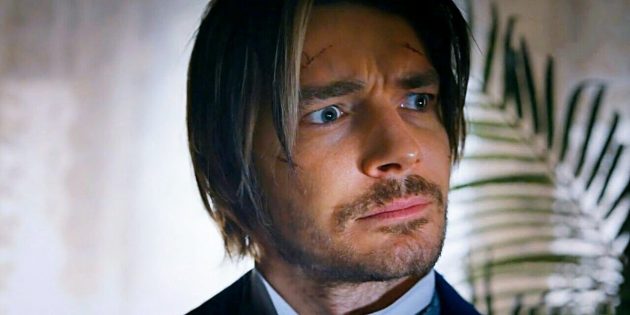
Maksim Matveev’s portrayal seems designed to mimic Alexander Petrov’s role as Gogol, complete with eccentric fits and mystical flashbacks. The filming style mirrors 'Gogol,' relying heavily on close-ups with fluctuating speeds.
Supporting characters are thinly veiled versions of those in 'Gogol'—the foolish policeman, the wise doctor with a troubled past, the enigmatic woman—simply renamed and recast.
Producers likely assumed that since 'Gogol' was well-received, a similar approach would work for 'Sherlock in Russia.' They overlooked the genre differences.
'Gogol' balanced mysticism and humor, fitting the writer’s persona and refreshing the domestic TV landscape, featuring stars like Oleg Menshikov and Evgeny Stychkin. In contrast, mysticism feels out of place in 'Sherlock in Russia,' making the project seem derivative and forced.
Overall, the first two episodes leave viewers uncertain about the creators’ intentions. The series fails to achieve the dark noir tone seen in films like 'Sherlock Holmes and the Case of the Silk Stocking,' lacks compelling detective storytelling or adventure, and falls short as a comedy.
It's hard to label the project simply as bad; it instead comes across as awkward and embarrassing. The first episode may induce laughter due to its absurdity, but the mood quickly turns somber.
*Note: Meta Platforms Inc. and its social networks Facebook and Instagram are banned in Russia.
Discover the latest news and current events in Inspiring Movies & TV Shows as of 10-04-2022. The article titled " The Curious Case of 'Sherlock in Russia': Why It Misses the Mark " provides you with the most relevant and reliable information in the Inspiring Movies & TV Shows field. Each news piece is thoroughly analyzed to deliver valuable insights to our readers.
The information in " The Curious Case of 'Sherlock in Russia': Why It Misses the Mark " helps you make better-informed decisions within the Inspiring Movies & TV Shows category. Our news articles are continuously updated and adhere to journalistic standards.