

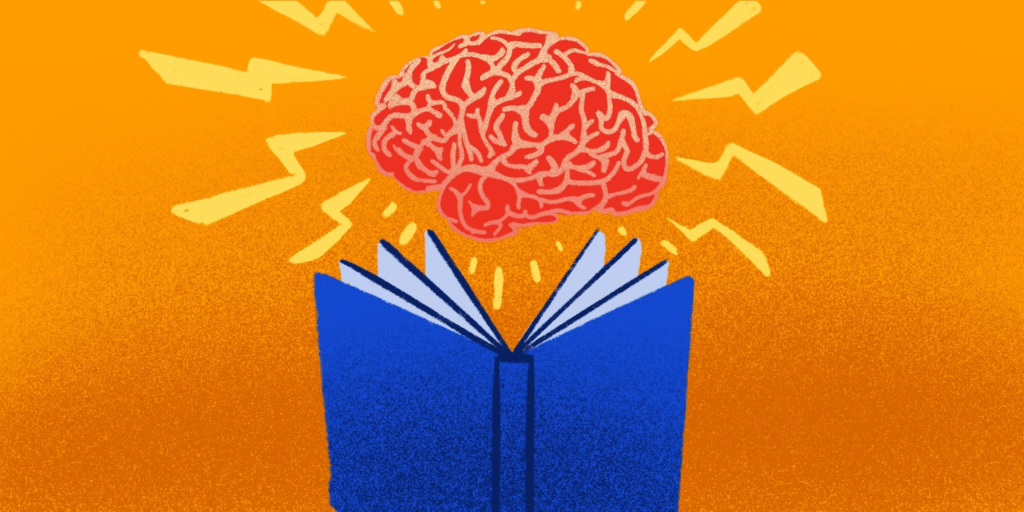

Surface Reading Has Become the Norm, Threatening Our Brain’s Potential
Neuroscientist Maryanne Wolf explores how reading on digital devices differs from reading books, the impact of digital reading on the human brain, and the possible consequences for society.
Neuroscientist Maryanne Wolf discusses how digital reading is reshaping human cognition and the potential risks this transformation poses.

Maryanne Wolf
Neurologist and director of the Center for Dyslexia, Diverse Learners, and Social Justice at the University of California, Los Angeles. Author of the book "Reader, Come Home: The Reading Brain in a Digital World."
Our Approach to Receiving and Processing Information Has Changed
Next time you travel by plane, take a moment to observe your surroundings. Tablets have replaced pacifiers for children. Younger students read on smartphones, while older kids engage in video games. Adults and other passengers are absorbed in e-books or checking emails and news updates.
What unites everyone in this scene is an invisible transformation: the neural network responsible for reading is subtly but rapidly evolving. The consequences of this shift will affect us all.
Neuroscience reveals that over 6,000 years ago, the emergence of literacy gave rise to a new neural network in our brains. This network evolved from a simple mechanism for decoding basic information—like counting goats in a herd—to the complex reading brain we have today. This brain supports essential cognitive and emotional processes such as knowledge acquisition, analogical reasoning, drawing conclusions, empathy, critical thinking, and idea generation. However, the transition to digital reading threatens the development of these vital functions.
This issue extends beyond technological innovation or the debate between paper and digital media. Sociologist Sherry Turkle emphasizes that society errs not by adopting innovations but by ignoring what is lost during these changes.
"Cognitive Impatience" Risks Eroding Our Critical Thinking Skills
Research shows that the neural network for reading is not inherited genetically like vision or language. It requires the right environment to develop and adapts to the literacy system and characteristics of the reading medium.
Today's dominant digital platforms encourage speed, multitasking, and processing vast amounts of information, causing the neural network to adapt accordingly.
As a result, less time and attention are devoted to slow, reflective reading processes such as drawing inferences, critical analysis, and empathy—skills essential for learning at any age.
Educators and psychologists increasingly recognize this trend. According to professor Mark Edmundson, many students actively avoid classic 19th- and 20th-century literature because they lack the patience for lengthy, deep texts.
The real concern is not just children’s "cognitive impatience" but the potential inability to engage in critical reading necessary to comprehend complex ideas and arguments—whether in literature, scientific texts, legal documents, or the deliberately convoluted language of politicians.
Numerous studies indicate that screen reading impairs comprehension among high school and college students. For instance, Norwegian psychologist Anne Mangen and colleagues studied how teenagers understood the same story presented on different media. Half read electronically, the other half on paper. Results showed that paper readers better grasped the story, could recall details, and retell the plot chronologically.
Surface reading has become the new normal. We catch isolated phrases and skim the rest or read the first line and then search for keywords.
This habit leaves little room to process complex ideas, understand others’ emotions, appreciate beauty, or form personal opinions.
Some also note that the tactile experience of reading on paper adds a spatial dimension to words. Writer Andrew Piper remarks that people need a sense of their place in time and space within a text to revisit sections and deepen understanding through rereading.
The question is what happens to comprehension when children and teens skim text on screens, which lack spatial cues and discourage returning to earlier parts. Researcher Tami Katzir notes negative effects of screen reading appear as early as fourth and fifth grade, potentially impacting both comprehension and empathy.
Loss of critical thinking and empathy will affect everyone. It will undermine our ability to navigate the constant flow of information and distinguish truth from falsehood and demagoguery.
There Is Still Time to Make a Change
Neuroscientists often say, "Use it or lose it," which is encouraging—it means we have a choice.
This ongoing story of changes in the reading brain is far from over. We possess the scientific knowledge and technology to identify these changes and correct course before they become entrenched. We must nurture a new kind of brain—a "biliterate brain" capable of deep thinking through both digital and traditional reading sources.
The stakes are high: our ability to understand others’ perspectives, discern truth from lies, and the capacity of future generations to appreciate and create beauty. Ultimately, this will empower society to move beyond the overwhelming abundance of information toward genuine knowledge and wisdom essential for progress.
Discover the latest news and current events in Life Transformation as of 25-09-2021. The article titled " Surface Reading Has Become the Norm, Threatening Our Brain’s Potential " provides you with the most relevant and reliable information in the Life Transformation field. Each news piece is thoroughly analyzed to deliver valuable insights to our readers.
The information in " Surface Reading Has Become the Norm, Threatening Our Brain’s Potential " helps you make better-informed decisions within the Life Transformation category. Our news articles are continuously updated and adhere to journalistic standards.