


“Rows of Half-Dead with White Eyes Envied the Dead”: True Survivor Stories from the Nuclear Bombings
Explore harrowing firsthand accounts from survivors of the Hiroshima and Nagasaki atomic bombings 79 years ago. These powerful stories reveal the devastating impact of nuclear war and the enduring human spirit.
Throughout history, humanity has learned many lessons—one of the most profound being the catastrophic consequences of nuclear war. But have we truly absorbed these lessons? The vivid testimonies of those who survived the atomic bombings of Hiroshima and Nagasaki nearly eight decades ago continue to shock and remind us that such tragedies must never happen again.
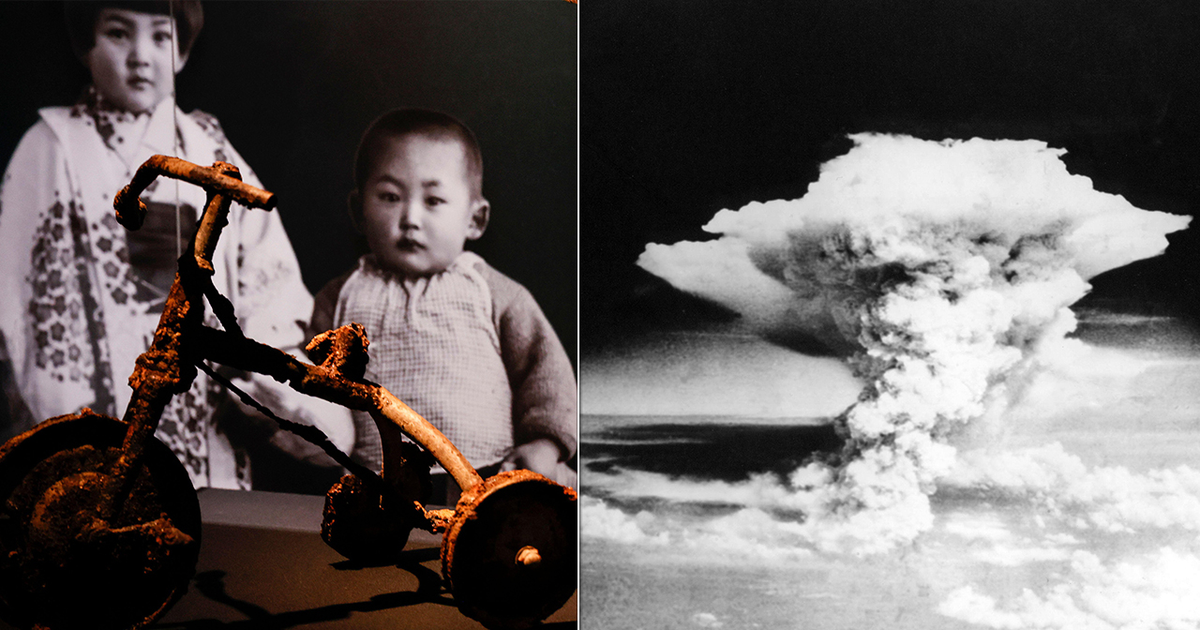
On August 6, 1945, the United States dropped the atomic bomb "Little Boy," with an explosive power of 13 to 18 kilotons of TNT equivalent, on Hiroshima. Approximately 80,000 people died instantly, with over 30,000 vaporized at the molecular level. Passersby heading to work, waiting in line at shops, or sipping coffee on open terraces were reduced to charred silhouettes etched onto walls.
Three days later, the horror repeated itself when the "Fat Man" bomb, with a yield of 21 kilotons, detonated over Nagasaki. The same black shadows of people, hundreds of bodies littering the streets, and an atmosphere thick with concentrated grief filled the city.
In mere minutes, these explosions obliterated two cities, turning them into reservations of devastation. At the time, it seemed that clearing debris and providing medical aid to the burned survivors might allow people to momentarily forget the dark days of August. However, the invisible menace of radiation persisted, claiming the lives of those who survived the initial blasts year after year.
Today, the death toll from the atomic bombings of Japan in 1945 exceeds 450,000 people.

Beyond the unbearable physical suffering, the nuclear bombings fractured Japanese society morally and socially.
Those who survived Hiroshima and Nagasaki—mostly children and teenagers—were labeled "hibakusha," meaning "people exposed to the bomb." This term quickly became synonymous with outcasts and pariahs due to widespread fear of radiation. People around them knew that hibakusha suffered from an invisible affliction, but whether the illness was contagious, could be passed to children, or whether one could work or form relationships with survivors remained unknown. As a precaution, many kept their distance. Even 77 years later, this stigma persists in Japanese society. However, survivors now openly share their experiences, using memory itself as a warning to future generations.
Seiko Fujimoto’s Nightmare of the Dead
For two decades after the bombing, Seiko Fujimoto was haunted by the same nightmare. She tried to navigate through rows of the dead, their bodies charred and eyes white and bulging. Terrified, she searched for her mother but could not find her. Years later, after seeing archival photographs in a museum, she realized she had witnessed crowds of blackened figures in reality. Seiko was just three years old when the bomb was dropped on Hiroshima. It was an exceptionally hot year, and her uncle had taken her and his children out of the city for safety. On August 6, she and her brother were walking in a field with their dog—an act that saved their lives.
"I saw something descending from the sky—it looked like a balloon," she recalled. Then a strong wind blew, and it felt as if the lights went out. She awoke in a hospital. Both she and her brother survived, though burned and partially amnesic. Their parents found them, but the bodies of their uncle, aunt, and cousins were never recovered, nor was their large home.

The family soon moved to Tokyo, but her father forbade Seiko from telling anyone they had lived in Hiroshima, fearing it would harm her chances of marriage. His fears were unfounded. Fujimoto became a doctor, started a family, and had two healthy children. Sadly, her brother died two years after the bombing from esophageal cancer, frequently asking for watermelon. Since then, Fujimoto has harbored a deep aversion to watermelons.
Yoshiro Yamawaki: The Dead Face of Father Smiling
At nine years old, Yoshiro Yamawaki witnessed a giant flash of light through his window and immediately fled with his mother and brother to a bomb shelter. His mother’s quick reaction saved them from the worst. The true horror became clear the next day when Yoshiro searched for his father, who had stayed at the factory during the bombing. The bomb detonated just one kilometer from the plant.

"On the bridge, we saw rows of dead people standing by the railings on both sides. They had died standing, heads bowed as if in prayer. Dead bodies floated down the river as well. At the factory, we found my father’s body—it seemed like his dead face was smiling. The adults at the factory helped us cremate him. We burned my father on a pyre but never told my mother what we had seen and endured," Yamawaki later recalled.
Yamawaki survived two cancers and multiple surgeries. He believes these stories must never be silenced. Only by remembering can we prevent such a tragedy from recurring.

Tsutomu Yamaguchi: Twice Saved from Death
Young engineer Tsutomu Yamaguchi can be called incredibly unlucky, having survived both American atomic bombings. An employee of Mitsubishi, Yamaguchi was on a business trip to Hiroshima for just two days in early August. When the "Fat Man" bomb was dropped on the city, he was three kilometers from the blast epicenter.
Tsutomu was instantly blinded; glass shattered his teeth, and his arm and ribs were broken. Yet he found the strength to stand and, almost by touch, ran toward the train station. The hot radioactive wind burned his charred skin, but Yamaguchi knew the priority was to escape. He traveled back to his hometown of Nagasaki and went straight to the hospital. Bandaged and nearly blind, three days later he heard another explosion. Glass shattered in his hospital room, and the now-familiar scorching wind burned him again. Ironically, the hospital was only three kilometers from the second blast’s epicenter.

An emergency evacuation began. Nearly blind, Yamaguchi ran toward the radiation epicenter instead of away from it. He received such a high radiation dose that radiation sickness was diagnosed six months after the tragic August events. But most importantly, he survived.
Tsutomu’s wife and children also suffered from the nuclear fallout, exposed to the radioactive black rain. Two of his children died from cancer within five years. Despite his tragic fate, Yamaguchi regained his sight, overcame cancer, returned to work, took out a mortgage on a new home, and until the end of his life avoided speaking about his experiences.
Tsutomu Yamaguchi passed away from cancer at age 93 in 2010. He remains the only person officially recognized by authorities as a survivor of both the Hiroshima and Nagasaki bombings.

Emiko Okada: Water Became a Precious Commodity in Hiroshima
Emiko Okada was spared from school that day, a reprieve that saved her life. At the moment of the explosion, she was at home with her parents.
From her memories: a white, piercing flash, followed by a long, dragging silence, then a slow-motion scene with distorted sound. Her parents slowly rose from the floor, brushing glass shards off themselves, wiping blood from their faces, while ash covered the entire room. Then came the screams and wails from the streets.
"I don’t remember if it was day at all. It was as if sunset came immediately. The sky was red, and everyone running through the streets looked like red shadows. Even now, when I see a bright crimson sunset, I remember the day of the bombing. I hate sunsets," Okada recalls.
According to the survivor, the city resembled a hellish cauldron. Food and water shortages began almost immediately. People, unaware of radiation, scavenged and ate whatever they could find.
"Water became a luxury! Starving people resorted to theft. That’s how we lived those first days, but now it’s forgotten," she said. Two days later, Emiko began losing her hair and then her teeth.
"I constantly felt exhausted, only thinking about where to lie down," she recalled. "No one knew about radiation. It wasn’t until 12 years later that I was diagnosed with aplastic anemia."
Emiko’s 12-year-old sister, who was at school that day, was never found. Okada still believes her sister lost her memory and will one day knock on her door.
Photo credit: Legion Media
Discover the latest news and current events in Personal Growth & Self-Discovery as of 29-04-2024. The article titled " “Rows of Half-Dead with White Eyes Envied the Dead”: True Survivor Stories from the Nuclear Bombings " provides you with the most relevant and reliable information in the Personal Growth & Self-Discovery field. Each news piece is thoroughly analyzed to deliver valuable insights to our readers.
The information in " “Rows of Half-Dead with White Eyes Envied the Dead”: True Survivor Stories from the Nuclear Bombings " helps you make better-informed decisions within the Personal Growth & Self-Discovery category. Our news articles are continuously updated and adhere to journalistic standards.