



Port Arthur at 30: Bondi attack tests Australia’s gun-control legacy
Three decades after Port Arthur, Bondi's mass shooting rekindles debate on Australia’s gun laws and possible nationwide reforms, including licensing limits and a national firearms register.
Three decades after Australia reformed its gun laws, a new mass shooting at Bondi Beach has reignited the national debate. The attack occurred during Hanukkah celebrations and has prompted lawmakers to consider sweeping reforms across states and territories.
This piece revisits Australia’s gun-control journey, the current landscape of ownership, and what changes are being debated in the wake of the Bondi tragedy.

Port Arthur and the gun-law legacy
The 1996 Port Arthur massacre, which left 35 people dead, became a turning point for Australia. In its wake, the country banned automatic and semi-automatic rifles and shotguns, launched a large nationwide buyback program, and introduced strict background checks and waiting periods. The reforms helped position Australia as a global model for gun control.
Advocates say the policy helped reduce gun fatalities, but critics note that new challenges have emerged with evolving technology and social dynamics.
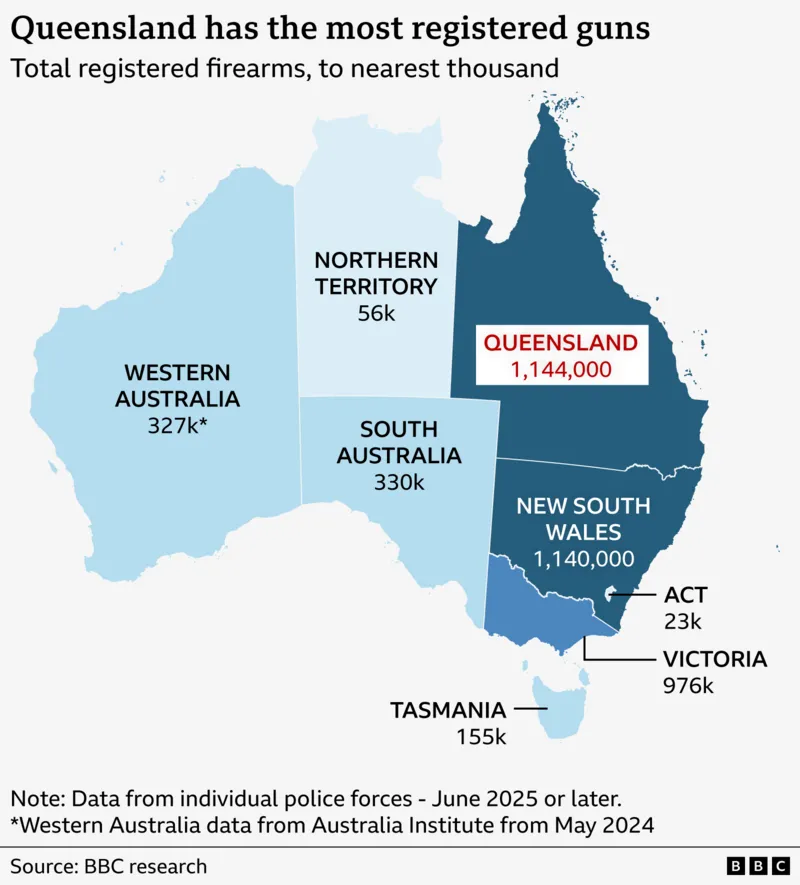
Gun ownership at a record high
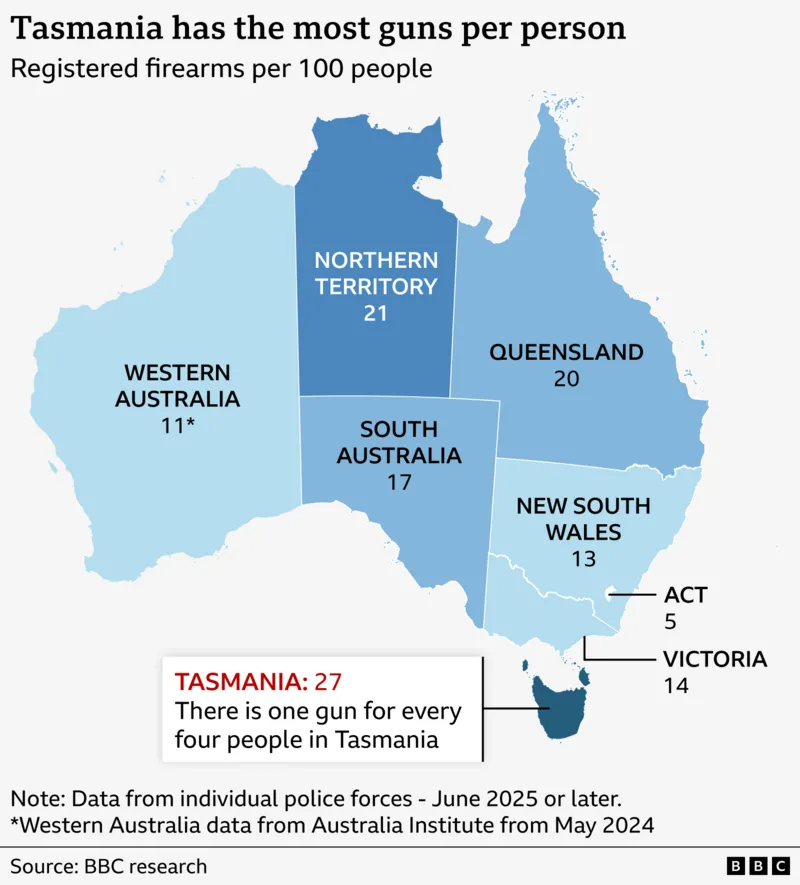
New research from the Australia Institute shows private gun ownership remains high. There are more than four million firearms registered in private hands, roughly one gun for every seven residents. Queensland records the largest total number, while Tasmania and the Northern Territory have the highest ownership rates per person. The study also notes that one in three firearms within New South Wales are held in major cities, and the average license holder owns more than four weapons.
These figures underscore a key challenge for policy makers: more firearms in more places, but with a population that is increasingly urbanized.
What are Australia’s current gun laws?
Gun rules differ by state, but broadly speaking, to obtain a license you must be over 18, judged a fit and proper person, complete safety training, and show a genuine reason for ownership—such as hunting, pest control, sport shooting, work duties, farming, animal welfare, or collecting firearms.
Loopholes exist. For example, some jurisdictions allow supervised access for minors, and weapon classifications can vary between states, potentially creating confusion. The 1996 reforms also curtailed self-defence as a valid reason for ownership, a contrast to the United States approach.
After Port Arthur, more than 650,000 firearms were voluntarily surrendered in a nationwide buyback, and automatic and semi-automatic firearms were banned. New Zealand followed a similar path after its Christchurch attacks in 2019.
Recent polling shows broad public support for tougher rules: roughly seven in ten Australians want harder access to guns, and about 64% support strengthening current laws.

Fresh reform after Bondi: what’s on the table
In the immediate aftermath, leaders announced a plan to tighten gun controls. Proposed measures include:
- capping the number of firearms a license holder may possess
- narrowing broad, non-specific licensing
- adding Australian citizenship as a prerequisite for ownership
- improving intelligence sharing during license checks
- regular reviews of license holders’ status
Prime Minister Anthony Albanese and state leaders emphasised the need to move quickly. Some critics argue that focusing on the number of guns misses the bigger issue of radicalisation and access to dangerous materials, while others push back on a cap, saying it may not prevent all attacks.
Former Prime Minister John Howard—architect of the 1996 reforms—supported stronger controls but cautioned against viewing reforms as a cure-all for antisemitism or other social problems.
One practical goal is the long-promised national firearms register, which officials say should be operational by mid-2028. A strengthened registry is seen as a tool to track ownership and detect risky patterns earlier.

Recreational hunting under spotlight
Roland Browne argues that licensing processes for recreational hunting are too lax and should be re-evaluated, noting that some licenses cover broad categories that can obscure risk. Proponents of hunting say the activity has ecological and social value, helping control pests and supporting rural economies, and that responsible hunters play a role in wildlife management.
Many Australians still enjoy hunting as a family or community activity, and some license holders participate in target shooting and other sanctioned sports. The debate continues about how to balance safety with legitimate sporting uses.

A wake-up call for safety and vigilance
Survivors and families affected by Port Arthur have repeatedly stressed that safety requires ongoing reform, public awareness, and strong enforcement. The Bondi incident has reinforced the view that gun laws must adapt to new threats and changing communities, while keeping legitimate sporting and hunting traditions intact.
Researchers and advocates emphasize that the issue extends beyond firearms alone—effective prevention hinges on better risk assessment, robust licensing, and reliable information sharing across agencies.
Conclusion: a continuing debate
Australia remains a relatively safe country with relatively low gun-violence rates, but the Bondi attack shows that no policy is perfect. The broad consensus is to strengthen oversight, close loopholes, and ensure laws reflect current technology and social dynamics while preserving lawful recreational activities.
As communities reflect on Portsmouth’s legacy and Bondi’s tragedy, policymakers face a careful balancing act: protecting public safety without overreach into ordinary, lawful gun ownership.
Expert comment: Policy analysts say reforms must focus on rigorous license assessments and sensible firearm types, not simply on the number of guns someone can own. They warn that without better data and enforcement, new laws may miss the root causes of violence.
Summary: Australia’s gun-control framework remains a work in progress. The Port Arthur legacy continues to shape policy, while incidents like Bondi prompt fresh proposals—from licensing caps to a national firearms register. The debate weighs safety, sport, and individual rights, seeking practical steps to reduce risk while respecting legitimate use.
Key insight: Strengthening licensing, improving information sharing, and building a national firearms register are central to reducing risk, while preserving lawful sporting activities. BBC News
Discover the latest news and current events in World News as of 19-12-2025. The article titled " Port Arthur at 30: Bondi attack tests Australia’s gun-control legacy " provides you with the most relevant and reliable information in the World News field. Each news piece is thoroughly analyzed to deliver valuable insights to our readers.
The information in " Port Arthur at 30: Bondi attack tests Australia’s gun-control legacy " helps you make better-informed decisions within the World News category. Our news articles are continuously updated and adhere to journalistic standards.