

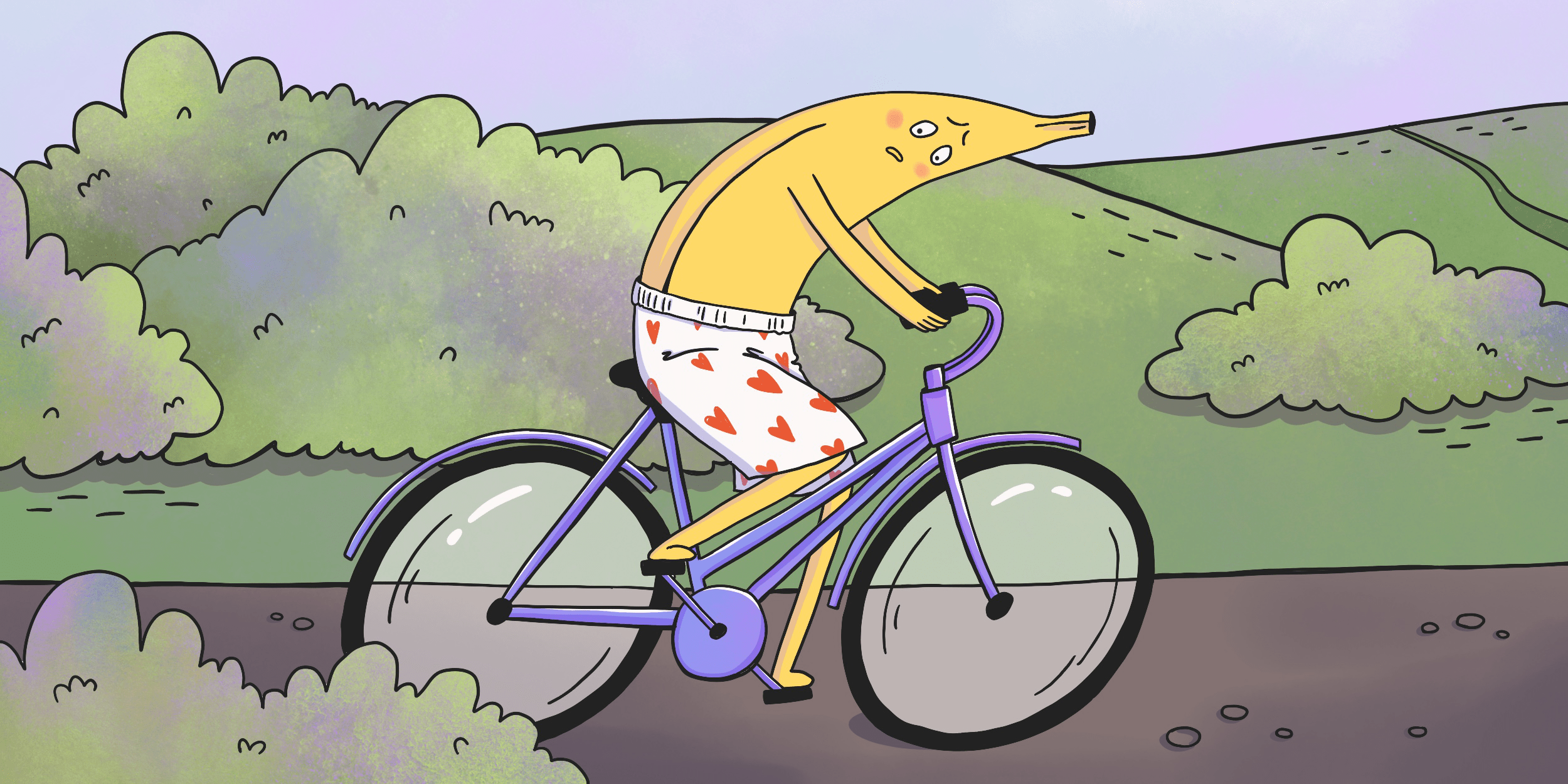

Does Cycling Negatively Affect Male Erectile Function?
Mild erectile issues aren’t the only concern linked to cycling. We explore whether cycling poses risks to men’s sexual health.
Cycling is more than just a physical activity; it is an aerobic exercise that can positively impact erectile function when practiced regularly. However, there is a crucial factor to consider. Spending prolonged time seated on a bicycle saddle applies pressure to the genital area. Studies report that between 22% and 91% of cyclists occasionally experience numbness in the perineum after riding.
This pressure could theoretically impair sexual function, and numerous studies support that these concerns are valid.
How Cycling Affects Male Genital Health and Erectile Function
The rear part of the saddle presses against the gluteal muscles and ischial bones, while the front impacts the muscles, blood vessels, and nerves in the perineal region.

Julia Vershinskaya
Urologist at Community Clinic.
Men who cycle for several hours regularly risk developing chronic pelvic pain syndrome. This condition causes pain in areas of the lower pelvis, such as the penis, scrotum, perineum, or bladder.
Two mechanisms contribute to this. First, pelvic floor muscles spasm due to constant engagement during cycling. Like any muscle, without adequate relaxation, these muscles can cramp and cause pain. Second, compression of branches of the pudendal nerve by a firm bicycle saddle can occur.
Importantly, chronic pelvic pain is not linked to reduced blood flow since major vessels do not pass through the saddle’s pressure zone.
Additionally, researchers suggest that long-duration cycling may adversely affect arteries supplying the genital area.
For instance, one study proposed that prolonged compression during cycling could lead to penile arterial insufficiency and promote fibrosis—a condition where connective tissue replaces normal tissue, impairing function. Damage to the endothelium, the vessel lining essential for achieving erection pressure, is also a concern.
However, these remain hypotheses, and many cyclists do not experience erectile problems.
A 2005 review analyzing 21 studies found that moderate to severe erectile dysfunction occurred in 4.2% and 4% of cyclists, respectively, compared to only 1.1% and 2% in runners and swimmers of similar age.
The authors concluded that cycling more than 3 hours weekly increases erectile dysfunction risk. Similar findings emerged from a study involving 1,709 men aged 40 to 70.
Long-term cycling may also impact urinary health. Research shows cyclists engaged in the sport for over 10 years often report lower urinary tract symptoms, including frequent urination, nocturia, and stress urinary incontinence.
Contrastingly, some studies find no link between cycling and erectile dysfunction or infertility. A UK study of over 5,000 cyclists found no increased risk regardless of cycling duration or years of practice.
A 2018 review surveying nearly 4,000 men (swimmers, runners, cyclists) found no erectile or urinary issues among cyclists. Another study of 688 cyclists also reported no correlation between cycling and erectile dysfunction risk, regardless of weekly mileage, skill level, or saddle type.
Interestingly, longer cycling experience correlated with a lower erectile dysfunction risk compared to less frequent cyclists.
Moderate cycling (under 3 hours per week) may even reduce erectile dysfunction risk compared to sedentary individuals, as confirmed by the aforementioned 1,700-men study.
A 2021 systematic review and meta-analysis of over 4,500 men found that after adjusting for age and comorbidities, cyclists had a higher erectile dysfunction risk than non-cyclists. However, due to study heterogeneity, more research is needed for definitive conclusions.
Currently, there is no conclusive evidence that cycling harms men's sexual health.
On the contrary, cycling likely reduces erectile dysfunction risk by improving cardiovascular health.
If erectile or urinary issues arise after cycling, consider evaluating weekly training volume and saddle comfort.
Can Choosing the Right Saddle Reduce Erectile Dysfunction Risk?
In one study, 20 healthy young men without erectile problems pedaled on stationary bikes with various saddles while researchers measured oxygen pressure in the penis.
Oxygen pressure decreased during pedaling across all saddle types due to perineal compression. However, the extent varied: narrow soft saddles reduced oxygen pressure by 82%; narrow medium-soft saddles with a V-shaped cutout by 72%; wide firm leather saddles by 63%; and specially designed wide female saddles without a nose by only 20%.
Researchers concluded that compression is inevitable but can be minimized by selecting the appropriate saddle. Findings indicate less perineal pressure with saddles featuring:
- A wide rear section at least twice the distance between the cyclist’s ischial bones.
- A narrow front section angled downward or positioned neutrally.
- Absence of a narrow front section (nose-less saddles), which reduce arterial pressure on the perineum but may increase hand pressure and reduce stability, requiring frequent backward movement.
Contrary to popular belief, saddle cutouts do not reduce perineal pressure and may increase it due to improper placement.
Regarding saddle material and softness, geometry plays a more critical role than material composition. Saddle positioning is also vital; a high saddle aligned with the handlebars causes the rider to lean forward, increasing perineal pressure. Raising the handlebars above saddle height creates more space for nerves and arteries in the groin.
How to Minimize Erectile Dysfunction Risk While Cycling
First, remember that cycling’s impact on erectile function is not proven, and even studies indicating increased risk report low incidence rates.
A sedentary lifestyle negatively affects male sexual health far more than cycling. If you cycle without erectile or urinary issues, continue enjoying your rides confidently.
If you cycle frequently and for long durations, experience perineal numbness, or face urinary or sexual problems, consult a urologist and discuss your symptoms and cycling habits.

Julia Vershinskaya
Genital numbness indicates nerve compression. However, symptoms may develop hours or days after cycling. Signs include burning during urination, pain during bowel movements, discomfort during erection or ejaculation, sharp or dull pain in the scrotum, penis, or anus, and urinary difficulties or urgency. These symptoms may indicate multiple conditions.
Diagnosing cycling-related issues may require a detailed consultation, muscle palpation, and specialized neuro-orthopedic examination lasting at least an hour.
If you experience perineal numbness post-ride without other symptoms, try these steps to reduce discomfort:
- Choose a sufficiently wide saddle that supports your ischial bones comfortably.
- Consider a nose-less saddle, but be aware it may feel uncomfortable initially and increase wrist strain.
- Adjust saddle position to be horizontal or tilt the nose slightly downward.
- Avoid prolonged forward-leaning posture; periodically change torso angle.
- Stand on the pedals regularly; standing for over 20% of ride time reduces perineal numbness.
- Break long rides into segments with rest intervals. Experts recommend stopping every 30 minutes to dismount, breathe deeply, and stretch legs moderately.
Discover the latest news and current events in Lifestyle & Wellness as of 26-05-2024. The article titled " Does Cycling Negatively Affect Male Erectile Function? " provides you with the most relevant and reliable information in the Lifestyle & Wellness field. Each news piece is thoroughly analyzed to deliver valuable insights to our readers.
The information in " Does Cycling Negatively Affect Male Erectile Function? " helps you make better-informed decisions within the Lifestyle & Wellness category. Our news articles are continuously updated and adhere to journalistic standards.