

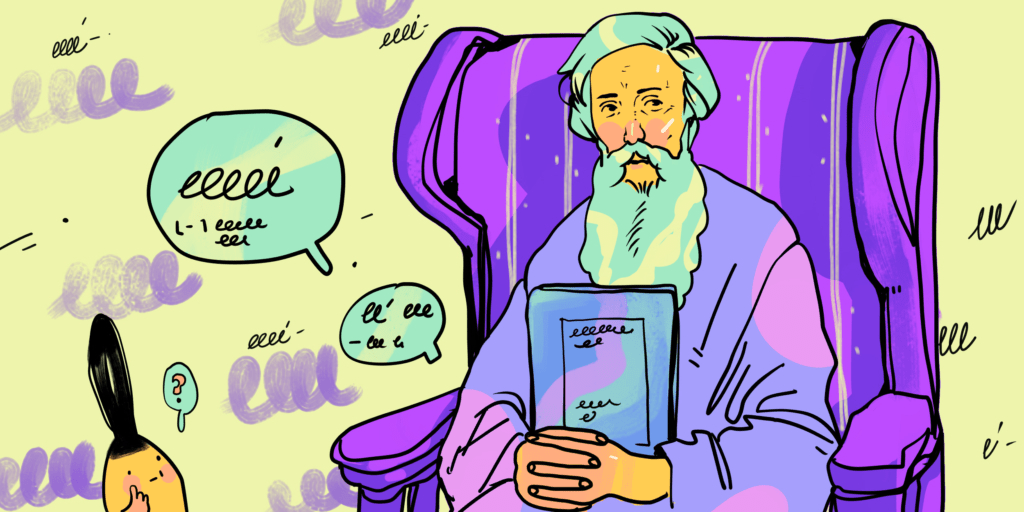

Discover 10 Fascinating Words from Dahl’s Dictionary That Will Spark Your Curiosity
Explore vibrant, lesser-known words from Vladimir Dahl’s 19th-century dictionary that capture the beauty and richness of the Russian language. These unique terms, some surprisingly relatable today, reveal the depth of dialects and folklore.
Many of these intriguing words can easily find a place in modern conversation.
Vladimir Ivanovich Dahl published his "Explanatory Dictionary of the Living Great Russian Language" in the mid-19th century. The first edition included over 200,000 entries, featuring numerous dialect words that are vivid, expressive, and captivating. Here are ten standout examples highlighting the diversity and brilliance of the Russian language.
1. Anchutki
In East Slavic mythology, anchutki are tiny mischievous spirits or imps. In Alexey Remizov’s tale "Bathhouse Anchutki," they are described as the children of the bathhouse spirit—small, black, furry creatures with hedgehog-like feet and bare heads resembling Tatar children. They even marry kikimoras and enjoy playing pranks. Besides bathhouses, anchutki are said to inhabit fields and bodies of water.
Dahl’s dictionary defines "anchutki" as little devils. An expression "drunk to the anchutki" closely parallels the familiar phrase "drunk to the devils," capturing a vivid cultural image.
2. Byakat
The verb byakat is linked to the childish word "byaka," meaning something unpleasant or nasty. One meaning of "byakat" is to behave badly or rudely.
It also refers to sheep bleating, an onomatopoeic connection to the sound "byashkam." This meaning aligns with another: to speak indistinctly or mumble, as in the phrase "Why are you bleating?" when someone is hard to understand.
Another lesser-known meaning is to drop or throw something with a loud noise, echoing the sound "byak" associated with a falling object.
3. Dbat
No, this isn’t a typo. The word dbat was used by 19th-century peasants to mean caring for the household or accumulating supplies. Dahl also notes an interesting synonym: "gonodobit," emphasizing the act of tending or gathering.
4. Nyuni
Many know the phrase "to let nyuni loose," but what are nyuni? Historically, this word referred to saliva running down the lips or drooping, wet lips. Although the term has fallen out of use, it survives in this colorful idiomatic expression.
5. Zhurapki
Zhurapki are colorful, woolen Persian socks. This word comes from Turkish or Azerbaijani, where it meant "sock," "stocking," or "leggings," with variants like "dzhurapki" and "shurapki."
6. Potiral'tse
This charming old word means "towel." Dahl mentions it appearing in folk songs. The term highlights the utilitarian purpose but carries a sweet, endearing sound. He pairs it with a delightful synonym, "potirushka," both stemming from the verb "to rub."
7. Malamzia
Though it might sound like a curse, malamzia actually describes a person with poor eyesight. Dahl adds a curious synonym: "prishchura," meaning squinting. Despite its potential as a colorful insult, it simply denotes visual impairment.
8. Stran
Evoking the words "country" and "strange," stran has multiple meanings in Dahl’s dictionary. It can neutrally mean "a stranger," possibly with a negative undertone reflecting historical xenophobia.
Other definitions include "eccentric," "recluse," "scoundrel," "wild," "crazy," or "fool," revealing a range of negative traits linked to unfamiliarity or oddness. A notable synonym for "crazy" is "madman."
Beyond people, "stran" can also mean "nonsense" or "rubbish," connected to the adjective "strange." Interestingly, it can mean "target" or "goal," a curious sense for modern readers.
9. Khurdy-Murdy
While not exactly "hukhry-mukhry," this catchy phrase refers to household odds and ends, clutter, or junk.
This vibrant term resembles the English slang "stuff," often used to describe miscellaneous or worthless items. If you’re bothered by the influx of English borrowings, you can counter "stuff" with the delightful "khurdy-murdy," or choose from Dahl’s synonyms "sharabara" and "butor."
10. Shushlepen
Shushlepen was used to call a lazybones, loafer, or idler. It likely derives from the verb "shlepat," meaning "to slap."
It’s a pity this expressive word has fallen out of use—it sounds so charming! Imagine a popular vlogger saying, "I’m feeling like a shushlepen today because I’m out of energy."
Discover the latest news and current events in Education, Work & Study as of 15-06-2022. The article titled " Discover 10 Fascinating Words from Dahl’s Dictionary That Will Spark Your Curiosity " provides you with the most relevant and reliable information in the Education, Work & Study field. Each news piece is thoroughly analyzed to deliver valuable insights to our readers.
The information in " Discover 10 Fascinating Words from Dahl’s Dictionary That Will Spark Your Curiosity " helps you make better-informed decisions within the Education, Work & Study category. Our news articles are continuously updated and adhere to journalistic standards.