


Before Yankovsky, Aksenova, and Snigir: Other Russian Adaptations of 'Crime and Punishment'
Explore the rich history of Russian film adaptations of Dostoevsky's 'Crime and Punishment,' highlighting key productions from 1969, 2007, and the latest 2025 series that modernizes the classic tale.
While directors often regard Bulgakov as a cursed writer, Dostoevsky is considered one of the most challenging authors to adapt for the screen. Yet, Vladimir Mirzoev is far from the first to bravely tackle his complex works.
In 2024, a major trend in Russian cinema is the adaptation of classic literature. Earlier this year, "The Master and Margarita" and "Eugene Onegin" were released, with the premiere of the series "Crime and Punishment" scheduled for late October. This project has been widely discussed due to director Vladimir Mirzoev's bold decision to set the story in modern times and its star-studded cast. The Moscow premiere took place on October 22, but viewers on Kinopoisk expecting to watch the first episode on October 26 were met with an unexpected delay.
The release date was postponed to October 29, officially due to "technical and operational reasons," though many online users speculated otherwise. Some suggested provocative scenes were being cut, while others believed scenes were being reshot, similar to the approach taken with "Slovo Patsana." The creators assure these issues are temporary and will be resolved quickly. Surveys indicate that about 1.3 million viewers are already eager to see Ivan Yankovsky portray the impoverished student Rodion Raskolnikov, and this number is expected to grow. While the project’s innovative approach sparks debate, let's revisit other notable adaptations of "Crime and Punishment" that also made significant impacts in their times.
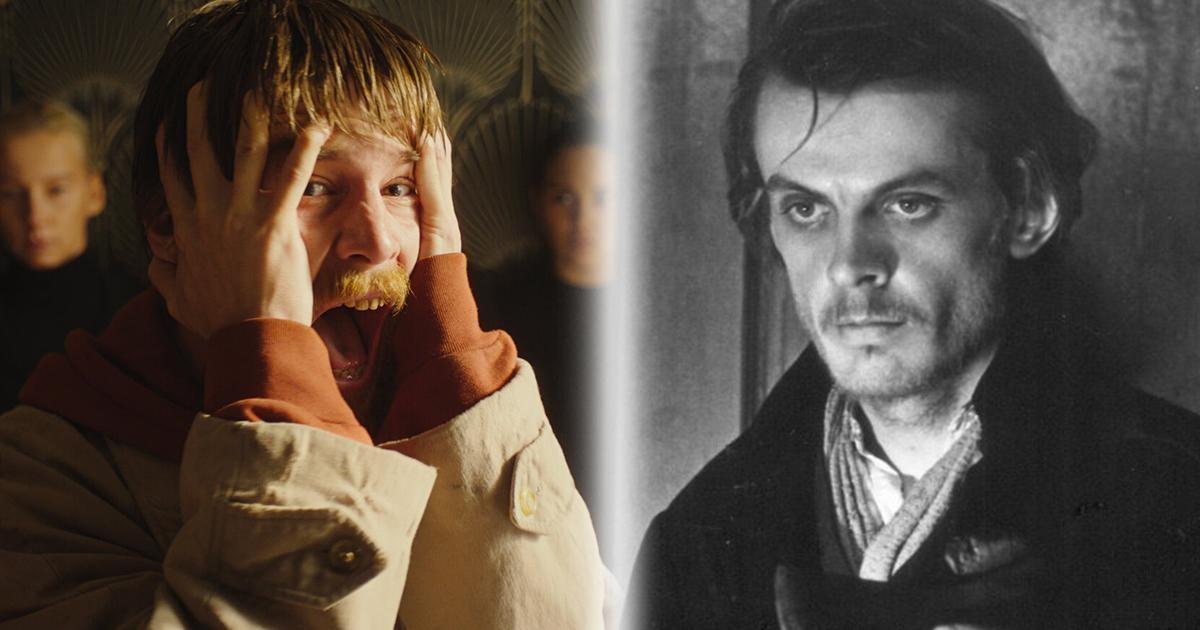
"Crime and Punishment," 1969 (Director: Lev Kulidzhanov)
Approximately ten film adaptations of Fyodor Dostoevsky's famous novel have been produced worldwide, including in Poland, Finland, France, and the United States. However, one of the finest versions was released in the Soviet Union in 1969, directed by Lev Kulidzhanov. The film closely follows the novel’s plot, but critics especially praised its perfect capture of the novel’s oppressive atmosphere. Kulidzhanov filmed gloomy Saint Petersburg in black and white—a choice driven mainly by the scarcity and high cost of color film development at the time, but one that ultimately enhanced the movie's mood.

The cast featured Georgiy Taratorkin as Rodion Raskolnikov, Innokenty Smoktunovsky as Porfiry Petrovich, Viktoriya Fedorova as Avdotya Romanovna, Yefim Kopelyan as Svidrigailov, Yevgeny Lebedev as Marmeladov, and others. For Tatiana Bedova, who played Sonya Marmeladova, this was her film debut. Before entering theater school, she worked as a semiconductor tester. Bedova was the last to audition for the role after the originally cast actress was replaced. Despite her nervousness and inexperience, her shy demeanor impressed Kulidzhanov.

The film premiered in the Soviet Union in 1969 and internationally a year later. Critics hailed it as one of Kulidzhanov's best works. With a runtime of 3 hours and 41 minutes, it demands patience from modern viewers but guarantees a cathartic experience by the end.

The film was also involved in controversy. It was slated for the Cannes Film Festival, but shortly before the premiere, festival founder Robert Favre Le Bret expressed fatigue with "Slavic spectacles and Japanese samurai films," banning Soviet and Japanese films from the program. In response, Sergey Obraztsov, the artistic director of the Moscow Puppet Theater and a jury member, withdrew from the festival. The Venice Film Festival was not held that year either, so the film missed out on international awards.
"Crime and Punishment," 2007 (Director: Dmitry Svetozarov)
The early 2000s saw renewed interest in classic literature adaptations, sparked by Vladimir Bortko's series "The Idiot." In 2007, Dmitry Svetozarov directed another Dostoevsky adaptation with the series "Crime and Punishment," warmly received by audiences. Freed from the constraints of feature-length film, Svetozarov detailed all key plot points thoroughly and earned praise for his casting choices. The cast included Vladimir Koshevoy as Rodion Raskolnikov, Andrey Panin as Porfiry Petrovich, Aleksandr Baluyev as Arkady Svidrigailov, Elena Yakovleva as Pulcheria Raskolnikov, Yuri Kuznetsov as Semyon Marmeladov, Zoya Buryak as Nastasya, Svetlana Smirnova as Katerina Ivanovna, among others.
The meticulous work of production designers, costume artists, makeup artists, and decorators authentically recreated the atmosphere of Saint Petersburg. The color yellow, symbolizing sickness and despair in Dostoevsky's work, appeared frequently on screen.

While adhering closely to the original literary source, Svetozarov altered the ending, transforming it into a "Balabanov-style" conclusion, a notable choice given his earlier statements about respecting Dostoevsky’s material. For Vladimir Koshevoy, playing Raskolnikov marked his big-screen debut, aided by his own background as a student with two higher education degrees.

To embody Raskolnikov’s troubled psyche, Koshevoy underwent rigorous challenges. The director made him listen to oppressive music, forbade him from removing his dirty and worn clothes between takes, and unexpectedly extended shooting shifts to immerse him in discomfort.

"Crime and Punishment," 2024 (Director: Vladimir Mirzoev)
"I can't say I used a specific method during preparation. I sought inspiration in literature and painting, trying to find an artist who could reveal the author's inner world through their art. That artist was Edvard Munch," Ivan Yankovsky shared about his portrayal of Rodion Raskolnikov.
It was announced in autumn 2023 that Yankovsky would play the lead role, with no real competition during casting. Yankovsky himself had proposed the adaptation to Vladimir Mirzoev while filming "The Swamp." Mirzoev had already been contemplating the idea and had begun preparing a project synopsis.

Although the series has not yet been fully released, some critics who previewed the first episodes found them less successful. Director Mirzoev has been criticized for mixing time periods—setting the story in the present while characters speak in original book quotations—as well as for excessive surrealism and an unconvincing Raskolnikov. Online discussions suggest Yankovsky’s performance is overly expressive, leaving little room to convey the character’s deep inner turmoil.

However, the series has time to improve, consisting of 10 episodes instead of the usual 8, allowing for potential unexpected plot developments. From the outset, the cast is impressive: Ivan Yankovsky (Rodion Raskolnikov), Lyubov Aksenova (Dunya), Tikhon Zhiznevsky (Dmitry Razumikhin), Vladimir Mishukov (Porfiry Petrovich), Alena Mikhaylova (Sonya Marmeladova), Vladislav Abashin (Arkady Svidrigailov), Yulia Snigir (Marfa Petrovna), and Nikita Tarasov (Pyotr Luzhin).

It is too early to draw conclusions about the series, as Dostoevsky’s deep exploration of his characters' inner worlds makes his work notoriously difficult to adapt. Directors unanimously agree that working with Fyodor Mikhailovich’s texts is challenging but achievable. By the end of the year, we will know if Mirzoev’s vision succeeds.

Photos: PhotoXPress.ru, film stills
Discover the latest news and current events in Personal Growth & Self-Discovery as of 29-08-2024. The article titled " Before Yankovsky, Aksenova, and Snigir: Other Russian Adaptations of 'Crime and Punishment' " provides you with the most relevant and reliable information in the Personal Growth & Self-Discovery field. Each news piece is thoroughly analyzed to deliver valuable insights to our readers.
The information in " Before Yankovsky, Aksenova, and Snigir: Other Russian Adaptations of 'Crime and Punishment' " helps you make better-informed decisions within the Personal Growth & Self-Discovery category. Our news articles are continuously updated and adhere to journalistic standards.