

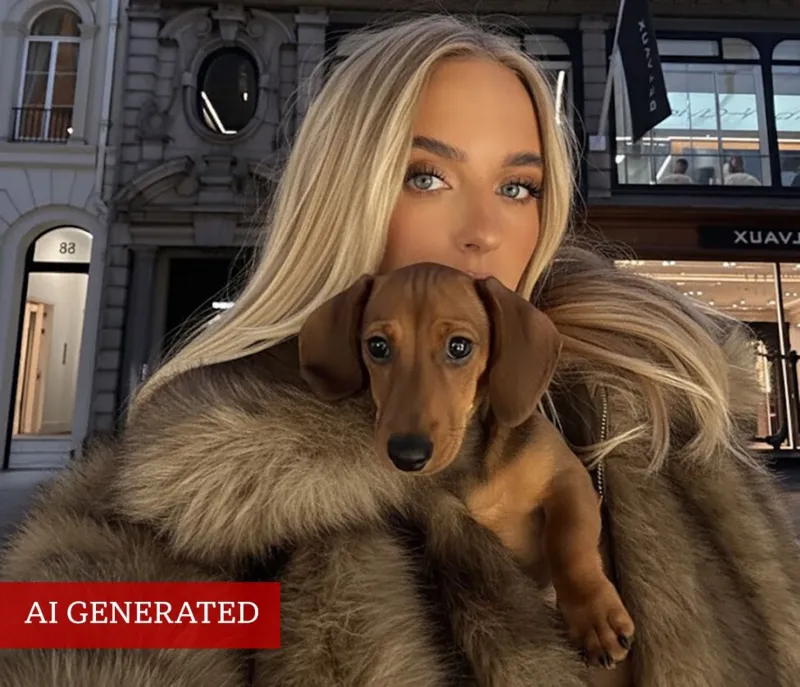

AI Animals on Photos: Influencers Ride the Trend Without Real Pets
A growing trend sees influencers adding AI-generated animals to their photos, sparking a broader debate about authenticity, disclosure, and how AI tools reshape online influence.
Intro
AI-generated animals are becoming a talking point on social media, with creators adding digital creatures to ordinary photos. While the novelty draws attention, it also raises questions about honesty and transparency online.
What’s fueling the AI animal trend
Creators are turning to artificial intelligence to insert animals into images, turning everyday scenes into eye-catching visuals. Critics describe some AI work as "slop"—low-quality, obviously generated content that floods feeds and can blur the line between real and simulated.
Creators embracing AI animals
Influencer Zoe Ilana Hill, who has around 82,000 followers, tried the trend by adding AI-generated deer to a post. She says the effect felt surprisingly convincing and emphasizes that she clearly marks AI-made images so followers aren’t misled. She views AI as a tool to complement her work, not a threat to her career.
Another creator from Finland, Clara Sandell, assembled a carousel featuring AI tigers, an elk, a horse, and pets. The post drew positive reactions for its elegant look, and Clara says she would participate again if the trend remains transparent and recognizable as AI-generated.
Public reaction and concerns
- Fans are split: some love the novelty, while others worry about trust and animal welfare in AI scenes.
- Instances of undisclosed AI imagery sparked confusion and debates about authenticity on feeds.
- Some critics argue that excessive AI content may undermine credibility for creators who rely on real-life presence.
Expert perspectives on AI content
Social media consultant Matt Navarra notes that AI can deliver striking, polished visuals, from wild animal scenes to highly believable composites. However, he adds that serious creators will double down on authenticity to stand out amid a flood of AI images, and he predicts AI-driven posts will become even more common in feeds by 2026.
Creative health and disclosure
Katina Bajaj, a specialist in creative health, cautions that the rapid pace of AI content can overwhelm viewers. Her guidance is to value creative health, be mindful of how we consume and share AI imagery, and to label AI-generated content when possible. While platforms do not have a universal labeling rule yet, AI-generated images may receive detection-based labels, and TikTok has introduced a feature to help users tailor their feeds by managing topics.
Voices from creators: mixed views
Some creators, such as Maddi Mathers from Melbourne, worry that AI content can erode trust and harm a creator’s long-term career if audiences can’t tell what is real. Others enjoy exploring AI as a new tool for imaginative expression and aesthetics.
Lessons from a misfire
Emily Manns, a fashion creator in the United States, experimented with AI apps to craft an aesthetic shot, but the result was awkward and distorted. She says the experience was funny yet a reminder that AI tools aren’t perfect and that quality matters when audiences judge authenticity.
Conclusion
AI-generated animal content is reshaping how influencers present themselves online. The trend offers creative possibilities, but transparency and responsibility remain essential to maintain trust as platforms refine labeling and feed controls.
Expert perspective
Matt Navarra observes that AI can produce eye-catching visuals, but authenticity is still crucial for building a lasting audience. He anticipates AI-driven content will grow, urging creators to balance novelty with clear disclosure.
Summary
The trend of adding AI-generated animals to photos has gained attention and sparked debates about truthfulness. Proponents see a powerful new tool for creativity, while critics warn that lack of transparency can erode trust. Industry voices emphasize transparency, platform policies, and mindful use as the path forward. AI content may become a staple in influencer feeds in the coming years.
Key insight: Transparency around AI-generated imagery is essential for maintaining trust in influencer content. BBC News.