

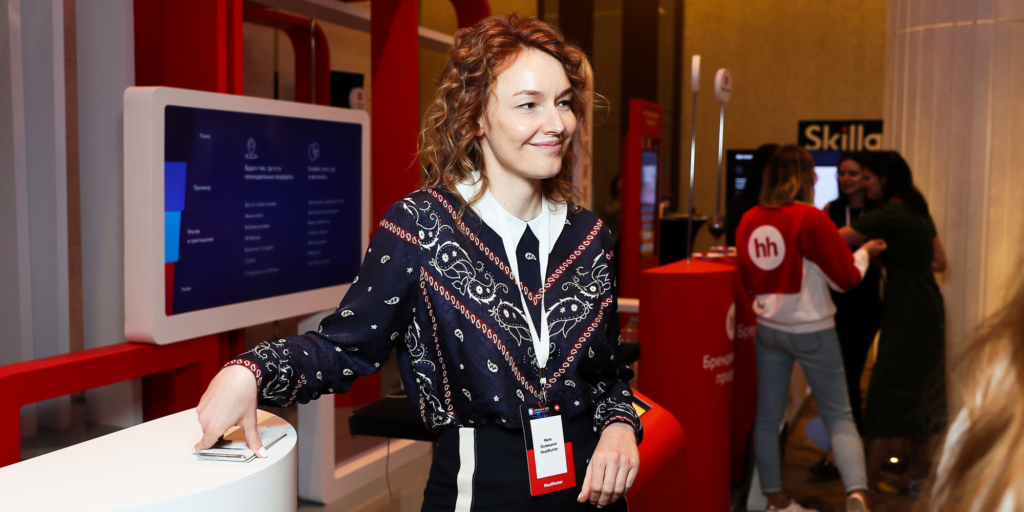

‘A Company Doesn’t Need Everyone to Want to Work There’: Interview with Nina Osovitskaya, HeadHunter’s HR Branding Expert
Insights from HeadHunter’s HR branding expert on crafting compelling job postings, conducting effective interviews, and making yourself indispensable to companies.
Discover what questions to ask during interviews, how to spot misleading job ads, and strategies to become a sought-after candidate.
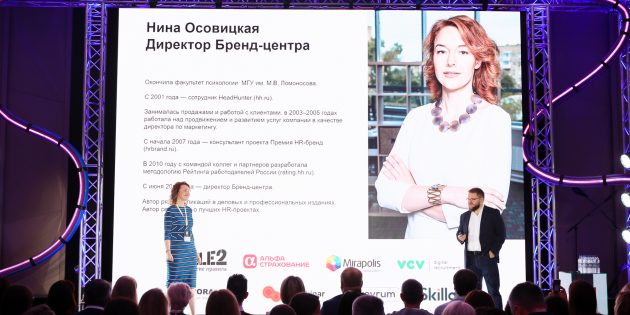
Nina Osovitskaya has been with HeadHunter for 18 years. Over this time, she has held multiple roles, launched the HR Brand Award, become a leading expert in labor market positioning, and authored three books on the subject. We spoke with Nina to understand why no organization can be perfect for everyone, what job seekers value most, and which sectors face critical staff shortages.

Nina Osovitskaya
Director of HeadHunter’s Brand Center.
‘Companies That Acknowledge Their Flaws Come Out Ahead’
What were you doing before joining HeadHunter?
It’s a bit tricky to answer because my entire conscious career has unfolded at HeadHunter. I joined when the company was less than a year old. It was a newly formed startup with an uncertain future, and I started in an entry-level position. Before that, I explored various paths—from singing backup in a reggae band to managing a scientific lab. After maternity leave and having my first child, I sought a more serious role and found my way to HeadHunter.
How did the company and your role evolve together?
It was a fascinating time—the early days of the Russian internet as a professional platform. When I started, posting vacancies and accessing the candidate database were free. The main challenge was that many professionals were just beginning to use the internet, so it was unfamiliar territory. I helped clients by taking vacancy details over the phone or fax, then crafted polished job descriptions, added company logos, structured the content, and uploaded it online. It felt like a small miracle each time—a well-presented vacancy appeared on the web showcasing the employer.
After a year, we introduced paid services, and I transitioned into sales. This was an interesting shift because back then, everything online was expected to be free. Job boards looked like open bulletin boards where anyone could post ads, so our paid model was met with skepticism. People simply didn’t understand why they should pay for online services.
I spent several years in sales before moving to marketing to promote the company. After my second maternity leave, I wasn’t ready to return to full-time office work. We brainstormed with leadership and launched the HR Brand Award, celebrating excellence in HR branding. This project allowed me to continue working remotely and flexibly.
Initially, participation was limited, but it helped me dive deep into brand collaboration with various companies. Later, we launched the Russian Employer Ranking, which evaluates companies’ overall attractiveness to candidates and why employees value working there, beyond just HR projects.
For over a year now, I’ve led HeadHunter’s Brand Center, a dedicated division helping employers build and promote their HR brands to become more appealing to their target audience.
Is HR branding just a superficial facade that can hide anything?
I’d argue otherwise. If branding focuses only on surface appeal, it only works at the initial stage—attracting people to interviews. If you promise something that doesn’t exist, candidates will sense it, especially during probation. Remember, probation is mutual: the employee evaluates the company too. If disappointed, they may leave.
For example, a regional company struggled with labor market challenges. Their flashy recruitment ads made big promises and attracted many applicants, but they couldn’t retain them. Online, negative reviews called it a 'sweatshop' ignoring work-life balance. Eventually, candidates stopped showing up even for interviews.
The company then shifted positioning, openly stating that while working conditions were tough, it was an excellent training ground for ambitious individuals ready to invest in their careers. This focused on the right audience—those undeterred by overtime and no days off—and delivered on promises: employees advanced quickly. Within six months, negativity dropped significantly.

What warning signs should candidates watch for when evaluating a company?
First, clarify your priorities: office location, manager personality, workplace atmosphere, etc. Use these to assess opportunities.
Often, candidates meet with potential managers but spend the time trying to impress rather than asking clarifying questions. Don’t miss the chance to learn more.
Ask how compensation relates to performance—can you increase earnings by working more effectively? While some hesitate, most employers welcome this question framed around transparency rather than specific numbers. It signals a results-driven mindset.
Also inquire about training, development, and growth opportunities. Instead of stating ambitious career goals, ask how transparent and structured the company’s career path is. This usually yields clear answers to help your decision.
How should leaders present their companies without crossing into exaggeration?
When developing employer brands, we carefully craft value propositions that include not only positives but also negatives. For example, if the career growth system isn’t fully transparent yet but will improve within a year, be upfront about it.
Office location is another factor—often fixed for years due to property ownership. Some companies relocate to attract talent, but many cannot.
Also mention production specifics, especially if it remains environmentally unfriendly despite tech advances, or if overtime is common.
These realities should be communicated openly in job postings, not just during interviews. I admire Troika Dialog’s slogan: ‘It won’t be easy, but it will be interesting.’ This upfront honesty is a strong move. Companies willing to openly share weaknesses gain an edge in the labor market.
‘Organizations Across Industries Compete for Talent’
What can companies do right now to boost their HR brand?
Start by basing your value proposition on research rather than assumptions. Many rely on narrow internal views, but you need to capture the perspectives of all employees.
Begin with top management to understand strategic priorities and workforce plans—not just current needs but how requirements will evolve. New target audiences may emerge, while others become less relevant.
Next, research current employees’ perceptions using surveys, interviews, and focus groups. Ask what they see as the company’s strengths and what’s missing. What might prompt them to leave?
Then, analyze what job seekers value when choosing employers: importance, brand recognition, and attractiveness. Compare with competitors not only in your sector but across industries—talent pools often overlap.
Conduct competitive analysis to see how rivals position themselves, what language and visuals they use. Strive to be distinctive to avoid market confusion.
Once data is gathered and analyzed, develop your Employer Value Proposition (EVP). Involve top leaders to confirm their commitment to fulfilling promises. This prevents disappointing mismatches.
Which companies consistently top the Russian Employer Ranking?
Big players in energy and raw materials dominate—Rosatom, Sibur, Gazprom Neft, and Norilsk Nickel regularly lead. Increasingly, IT firms, banks, and retail chains appear in the rankings.
Top employers invest long-term and systematically in their HR brands. They conduct deep research and carefully craft their EVPs. Many are state-owned with communication constraints but still maintain consistent presence in channels their audiences frequent. Notably, state companies have become more open and approachable over the past five years, a big shift from before.
Which job categories are most in demand currently?
IT is by far the most competitive field, with demand far outstripping supply. Not only tech companies but also manufacturing firms are creating dedicated IT and digital divisions to attract talent.
There’s also a strong need for skilled blue-collar workers. This is notable because companies are investing more in promoting trades as attractive career paths. Older generations who chose these professions during the Soviet era are retiring, and it’s increasingly challenging to attract young people. Many firms have launched their own colleges or programs to encourage youth to consider these roles from the start.
What would the ideal company look like—one everyone wants to work for?
No company needs to appeal to everyone. The key is to be a magnet for your specific audience. Some prefer minimal bureaucracy, open relationships, fast decision-making, and room for mistakes. Others thrive in structured, predictable environments. Neither is objectively better.
A specialist might excel in one company and struggle in another. The ideal scenario is a company that clearly understands its identity and communicates effectively with the right people who possess the necessary skills and enjoy the working conditions offered.
‘Chair Quality Directly Affected Employee Turnover Rates’
Where can one learn HR branding?
Mostly through additional education formats. Two well-known international online courses in English are the Employer Branding Academy by Universum and the Employer Branding College. They share similar methodologies, but the former offers project defense opportunities in European capitals.
Keep an eye on our events: HeadHunter frequently hosts open educational conferences and webinars. The recent HR Digital Summit included a dedicated HR marketing track offering a concentrated learning experience comparable to a good online course.
How promising is a career in HR marketing?
Compared to IT, it’s a small niche, but within HR and communications, demand outpaces supply. Companies constantly seek employer brand managers, and our team is expanding too. HR professionals with marketing skills are highly sought after, and this trend will grow over the next five years.
What are typical salaries in this field?
Salaries vary by employer type. Agencies often have heavier workloads but can pay over $1,300 monthly for strong specialists. In smaller companies in major cities, starting salaries are around $800, while large firms may offer over $2,000.
Should HR focus more on team results or individual employee experiences?
They’re closely linked. For routine tasks with strict processes, employee feelings may matter less—such work could be automated eventually. But for creative, intellectual roles, engagement and alignment with company values directly impact outcomes.
Burnout remains a major issue. How can it be addressed?
Many companies face rising workloads causing burnout. Some tackle it systematically: monitoring stress levels via surveys and offering preventive measures like comfortable break areas. For example, we have a nap pod to recharge when productivity dips.
Additional wellness activities—onsite doctors, trainers, sports programs—are highly valued. Blurring boundaries between work and personal life mean employers must support employees’ health and mindfulness to reduce dropout risks.

Does the workspace affect employee efficiency?
It’s always important. For example, in a retail chain, poor-quality chairs for cashiers led to higher turnover. Investing in comfortable seating proved more cost-effective than constantly hiring replacements.
For highly skilled IT professionals, who are fiercely sought after, work conditions are critical. It’s not just about good chairs and desks but having modern equipment, as every detail can be decisive.
What’s your personal workspace like?
Our Brand Center is in a small office since most team members work remotely across Russia. The room has panoramic windows with a nice view from the sixth floor and a glass board for project insights, plans, and expectations. I wish we had a similar tool for online collaboration.
My desk has a laptop connected to a large monitor to reduce eye strain, plus an external keyboard and mouse. No landline phone—just my mobile and Skype for Business for communication.
How do you organize your day?
I plan my schedule in advance, leaving time for unplanned tasks, which inevitably arise. This helps keep work structured and timely. We use Outlook calendars, Jira, shared documents, and Trello for project tracking.
What do you enjoy outside of work?
With two daughters—one living independently—we love traveling as a family of four. I enjoy planning trips to suit all ages and interests. Culturally, we attend ballet with my younger daughter and opera with the older. We also watch movies and swim together. I do intense 40-minute EMS workouts due to limited time.
Life Hacks from Nina Osovitskaya
Books
I recommend ‘Work Rules!’ by Laszlo Bock, former Google HR director. It’s arguably the best recent book on people management, blending data-driven insights with nuanced understanding of human behavior.
For fiction, I was deeply moved by ‘Svečka’ by Valery Zalotukha—a modern epic akin to ‘War and Peace.’ It’s challenging but rewarding for serious readers.
Films and Series
I’m passionate but cautious about series because they can consume sleep time. I recommend ‘Black Mirror’ for its thought-provoking exploration of contemporary challenges. Recent films worth watching include ‘Joker’—great for discussions with teens despite its mature rating—‘Once Upon a Time in Hollywood,’ and for thrill-seekers, ‘Midsommar,’ which offers rich topics for conversation.
Websites and Videos
Professionally, follow international experts like Josh Bersin. TED Talks are excellent for inspiration and public speaking preparation.
Discover the latest news and current events in Career Opportunities and Education Jobs as of 24-05-2021. The article titled " ‘A Company Doesn’t Need Everyone to Want to Work There’: Interview with Nina Osovitskaya, HeadHunter’s HR Branding Expert " provides you with the most relevant and reliable information in the Career Opportunities and Education Jobs field. Each news piece is thoroughly analyzed to deliver valuable insights to our readers.
The information in " ‘A Company Doesn’t Need Everyone to Want to Work There’: Interview with Nina Osovitskaya, HeadHunter’s HR Branding Expert " helps you make better-informed decisions within the Career Opportunities and Education Jobs category. Our news articles are continuously updated and adhere to journalistic standards.