


Unstoppable Spirit: Inspiring Journey of Paralympian Oleg Balukhto
An exclusive interview with Oleg Balukhto, an international-class Paralympic athlete and multiple world championship medalist, sharing his inspiring story of overcoming adversity and dedication to sport.
Discover the remarkable story of Oleg Balukhto, a world-class Paralympic cross-country skier and multiple medalist at World Championships and Cups, who also competed at the Vancouver Paralympic Games. His journey shows that even from a small provincial town and after losing an arm, success is within reach.
Oleg Balukhto is a master of sport at the international level, a consistent medalist in world competitions, and a proud participant in the Paralympic Games.
Recently, we had the opportunity to talk with Oleg about his passion for sports, the spirit that drives him, and his perspective on the upcoming Olympic Games in Sochi.
– Hi Oleg! Thanks for embracing the motto 'No Excuses'.
– Hello, Nastya! Thank you for inviting me to this special feature.
– Tell us about your childhood. Where were you born?
– I come from Klintsy, a small provincial town in the Bryansk region with around 80,000 residents. It’s where I was born, grew up, and went to school.
I attended an ordinary secondary school. After 10th grade, I worked during summer at a construction site. Unfortunately, an accident happened, and I completed 11th grade without my arm.
– Did life change drastically after that?
– Yes, quite significantly. My first thought was, 'What will my friends say?'.
While hospitalized, I worried about how acquaintances would react, especially since I still had to finish school. When I returned home, friends came over and we talked. At first, it was unusual for both me and them, but soon we interacted as equals.
I didn’t dwell on the incident: I went back to school, participated in events, and started competing in sports.
– What challenges did you face after your injury?
– Mostly everyday tasks, like tying shoelaces. Initially, it was difficult, but people adapt. Now, ten years later, I live without noticing the absence of my arm.
– Who supported you the most during that time?
– My parents. They encouraged me not to withdraw or give up. While I was still in the hospital, they were already contacting universities in Bryansk to check accessibility for students with disabilities and making plans for my future.
– What education did you pursue?
– After school, I enrolled in the Moscow State Academy of Physical Culture, studying part-time in the cross-country skiing department.
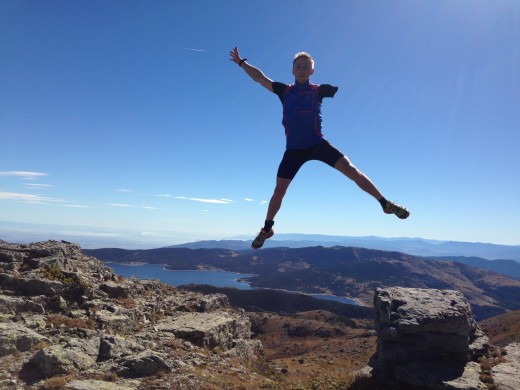
Oh Sport, You Are Life!
– How did you get into sports? Why cross-country skiing?
– I tried various sports like football and athletics, but nothing stuck.
At 13, I joined a skiing club and trained for about a year, but the intense regimen didn’t appeal to me, so I quit.
At 16, after my accident, my former coach, Nikolay Alekseevich Kireichev, approached me and asked, 'Oleg, do you want to train again?'. I said, 'Let’s try', even though I wasn’t sure how it would work without an arm.
We gave it a shot. It worked.
– Did you enjoy skiing this time?
– Yes! I appreciated the variety in training: cross-training, roller skiing, simulation, cycling, swimming, and of course, skiing itself. I started competing, won silver at the Russian championships, and got hooked.
– What does your training schedule look like?
– I train daily for 2 to 2.5 hours in the morning and 1.5 to 2 hours in the evening, varying the intensity depending on the type of workout – speed, strength, etc.
– No holidays or days off?
– Rest is vital. Without breaks, progress stalls and the body overloads. Proper recovery periods are key, so rest days are essential.
– So your coach played a big role in your comeback?
– Absolutely. He has experience coaching athletes with disabilities, including Valery Pavlovich Kupchinsky, a nine-time Paralympic champion for visually impaired athletes. Nikolay Alekseevich knows adaptive sports well.
– How is para-sport different from regular sports?
– Athletes are classified by disability type: hearing, vision, mobility impairments. Each category has classes with coefficients adjusting performance standards. For example, my coefficient is 96%, meaning my times are adjusted by 4% compared to able-bodied athletes. We compete within these classifications, not against able-bodied athletes.
– What about the psychological aspect?
– I believe athletes with disabilities have a stronger competitive spirit. They’ve overcome serious life challenges – injuries, accidents, illnesses – and have built resilience and motivation.
– What does sportsmanship mean to you?
– The mindset to win!
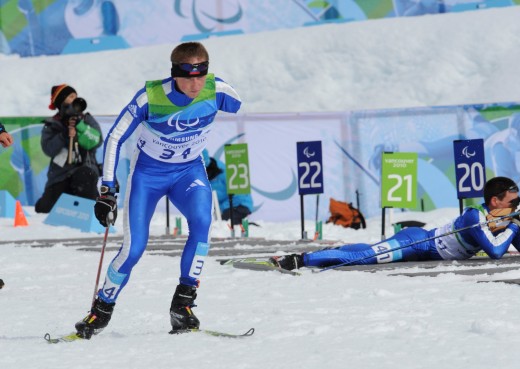
Citius, Altius, Fortius!
– Paralympic sport gained attention in Russia after Vancouver, but many athletes face challenges acquiring costly specialized equipment. What difficulties have you encountered?
– When part of the national team, equipment is provided by the Ministry – skis, clothing, everything. Financial struggles are rare.
My main challenges have been practical: traveling alone to competitions without a companion, carrying heavy ski bags with one hand.
– Doesn’t the coach travel with you?
– Coaches attend only Russian Championships. For internal events, they assist with preparation, but for international competitions, I travel solo and rely on friends in Moscow to meet and assist me, which they gladly do.
– Have strangers ever helped you?
– Almost never.
– How did you join the national team?
– In 2005, I placed second at the Russian championships, which qualified me for the youth reserve. In 2006, I won silver and bronze at the Russian Championships, earning a spot on the national team.
– Now you’re an international master of sport and multiple world medalist, right?
– Yes, I have many medals from World Cups. At the 2009 World Championships, I won silver in the long classic race; in 2011, bronze in biathlon.
Unfortunately, Vancouver didn’t go as planned. I aimed for a podium but had ski waxing issues, finishing sixth.
– Top ten is still impressive, especially with weather playing such a big role in skiing.
– Indeed. Success depends on many factors beyond the athlete – waxing, weather. People often criticize the main team without realizing sometimes skis just don’t perform.
– Are you aiming to compete in Sochi?
– Selection is ongoing. After recent competitions, it will be clear if I make the team. My December World Cup results in Canada were 7th and 8th places, which might not be enough.
– Is competition fierce among Paralympians?
– Internationally, yes. The level keeps rising worldwide, but Russian Paralympians remain among the strongest, as shown in Turin and Vancouver where we led the medal count. Sometimes international events feel like Russian championships because we dominate the podium!
– Is it the Russian spirit, better training, or superior coaching?
– A mix of all. Good training, quality coaches, decent equipment, and strong character.
– Speaking of Sochi, many people are frustrated with the Games’ preparations. How do you feel about Russia hosting the Olympics?
– If I weren’t an athlete, I might agree with those who say the funds should go to regional sports infrastructure. But as a professional, I believe the Olympics are essential.
First, hosting such a prestigious event at home is motivating. The home advantage is real.
Second, it raises awareness and respect for athletes with disabilities. Before Vancouver, Paralympic sports were barely covered in Russia. If Sochi broadcasts Paralympic events widely, perceptions will change, showing that disabled athletes contribute to national pride.
Third, the Games inspire people with disabilities themselves to pursue sports and live actively.
– Do spectators attend Paralympic events beyond family and friends?
– Abroad, almost never. Healthy athletes’ events fill stadiums with fans and banners, but Paralympic competitions often feel like training sessions without advertising or crowds.
At Vancouver, stands were mostly official delegations and some children.
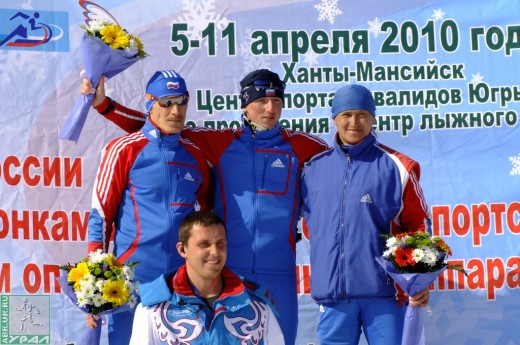
In Russia, however, it’s different. The 2010 Biathlon World Championship in Khanty-Mansiysk had packed stands with enthusiastic fans cheering along the tracks.
– Really?
– Absolutely!
Faith in the Future
– Why do many people ignore or avoid helping people with disabilities?
– There’s a stereotype that disabled people are beggars. Historically, many had no job opportunities, leading to despair and social withdrawal. Unfortunately, this created the stereotype, and society reacted accordingly.
In reality, life continues, and one must overcome internal barriers.
– You’re married to a beautiful wife. How will you teach your children to relate to people with disabilities?
– It’s a tough question. I’ll simply teach them that life is unpredictable, and people with disabilities are not aliens. They deserve the same respect as everyone else.

– Besides skiing, you’re passionate about cars. Have you considered motorsport?
– Cars are my hobby. I’ve thought about it. Alessandro Nannini raced in Formula 1 after his injury, so it’s possible. I enjoy extreme driving on closed tracks but unfortunately, we lack proper training circuits.
– Why haven’t you moved to Moscow yet?
– Moscow is beautiful but hectic. In Klintsy, the gym is just 2 minutes away, while Moscow has traffic jams and rush. I prefer calm.
– Do you work outside of sports?
– Sports are my job. I work as an athlete-instructor at a sports school, training and assisting coaches simultaneously.
– Are young people interested in skiing?
– They come, but few stay. Initially, about 20 kids aged 10–12 join, excited about skiing. But it’s a tough sport, and many drop out once training intensifies. Usually, only 2–3 remain passionate.
With a small town and new football complexes, kids find it easier to play soccer. Hopefully, Sochi will spark more interest in skiing among the youth.
– What are your plans after your sports career?
– I’ve thought about coaching. With 10 years of experience in adaptive sports, I want to continue working with athletes with disabilities, even in my hometown.
Dreams Beyond Sport
– What do you dream of outside of sports?
– I have a wife, so I dream of having children.
– Our project is called 'No Excuses'. What does that phrase mean to you?
– Living without thinking of yourself as disabled. Moving forward and knowing that no matter what, things will get better.
– Any wishes for our readers?
Enjoy life. It’s the only one you have. Appreciate each day and try new things so that years later, you have no regrets.
– Thank you, Oleg! Wishing you continued success!
– Thank you, Nastya!
Explore useful articles in Motivation as of 20-01-2014. The article titled " Unstoppable Spirit: Inspiring Journey of Paralympian Oleg Balukhto " offers in-depth analysis and practical advice in the Motivation field. Each article is carefully crafted by experts to provide maximum value to readers.
The " Unstoppable Spirit: Inspiring Journey of Paralympian Oleg Balukhto " article expands your knowledge in Motivation, keeps you informed about the latest developments, and helps you make well-informed decisions. Each article is based on unique content, ensuring originality and quality.