



Starter Motor Won't Turn? Discover the Top Reasons and How to Fix Them
Explore the common causes behind a starter motor failure, including oxidized contacts, faulty solenoid relay, and other issues preventing your engine from starting. Learn practical troubleshooting tips and solutions.
Experiencing a starter motor that refuses to turn can be frustrating. Common culprits include oxidized electrical contacts, a broken solenoid relay, and other malfunctions that prevent your engine from firing up.
How to Recognize a Starter Motor That Won't Turn
The issue is usually clear: when you turn the ignition key, nothing happens. You might hear clicking noises, buzzing, metallic grinding, or ringing sounds from under the hood—or sometimes no sound at all.
These symptoms indicate a problem with the starter motor itself or one of the components in its control system.
Understanding the Car Starter Motor
A car starter is an electric motor equipped with a solenoid relay that engages and disengages the starter, and a bendix gear that spins the engine's flywheel.
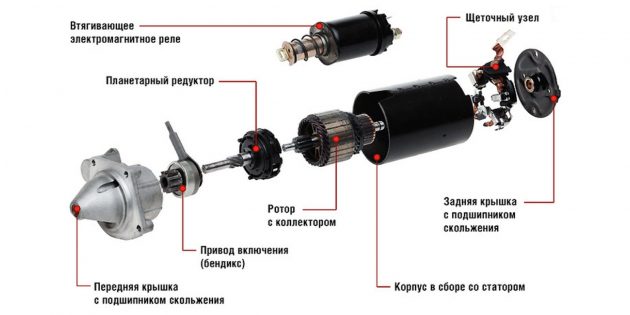
Typically, the starter includes a rotor with a commutator inside a housing containing the stator or permanent magnets. The rear houses the brush assembly and bearing cover, while the front contains the gear reduction unit (absent in older models), the bendix gear, and another bearing cover. On top sits the solenoid relay connected to the drive fork.
YouTube channel: serzh86
The starter operates in three stages:
- Turning the ignition key sends current through the control relay to the solenoid relay, which pushes the bendix gear along the shaft to engage with the flywheel's ring gear.
- Simultaneously, the solenoid relay's power contacts close, supplying current to the starter brushes, causing the starter motor to spin.
- Once the engine starts, the flywheel spins faster than the rotor, activating the overrunning clutch in the bendix gear to disengage it from the shaft. Returning the ignition key to its original position cuts power to the solenoid relay, disconnecting the starter drive from the flywheel.
Common Causes Why the Starter Motor Won't Turn
1. Insufficient Battery Charge
What happens: The starter either doesn't turn or spins very weakly, accompanied by clicking noises and dimming dashboard indicators.
A discharged battery can supply enough power to activate the solenoid relay (causing the clicks you hear under the hood), but not enough to rotate the crankshaft and start the engine.
Solution: Check the battery voltage; if it’s below 12 volts, fully recharge it. Also, identify and fix the cause of battery drain to prevent recurrence.
2. Oxidized Electrical Contacts
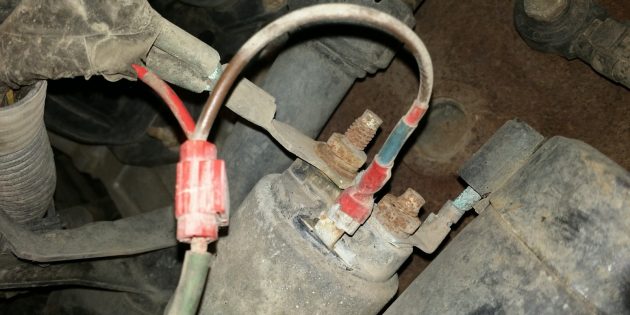
What happens: The starter motor struggles to turn and eventually stops working altogether.
Over time, corrosion builds up on battery terminals, solenoid relay contacts, or the engine ground wire. This oxide layer or buildup disrupts electrical contact, increasing resistance and reducing current flow necessary to start the engine. Eventually, contact may be lost completely.
Solution: Inspect all connections and clean them with fine sandpaper or a specialized electrical contact cleaner spray. Ensure all terminals are tightly secured.
3. Control Circuit Faults
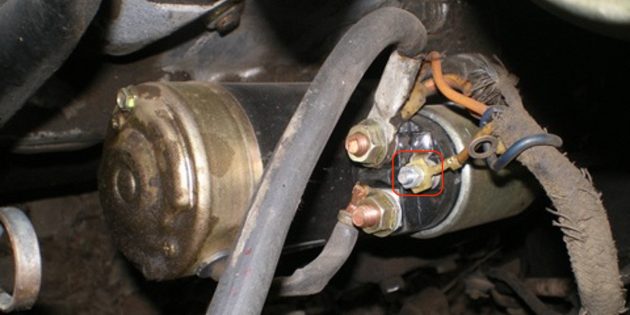
What happens: The starter motor does not turn and no sounds are heard.
This less common issue arises from faults in the ignition switch, control relay failure, or wiring break, preventing current from reaching the solenoid relay and thus disabling the starter.
Solution: Use a multimeter or test lamp to verify voltage at the thin solenoid relay wire when turning the ignition key. If voltage is present, the control circuit is functional. If not, inspect wiring, control relay, and ignition switch.
You can also supply power directly from the battery to this terminal. If the starter works, the problem lies in the control circuit; if not, further diagnosis is needed.
4. Faulty Solenoid Relay
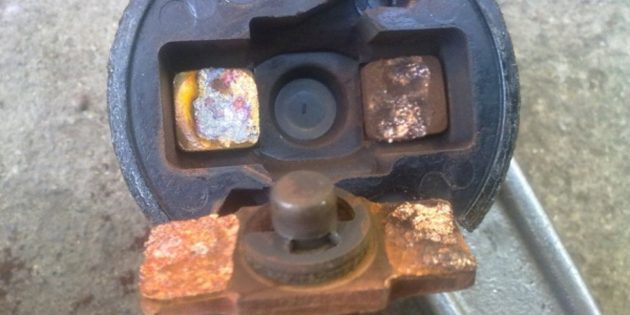
What happens: The starter motor doesn't turn and no clicking is heard.
If voltage is present on the solenoid relay control wire but the relay neither clicks nor engages, the relay is defective. This may be due to broken internal coil contacts or burnt relay plates.
Solution: Replace the solenoid relay. If it has a removable cover, you may attempt to clean or replace the contact plates inside.
5. Worn Brush Assembly
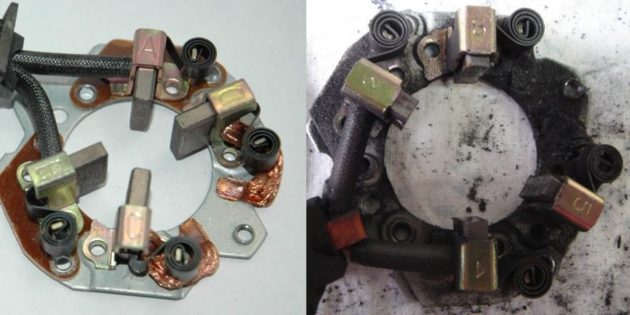
What happens: The starter motor does not turn, but clicking sounds are heard when turning the ignition key.
If all connections are secure and the solenoid relay engages properly but the starter still doesn't spin, worn graphite brushes are likely the cause. Over time, brushes wear down, lose proper contact with the rotor commutator, and fail to conduct current.
Test by applying power directly to the starter, bypassing the control relay, or shorting the two large terminals on the solenoid relay with a screwdriver. If it still doesn't turn, inspect the brush assembly and the rotor and stator windings for shorts or breaks.
Solution: Remove and disassemble the starter to replace the brushes with new ones.
As a temporary fix, gently tap the starter housing with a screwdriver or wrench to reposition misaligned brushes and restore contact with the commutator.
6. Stator or Rotor Winding Short Circuit
What happens: The starter motor does not turn, but a distinct click is heard when turning the ignition key.
This rare fault involves damage to the stator windings causing internal shorts or grounding, or metal debris lodged between rotor commutator segments causing similar effects.
Solution: Consult a professional auto electrician for repair or replacement of the starter. Diagnosing and fixing these faults without specialized equipment is challenging.
7. Detached Magnets
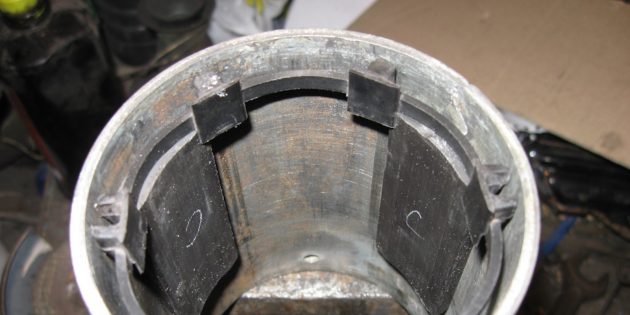
What happens: The starter motor doesn't turn, but a clear click is heard when turning the ignition key.
This uncommon issue occurs in starters with permanent magnets replacing stator windings. Over time, strong lateral magnetic forces can cause magnets to detach, rendering the starter inoperative.
Solution: Have a qualified auto electrician repair the starter. Attempting to reattach magnets yourself requires special adhesive.
8. Overrunning Clutch (Bendix) Seizure
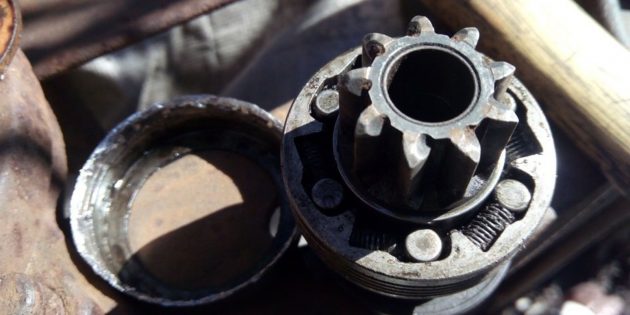
What happens: The starter motor spins freely with a buzzing noise but fails to turn the engine.
The bendix's rollers inside the overrunning clutch must move freely in their slots. Grease contamination can cause them to stick, preventing the bendix from engaging.
Solution: Remove the starter and either replace the bendix or disassemble and clean the clutch mechanism.
In emergencies, running the starter for 5–10 seconds may warm the grease, restoring roller movement and allowing the engine to start on the next attempt.
9. Worn Rotor Bushings or Bearings
What happens: The starter struggles to turn or makes noise when the engine is warm.
Wear in the rotor’s support bushings or bearings causes axial play. When heated, the rotor expands and contacts the stator, causing shorts and preventing rotation. Severe wear and repeated starting attempts can seize the starter completely.
Solution: Remove and disassemble the starter to inspect and replace worn bushings or bearings.
10. Damaged Bendix or Flywheel Teeth
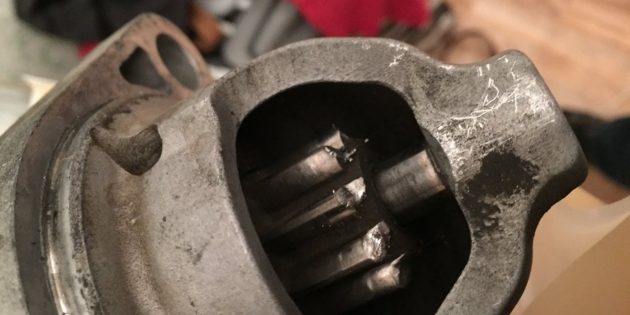
What happens: The starter motor rotates with grinding and ringing noises.
Prolonged use or incomplete engagement causes wear on the teeth of the flywheel ring gear and the bendix drive gear. This weakens the gear mesh, sometimes causing the teeth to miss entirely.
Solution: Remove the starter and inspect the bendix and flywheel. Replace worn parts. While bendix replacement is relatively straightforward, flywheel ring gear replacement is complex and costly.
Explore useful articles in DIY as of 16-10-2019. The article titled " Starter Motor Won't Turn? Discover the Top Reasons and How to Fix Them " offers in-depth analysis and practical advice in the DIY field. Each article is carefully crafted by experts to provide maximum value to readers.
The " Starter Motor Won't Turn? Discover the Top Reasons and How to Fix Them " article expands your knowledge in DIY, keeps you informed about the latest developments, and helps you make well-informed decisions. Each article is based on unique content, ensuring originality and quality.