

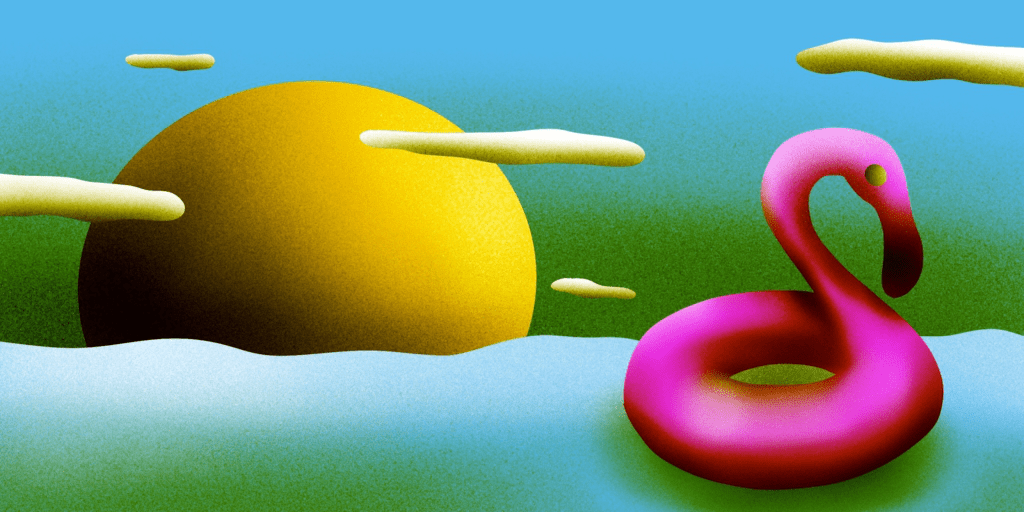

How Much Water Would It Take to Extinguish the Sun?
Explore with Zamona whether it's possible to extinguish the Sun using water, how much water would be required, and what the entire process would look like.
Spoiler alert: you’ll need a very large hose.
You can also listen to this article as a podcast for convenience.
Imagine you had a tough day at work. Returning home, you sigh, weigh your options, and decide to wipe out humanity. Don’t worry—everyone has such thoughts sometimes.
But let’s approach this creatively. Nuclear war, zombie apocalypse, or a bubonic plague pandemic might be thrilling but are somewhat clichéd. Instead, why not go big and try to extinguish the Sun itself—with ordinary water.

Of course, you know that a campfire can be put out with water. When water contacts fire, it evaporates, cooling the fuel. Once the fuel’s temperature drops below its ignition point, the fire goes out. Additionally, steam displaces oxygen around the fire, halting combustion due to lack of oxidizer.
However, the Sun, like all stars, doesn’t burn in the way we usually understand fire. It consists of gas heated by nuclear fusion processes in its core. Hydrogen under immense pressure fuses into helium, releasing tremendous energy, heating the gas, and causing the star to shine.
Still, let’s experiment by pouring water on the Sun—just to see if it would sizzle.
There’s plenty of water in space—you just need to know where to look. Some planets are made mostly of water. These “super-Earths” are larger than our planet but smaller than Uranus. Given their composition, they might better be called “super-water worlds,” but NASA scientists have their own terminology.

Consider Gliese 1214 b. It’s about 2.7 times larger than Earth and nearly seven times heavier. Compared to the Sun, it’s tiny—the Sun’s mass is 332,940 times that of Earth. But nothing stops us from grabbing tens of thousands of such watery worlds and hurling them at the star to see how it reacts.
Physicist Randall Munroe, author of "What If? Scientific Answers to Absurd Hypothetical Questions," explains how this experiment would end. As we pour streams of H2O onto the Sun, it won’t extinguish. Instead, the star will burn even brighter.
This happens because water contains hydrogen, which serves as fuel for the Sun. Adding water increases the star’s mass and temperature.
In other words, you might as well try putting out a fire with gasoline.
By the way, will it sizzle? In the vacuum of space, there’s no medium to carry sound waves, so no. But if you could hear radio waves, you’d hear the Sun’s unique sounds. NASA and Stanford University scientists converted data from the SOHO radio telescope into audio humans can perceive. Here’s what it sounds like:
Not scary, right? To get the full effect, this recording would need to play 24/7 at 100 decibels—about as loud as a rock concert. That’s roughly how loud the hissing of water on the Sun would be if we could hear it. Luckily, we can’t.
As you keep adding water, the Sun’s mass grows, and internal processes change. When the Sun’s mass increases by about 1.7 times, hydrogen-helium fusion shifts to the CNO cycle (carbon-nitrogen-oxygen).
How much water is needed for this? Approximately 3.4 × 1030 liters. Christopher Byrd, a physicist at West Texas A&M University, explains that doubling the Sun’s mass would make it emit 16 times more energy and shine 16 times brighter. Its color would shift from yellow to bluish.
Life on Earth would be swept away by solar winds along with the atmosphere, and the surface would be sterilized by intense X-ray and ultraviolet radiation.
Moreover, the Sun’s lifespan would drastically shorten—from the expected 5.4 billion years down to just a few million years—since brighter stars burn their nuclear fuel faster.
That’s something, but still too slow for our purposes. So, let’s keep pouring water on the Sun.

When the Sun’s mass reaches about 3.3 times its current mass, something extraordinary happens. The immense pressure from the outer layers causes the Sun to collapse into a singularity, forming a black hole roughly 19.5 kilometers in radius. The smallest known black hole of this size currently exists in the constellation Auriga.
At this point, it’s best to stop pouring water. We don’t want to enlarge the black hole, which would emit harmful X-ray radiation as it absorbs matter.
Also, local water authorities might notice something unusual and shut off the water supply.
Once the Sun becomes a dwarf black hole, Earth will cool down. Physicist Marco Kircho from Cornell University estimates that it would take about two months for the planet’s surface heat to dissipate into space.
Now you can breathe easy: the mission is accomplished. It took about 6.6 × 1030 liters of water.
Explore useful articles in Life Transformation as of 12-08-2022. The article titled " How Much Water Would It Take to Extinguish the Sun? " offers in-depth analysis and practical advice in the Life Transformation field. Each article is carefully crafted by experts to provide maximum value to readers.
The " How Much Water Would It Take to Extinguish the Sun? " article expands your knowledge in Life Transformation, keeps you informed about the latest developments, and helps you make well-informed decisions. Each article is based on unique content, ensuring originality and quality.