


Beat the Heat: Delicious Foods That Help Your Body Stay Cool and Hydrated
Discover tasty and nutritious foods that aid hydration and replenish essential minerals lost during hot weather. Stay refreshed and protected from overheating with these easy-to-find ingredients.
Spicy seasonings, tomatoes, and other hydrating foods can help restore lost fluids and minerals during hot days.
How Our Body Responds to Heat
When temperatures rise, thirst naturally increases as a protective response. Our bodies are about 60% water, but this water is not plain; it contains vital electrolytes like sodium (Na) and potassium (K).
To cool down, the body produces sweat, which evaporates from the skin surface. This process causes loss not only of water but also salts, trace elements, and other nutrients. For example, marathon runners in hot weather can lose up to two liters of fluid per hour through sweating.
The easiest way to recognize dehydration is by paying attention to thirst and urination patterns. If you urinate less frequently and your urine is dark and concentrated, it’s a sign to increase water intake. Proper nutrition also plays a key role in maintaining hydration.
Foods to Include in Your Diet
Sodium and Electrolytes
Including salt in your diet during hot weather is essential. Sodium is found in foods like milk and cream (about 50 mg per 100 g), eggs (80 mg per 100 g), and table salt (sodium chloride) which is often added to processed foods.
For example, bread contains approximately 250 mg of sodium per 100 g. Processed meats like bacon have around 1.5 g of sodium per 100 g, and salty snacks such as crackers and popcorn also contain about 1.5 g per 100 g. Soy sauce is particularly high in sodium, with 7 g per 100 g.
The recommended daily intake of table salt for adults over 16 is about 5 g (half a teaspoon).
Potassium-rich foods include beans and peas (about 1.3 g per 100 g), nuts (600 mg per 100 g), bananas and papaya (300 mg per 100 g), and baked potatoes with skin (573 mg per 100 g).
Adults should aim for at least 3.5 g of potassium daily.
Fruits and Vegetables
Eating fruits and vegetables is like drinking water because they are about 90% water. Unlike plain water, they also contain essential electrolytes.
| Fruit/Vegetable | Water (g/100g) | Sodium (mg/100g) | Potassium (mg/100g) |
|---|---|---|---|
| Celery | 95.43 | 80 | 260 |
| Cucumbers | 95.23 | 2 | 147 |
| Radishes | 95.27 | 39 | 233 |
| Green Leaf Lettuce | 94.98 | 28 | 194 |
| Tomatoes | 94.52 | 5 | 237 |
| Cabbage | 92.18 | 18 | 170 |
| Watermelon | 91.45 | 1 | 112 |
| Green Onions | 90.5 | 17 | 212 |
| Melon | 89.92 | 18 | 228 |
| Peach | 88.87 | 0 | 190 |
| Apricot | 86.35 | 1 | 259 |
| Dill (Herb) | 85.95 | 61 | 738 |
| Apples | 85.56 | 1 | 107 |
| Kiwi | 83.07 | 3 | 312 |
| Cherries | 82.25 | 0 | 222 |
Vegetables can be eaten whole or in salads. Adding a small amount of salt helps replenish sodium losses, while dressings made from vegetable oil or yogurt enhance flavor and nutritional value. Adding lean meats, fish, or cheese to salads also boosts protein content.
Complement salads with plain water, fermented beverages like kvass, or room-temperature kefir. In many Asian cultures, hot green tea is commonly consumed even during hot weather.
Cold Soups
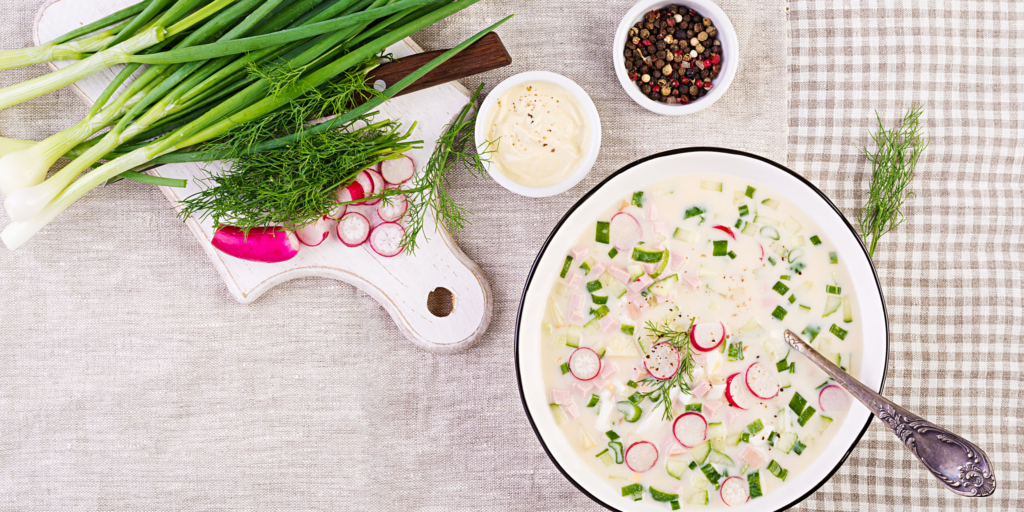
Cold soups are an ideal combination of food and hydration. Many cuisines feature refreshing cold soups for hot days, such as borscht, okroshka, gazpacho, tarator, or botvinya.
These soups typically consist of vegetable, vegetable-meat, or vegetable-fish bases with a liquid component that can include dark or light kvass, kefir, whey, or various broths. They are often garnished with finely chopped fresh herbs and aromatic greens. In extremely hot climates, adding ice cubes directly to the soup is common. Finding a recipe that suits your taste and budget is easy.
Spicy Seasonings
Spices are a staple in hot climates and beyond. In Russia, mustard and horseradish are traditional spicy additions, often used in okroshka.
Spices act as natural preservatives by inhibiting bacterial growth, especially important in warm weather. The heat from spices causes a mild irritation to the digestive tract lining, triggering the release of pleasure hormones that help with pain relief—a property utilized in medicine. Many treatments contain capsaicin, the main alkaloid in red peppers.
Mint, known for its cooling taste, is commonly used in refreshing drinks, desserts, and appetizers. Hot peppers are traditional in Caucasian, Asian, and Mexican cuisines, demonstrating their suitability for consumption during hot days. However, spicy foods are not recommended for people with certain health conditions.
Conclusion
Summer heat is temporary. Nature equips us with mechanisms to regulate body temperature through changes in skin blood flow and sweating, as well as to restore water-salt balance and energy needs via thirst and hunger. Paying close attention to your body's signals helps you adapt effectively to environmental changes.
*Note: Meta Platforms Inc. and its social networks Facebook and Instagram are restricted in some regions.
Explore useful articles in Culinary Mastery as of 10-04-2022. The article titled " Beat the Heat: Delicious Foods That Help Your Body Stay Cool and Hydrated " offers in-depth analysis and practical advice in the Culinary Mastery field. Each article is carefully crafted by experts to provide maximum value to readers.
The " Beat the Heat: Delicious Foods That Help Your Body Stay Cool and Hydrated " article expands your knowledge in Culinary Mastery, keeps you informed about the latest developments, and helps you make well-informed decisions. Each article is based on unique content, ensuring originality and quality.