



Venezuela blasts Trump airspace claim as colonial threat
Caracas denounces Trump's call to close Venezuelan airspace as illegal aggression while Washington steps up anti-drug actions and regional pressure, heightening tensions.
Venezuela rejected a recent US claim to close its airspace around the country. Caracas says the move is a coercive, illegal act that meddles in Venezuela sovereignty and international norms. The dispute comes as Washington expands its maritime activity in the region to curb drug trafficking.
Caracas condemned the remarks as an extravagant aggression that has no legal basis. It accused the US of trying to threaten Venezuela with acts that violate sovereignty. The Venezuelan government urged the international community to reject the move.
The United States has conducted air and sea operations in waters near Venezuela, saying they target drug shipments. American officials claim more than 21 strikes on boats suspected of carrying drugs, resulting in over 80 deaths, though no public, independent evidence has been released to support these claims. President Nicolás Maduro says the actions are an effort to topple his government.
In a post on Truth Social, Trump asked airlines and pilots to treat the airspace around Venezuela as closed in its entirety. The White House did not respond to INLIBER's request for comment.
Several members of the US Congress, from both major parties, criticized the move for bypassing Congress. Senate Democrat Chuck Schumer warned that the United States is edging toward another costly foreign conflict, stressing that only Congress has the power to declare war. Republican Representative Marjorie Taylor Greene also underscored the constitutional point that war powers lie with Congress.
The current push follows a Federal Aviation Administration warning about heightened military activity in Venezuelan airspace, which led several airlines to pause flights. Caracas responded by revoking take-off and landing rights, citing safety concerns.
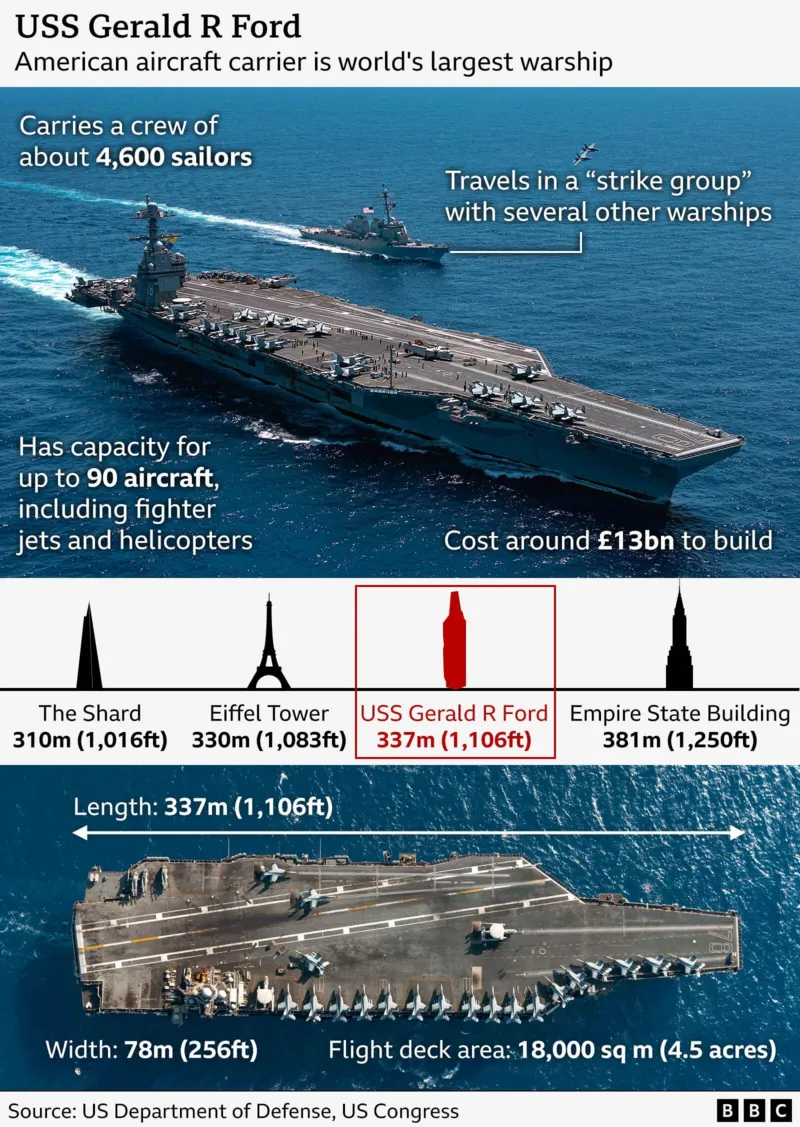
To deter what Washington calls drug trafficking, the US has deployed the aircraft carrier USS Gerald Ford and around 15,000 troops within striking distance of Venezuela. The administration says this is the region's largest deployment since the 1989 invasion of Panama. Trump said efforts to stop drug trafficking would begin very soon.
Colombia president Gustavo Petro, a fellow leftist who has faced US sanctions, has said he believes the US is using force to influence Latin America. Other regional leaders have welcomed Washington's stance, illustrating mixed regional opinions on the issue.
The US has also designated Cartel de los Soles, or the Suns Cartel, as a foreign terrorist organization, a move that gives US agencies broader powers. Venezuela rejects the designation as a false label aimed at justifying pressure.
Venezuela's foreign ministry called on the international community to strongly reject this act of aggression, while the country's military held coastal exercises with anti-aircraft and other weapons on display on state television.
Caracas asserts that the security posture is aimed at drug trafficking control, not a shift in sovereignty. Washington frames the moves as a strategic effort to stabilize the region, while Caracas continues to view them as interference.
Expert comment
Analysts say unilateral measures by the United States in Venezuela raise the risk of a broader regional conflict and political backlash. They also stress that only Congress can authorize war actions, highlighting the constitutional friction around this case.
Summary
The dispute over Venezuela s airspace underscores rising tensions between Caracas and Washington as each side presents its own legal and moral case. Caracas denounces the move as illegal and colonial, while Washington frames it as a counterdrug effort with regional implications. The situation has drawn in regional allies and set the stage for a broader debate about sovereignty and security in Latin America.
The key takeaway is that unilateral US pressure against Venezuela is viewed by Caracas as a sovereignty violation, illustrating a broader struggle for influence in the region.
BBC News