



Understanding Oven Convection: What It Is and When to Use It
Discover how oven convection works, the modes available, and practical tips to bake more evenly, saving time and achieving crisp crusts on meats, veggies, and pastries.
Convection is a feature found in most modern ovens. By circulating hot air with a fan, it helps food cook more evenly and often a bit faster. This guide explains how convection works, the different modes you may find, and when to switch it on for the best results.
What is convection, explained simply
In a typical home oven, convection means forced air movement created by a built‑in fan. The steady flow eliminates cold spots and surrounds the food from all sides. The goal is not to raise the temperature, but to make heat transfer more efficient, so dishes cook faster and more evenly. With convection, you can place two or three trays on different racks without constantly moving them.
Key advantages include more consistent browning, shorter cooking times, and the convenience of multi‑rack cooking without rotating pans as often.
How the convection system is designed

The convection setup has three core parts: a rear fan, a circular heating element around the fan, and temperature sensors. The fan moves air, the ring heater warms it inside the chamber, and sensors adjust power to keep the heat steady at the selected setting. The fan usually engages once the oven reaches the target temperature, and the hot air flows through the center, around the food, and back to the fan, creating a continuous loop. It typically takes 5–10 minutes to engage convection mode.
Different convection styles you'll encounter
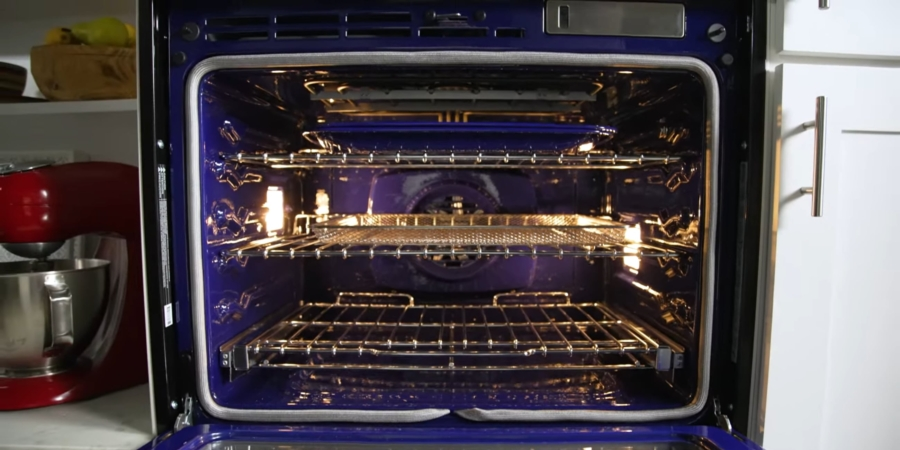
Manufacturers offer several convection options to suit various cooking needs. The main types are:
- Natural convection. Heat naturally circulates as warm air rises and cooler air sinks. This tends to cook unevenly, with edges browning faster than the center.
- Forced (dry) convection. The classic fan mode that moves hot air for more even heating across multiple racks and dishes.
- Moist convection. Adds steam to the airflow using a built‑in generator or water reservoir, helping keep foods juicy and reducing drying out.
- Dual or 3D convection. Two fans or adjustable airflow directions provide very even heating on all levels, useful for large batches.
When to use convection and for which dishes
Convection excels where you want a crisp crust, even browning, and moisture evaporation. It works well for meat and poultry, fish, vegetables, open‑faced pies, pizza, and foods that benefit from drying, like granola or sliced fruit chips.
Many ovens offer combined modes, such as convection with grill or convection with bottom heat. The grill helps brown the top quickly without drying the inside, while bottom heat is ideal for casseroles and tall pies.
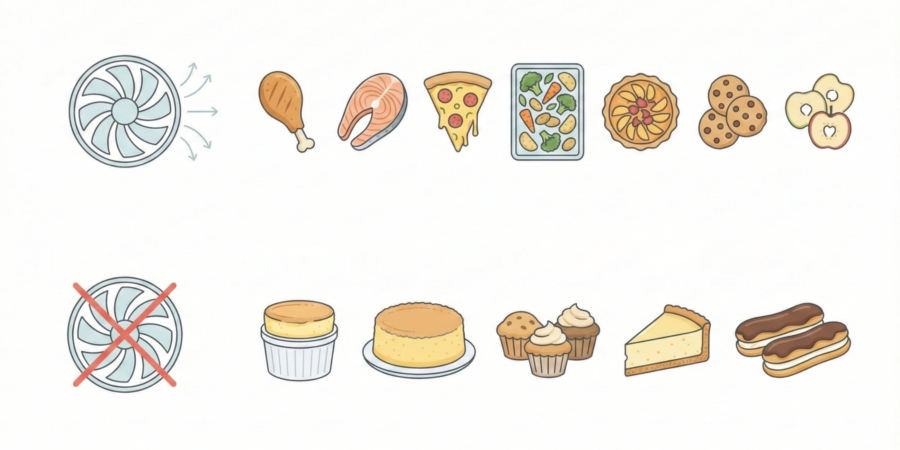
However, not every dish benefits from strong airflow. Delicate items like soufflés, sponge cakes, and some pastries may rise unevenly or dry out. For these, standard bake or lower fan speeds (if available) are preferable.
Practical tips: reduce the temperature by about 15–20 °C (roughly 30–40 °F) when using convection, and start checking for doneness a little earlier than you would with static heat.
The bottom line
Convection can simplify cooking by delivering more even heat and faster results, especially when you bake on multiple racks or want a crisp finish. For most home cooks, it's a valuable tool that yields more predictable outcomes for meat, vegetables, and baked goods with a crust.
As with any oven feature, use it thoughtfully. Some dishes perform best with the fan off or at a reduced speed, so choose the setting that best matches the recipe and desired result.
Do you have convection in your oven? Share in the comments how you use it and what you cook.
Key insight: Use convection to improve even heating and speed, but reserve it for dishes that benefit from a crisp exterior and uniform browning, while preserving moisture in delicate bakes.